


Christmas Beyond Belief: How Faith, Culture, and Family Shaped My Understanding of the Season Across Three Continents

- Distilled to its essence, Christmas is a season that invites us to slow down, open our hearts, and remember that connection—across faiths, generations, and geographies.
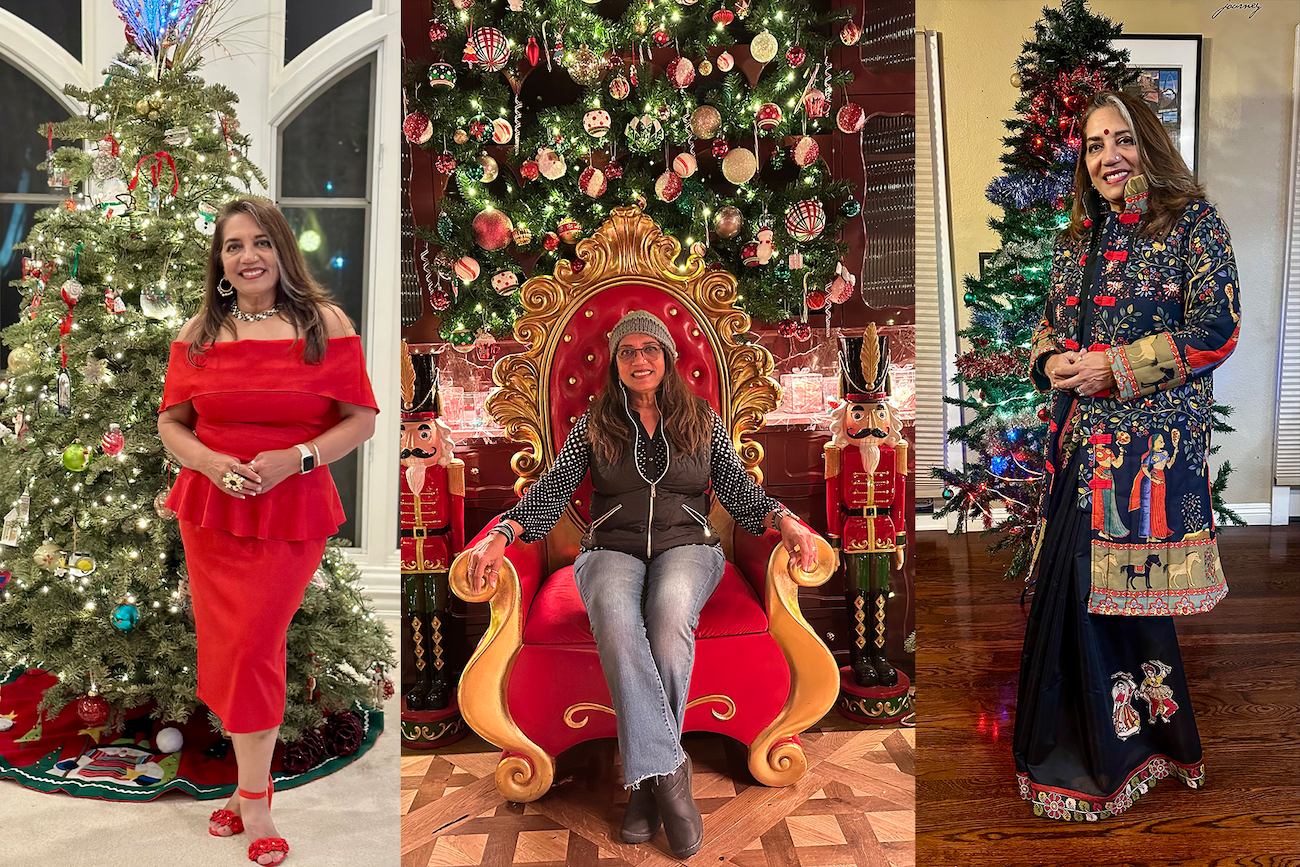

I was raised across three continents—India, Africa, and eventually the United States—and my understanding of Christmas has never been rooted in a single faith or tradition. Instead, it has been shaped by movement, diversity, and early exposure to many belief systems. My first encounters with the Bible came in Africa, where divinity classes were part of the school curriculum. These classes were taught by teachers rather than clergy and focused on selected passages meant to instill values rather than doctrine. Later, in college, a course on world religions deepened my appreciation for faith traditions across cultures. What stayed with me most was not theology, but a shared moral thread—compassion, non-violence, and respect for human dignity—values that quietly transcend religion and shape how we live and celebrate.
Faith education was also part of my boarding school life in India. It was a Jesuit school, and the student body was beautifully diverse—Christians, Jews, Muslims, and Hindus living and learning together. Everyone was free to practice their faith, though the Christian students had more structured expectations. On Sunday mornings, they lined up in uniform and marched to the church just outside the school grounds. It never felt forced, and religion itself was rarely a source of conflict—except when Hindu students were expected to attend church, while we were not permitted to leave campus to visit a temple.
Equity and Mutual Respect
That imbalance didn’t sit right with me. When something feels unfair, I have always felt compelled to speak up—focused, persistent, and determined to see it resolved. I approached the headmistress, Mrs. Matthews, and pointed out that if Christian students could attend church, Hindu students should also be allowed to go to a temple in the city. Her practical question was, “Who will take you?” I suggested my science teacher, Mrs. Subramaniam, who volunteered to escort us. It wasn’t about religious devotion; it was about equity and mutual respect. The one Jewish student and the one Muslim student practiced their prayers privately and had no concerns. Christmas at school before the holiday break was simple. We gathered for a social in the common room and sang carols.

When I moved to America, my family—being Hindu—did not celebrate Christmas with trees or presents. It simply wasn’t part of our tradition. When we were invited to friends’ homes who celebrated Christmas, I was fascinated by fully decorated trees with ornaments shimmering, presents neatly arranged beneath it. We participated naturally, exchanging gifts and sharing in the warmth of the season, but from a cultural rather than a religious place.
When we had family visiting from out of town, and to create a sense of festivity, I decorated a little tree, wrapped a few presents, and added a few poinsettias plants. It felt joyful and celebratory—still cultural, still informal.
That all shifted once I had children of my own. As our family grew, so did our celebrations. The small tree gave way to a full five- or six-foot one, decorated more beautifully each year as we added ornaments—and memories. Beneath it, the presents grew into a colorful, almost comical mountain of boxes, a reflection of our large, lively family. Christmas morning became a cherished ritual: everyone gathered for brunch, followed by the joyful chaos of gift exchanges among relatives and cousins. It was loud, warm, and full of life.
There is something about this time of year that feels especially warm and hopeful, when people seem lighter, kinder, and more connected. It is deeply satisfying to be surrounded by that shared sense of joy.
Enter Santa Claus
I still remember laying out a plate of cookies and a cup of milk for “Santa” on Christmas Eve, waiting for him to stop by after the children were asleep. For years, the children would wake up to a tree surrounded by a mountain of presents where none had been the night before. The look of awe and pure excitement on their faces was priceless—and even now, that memory brings a wistful, tender smile to my face.
Over time, we began hosting an annual Christmas party at our home, often welcoming fifty to sixty people. With so many guests, gifts multiplied quickly and the energy became delightfully overwhelming. Eventually, we introduced a gift exchange to keep things manageable, though the spirit of generosity and togetherness remained unchanged. Our favorite was singing a rousing ‘On the First day of Christmas, my true love gave to me…”
One particularly memorable Christmas was spent visiting a close friend in the UK. She is Indian and Christian, practicing both faiths equally, married to an aviator, and raising two children. Her home during Christmas was breathtaking. Every room was decorated, each with its own Christmas tree—the living room, dining room, and foyer— and each uniquely adorned. Fine Christmas china was laid out for a formal sit-down dinner. Piles of presents covered the floors in every shape and size. A train circled one tree, and a nativity scene stood nearby. Celebrating Christmas with her family was a completely different and deeply beautiful experience.
For many years after that, we didn’t celebrate with trees or presents simply because we were rarely home. Everyone was traveling, and the season passed in motion. But rarely when I am home—like this year—I find myself completely awed. Streets upon streets glow with lights and decorations: nativity scenes alongside Star Wars and Harry Potter themes, snow and ice train rides winding through front yards, and the familiar scent of hot toddy and apple cider in the air. It is exuberant, imaginative, and unmistakably festive.


I love witnessing it all. There is something about this time of year that feels especially warm and hopeful, when people seem lighter, kinder, and more connected. It is deeply satisfying to be surrounded by that shared sense of joy.
Chimney Out, Amazon In
Now, our children are grown and scattered across different places, with careers, families, and lives of their own. Christmas celebrations have naturally evolved. When we cannot all be together, gifts arrive in boxes shipped by Amazon or as digital gift cards. In recent years, I have shifted toward giving experiences instead of things—a spa day, a weekend away, a trip—something that invites intention and memory-making rather than accumulation.
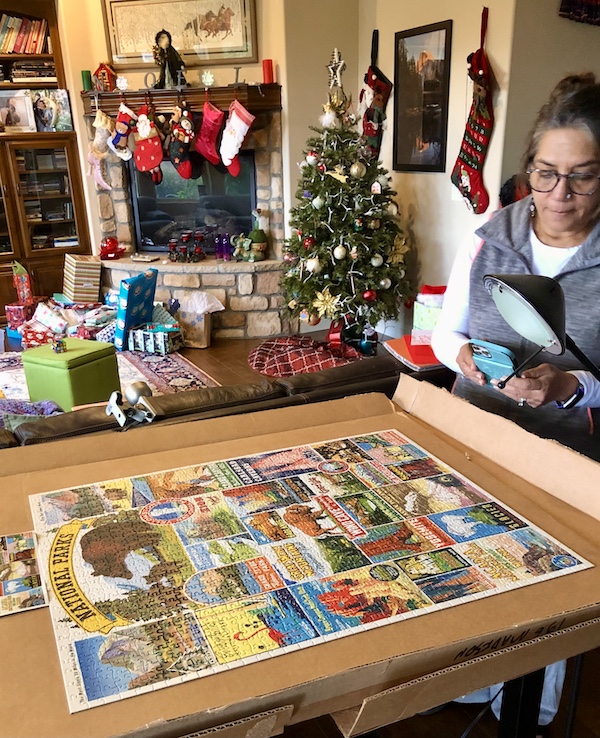
And now there are grandchildren. They are armed with handwritten wish lists, and shopping for them brings back the excitement of when my own children, nieces, and nephews were young. We create new traditions with them—starting a family puzzle, playing board games, simply being present.
For me, Christmas has never been about belief in the narrow sense. It has been about values lived out—kindness, fairness, generosity, and presence. Faith, encountered through many traditions, offered moral grounding; culture provided expression; family gave everything meaning. Whether gathered under a grand tree, spread across continents, or seated around a table with grandchildren piecing together a puzzle, the essence remains the same. Christmas, at its heart, is a season that invites us to slow down, open our hearts, and remember that connection—across faiths, generations, and geographies—is the most enduring tradition of all.
Nanda Mehta is Founder & Managing Director of Ahaana, (www.ahaana.org) a nonprofit organization whose goal is to create a cultural network for South Asian community through art and theater. Nanda is also CEO of Creative Journeys, (creativejourneysinc.com) a travel and event management organization. Through both Ahaana and Creative Journeys Nanda specializes in event management and planning, marketing, and storytelling.