


At a Time When Social Divisions Dominate Headlines, Sewa Diwali Offers a Counter-Narrative—One Rooted in Sewa

- Now in its eighth consecutive year, the initiative has helped donate nearly four million pounds of food cumulatively, with participation growing annually.
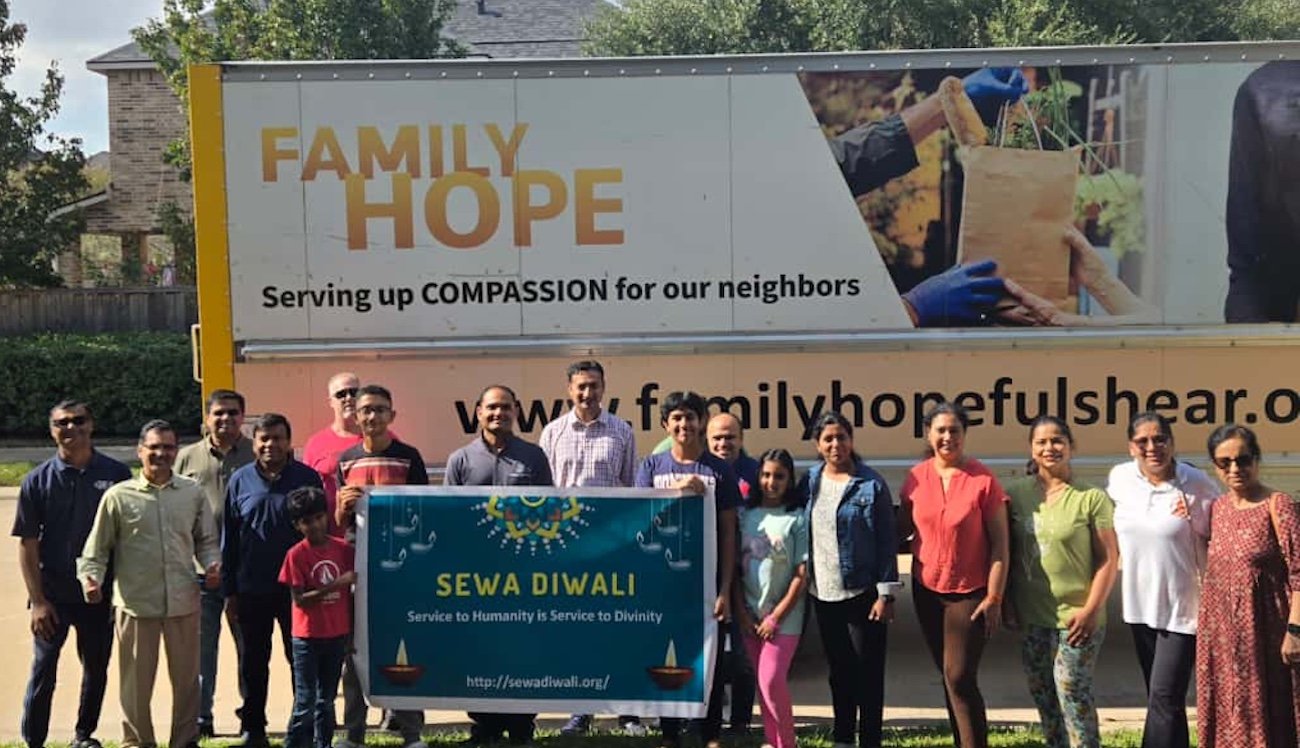

Every autumn, millions of Americans mark Diwali as a festival of light—of hope triumphing over despair and goodness prevailing over adversity. But in 2025, Diwali’s meaning extended well beyond lamps and celebrations. It took tangible form in grocery bags, food pantries, and the shared dignity of families who would not go hungry because strangers chose to serve.
The Sewa Diwali Food Drive of 2025 mobilized an extraordinary coalition of compassion. 553 organizations and community groups, supported by nearly 3,000 volunteers, came together to donate over 970,000 pounds of food across the United States. These donations reached over 350 food pantries, shelters, and soup kitchens, cutting across geography, faith, and race in communities still grappling with food insecurity.
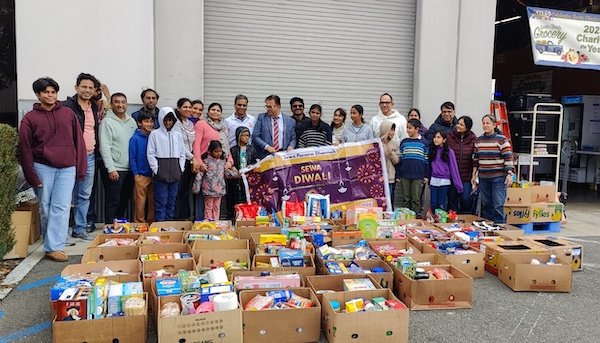
At a time when social divisions dominate headlines, Sewa Diwali offers a counter-narrative—one rooted in sewa, the Dharmic principle of selfless service. Practiced across Hindu, Jain, Buddhist, and Sikh traditions, sewa asks a simple but radical question: What do others need, and how can I help—without expecting anything in return?
That ethos was on full display this year. Temples, schools, and community groups opened their doors to practice compassion and charity. Volunteers from Hindu Swayamsevak Sangh USA coordinated efforts nationally and locally, ensuring that food reached Americans of all backgrounds and beliefs. The result was not charity as spectacle, but service as solidarity.
Public officials noticed. From Oregon to New Jersey, local and state leaders issued proclamations recognizing Sewa Diwali’s impact. A federal security director in North Carolina wrote that the donations had a “profound impact” during a challenging time, while city leaders praised volunteers as “a blessing to people that need you”. These acknowledgments are evidence that community-driven service still moves institutions.
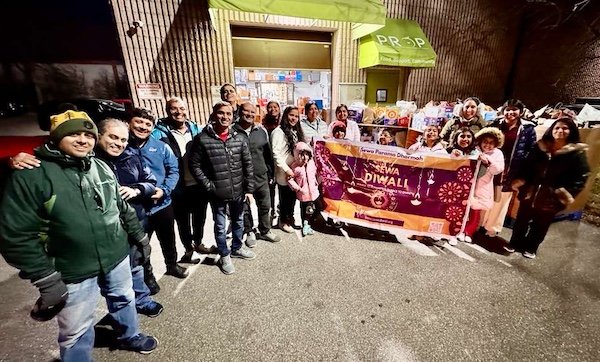
What makes Sewa Diwali especially compelling is its consistency. Now in its eighth consecutive year, the initiative has helped donate nearly four million pounds of food cumulatively, with participation growing annually. This is not a one-time gesture fueled by crisis or publicity. It is a sustained commitment, built quietly and patiently.


The spirit behind the effort is an ancient idea: “Vasudhaiva Kutumbakam”—the world is one family. In a pluralistic democracy, that idea resonates far beyond religious boundaries. It aligns seamlessly with America’s own civic tradition of volunteerism and mutual aid. The lesson of Sewa Diwali is both simple and urgent: celebrations mean more when they nourish others. Lighting a lamp is powerful. Feeding a family is transformative. Doing both—together—is how communities build lasting light.
Anil Kothari is an Oklahoma City-based mechanical engineer, yoga practitioner and teacher.