


Judge Indira Talwani Blocks Trump Administration’s Termination of Family Reunification Parole

- This pathway allows U.S. citizens and Green Card holders to sponsor spouses, children, parents, and siblings.
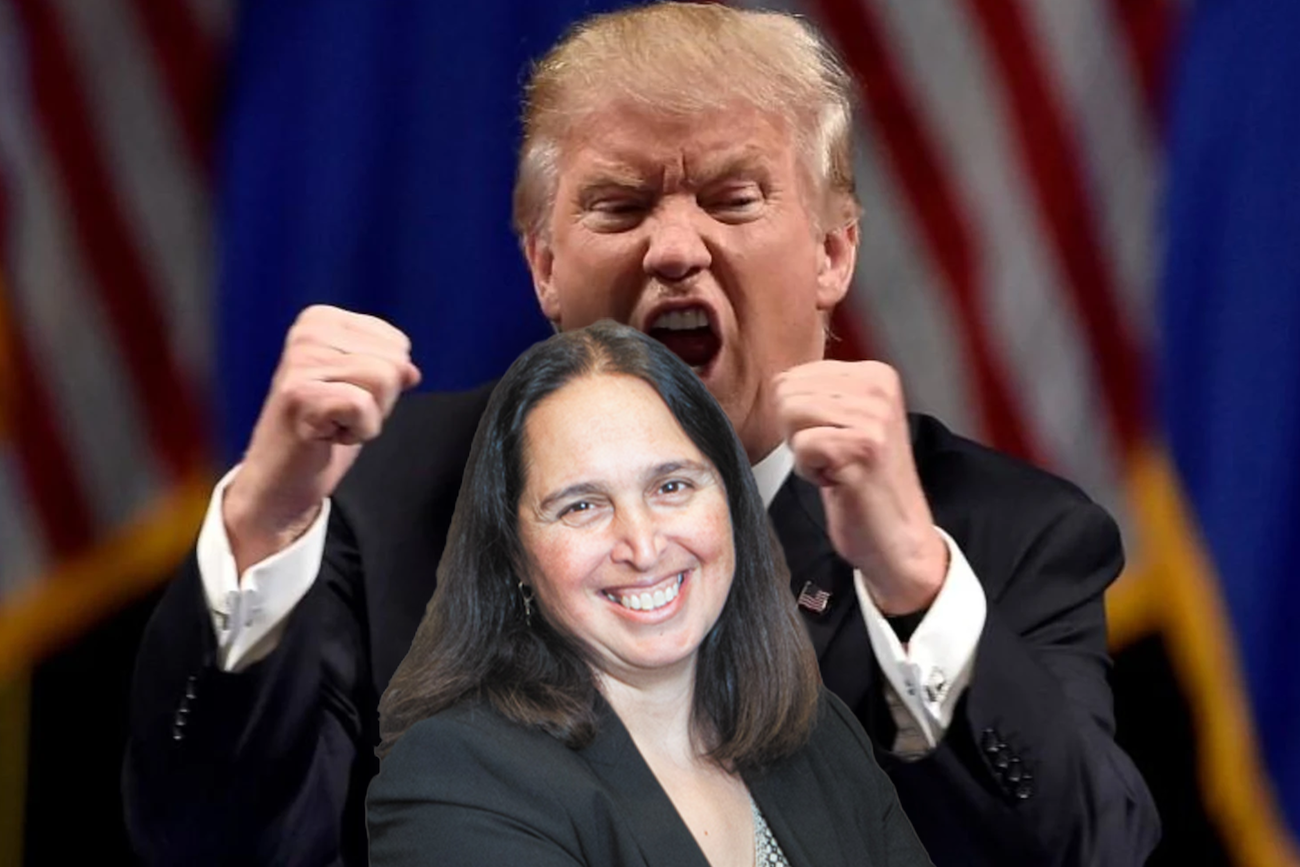

U.S. District Judge Indira Talwani issued a temporary restraining order that paused the Trump administration’s plan to strip legal status from approximately 10,000 to 12,000 immigrants enrolled in the Family Reunification Parole program. The order, issued on Saturday, prevents the scheduled January 14 expiration of these immigrants’ legal authorization.
The Legal Issue
The case centers on procedural due process. In her order, Talwani ruled that immigration officials failed to properly notify those who might lose their legal status, despite a requirement for direct notification. Publishing the decision in the Federal Register did not satisfy this requirement, according to the Politico report.
During Friday’s hearing, Talwani acknowledged that the Trump administration had the right to end the program, but expressed concerns about the methods used. At the hearing, Talwani stated: “I understand why plaintiffs feel like they came here and made all these plans and were going to be here for a very long time. I have a group of people who are trying to follow the law. I am saying to you that, we as Americans, the United States needs to.”
Family Reunification: Critical for Indian Immigrants
Family reunification has historically been a key principle underlying U.S. immigration policy since the late 1800s,, according to a Congressional Research Service report. The Immigration and Nationality Act of 1965 granted 74 percent of all permanent visas to family reunification categories, as noted by the Center for American Progress.
For Indian immigrants specifically, family reunification holds particular significance. The family-based immigration pathway allows U.S. citizens and Green Card holders to sponsor spouses, children, parents, and siblings, offering a legal route for loved ones to live together in America. However, Family Preference visas face long wait times due to strict quotas and the 7% per-country limit, which particularly impacts Indian applicants.
Chain migration, enabled by the 1965 Immigration and Nationality Act, significantly shaped family dynamics for Indian Americans. Indian American residents had the option to sponsor family members such as parents, elderly relatives, and siblings to join them in the U.S., creating extended networks of relatives. This pattern reflects deep cultural values: in India, extended families living together was common, though the nuclear family remains the predominant household structure in the United States.
Before joining the federal bench, Talwani clerked for Judge Stanley Alexander Weigel and practiced civil litigation at firms in San Francisco and Boston, focusing on employment law and civil rights.
Family reunification accounts for approximately two-thirds of total permanent immigration to the U.S. every year, making it the largest immigration pathway, according to the Migration Policy Institute.
Supreme Court Prospects: A Concerning Pattern
The outlook for this case at the Supreme Court appears challenging based on recent precedent. In May 2025, the Supreme Court granted an emergency request from the Trump administration to lift Judge Talwani’s order blocking the termination of parole status for about 500,000 immigrants from Cuba, Haiti, Nicaragua and Venezuela. The court’s 7-2 decision did not provide an explanation, with Justices Ketanji Brown Jackson and Sonia Sotomayor dissenting.
In that case, Justice Jackson emphasized that the Trump administration failed to show it would be permanently injured if it cannot end the grant of parole immediately, rather than waiting for the courts to resolve the legal questions, according to SCOTUSblog. She wrote that the court should have allowed federal courts to resolve this “highly consequential legal issue” before permitting the administration to act.
The Supreme Court has sided with Trump’s immigration enforcement efforts in multiple recent emergency applications, suggesting a receptive stance toward executive branch immigration policy decisions. Given this pattern, if the current family reunification parole case reaches the Supreme Court, the administration may find a favorable reception for its position that categorical program terminations fall within executive discretion.


However, there are potential distinctions. Attorney Karen Tumlin of the Justice Action Center, who represents plaintiffs in this case, emphasized that “we are talking about people who have done everything the U.S. government has asked of them and who, in many cases, are mere weeks or months from finally receiving their green cards.
The central legal questions—whether the administration must provide individualized notice and whether categorical termination of parole programs requires case-by-case review—present procedural due process issues that could resonate differently than the substantive immigration policy questions the Court has recently addressed. Yet the current Supreme Court’s demonstrated deference to executive immigration enforcement suggests significant headwinds for those seeking to preserve the Family Reunification Parole program.
The Judge Behind the Ruling
Indira Talwani, born in 1960 in Englewood, New Jersey, is the daughter of Manik Talwani, a geophysicist from Punjab, India. Her background reflects the kind of immigrant experience central to the case before her. She graduated from Phillips Exeter Academy, received her bachelor’s degree cum laude from Radcliffe College in 1982, and earned her law degree from UC Berkeley School of Law in 1988, graduating Order of the Coif.
Before joining the federal bench, Talwani clerked for Judge Stanley Alexander Weigel and practiced civil litigation at firms in San Francisco and Boston, focusing on employment law and civil rights, according to the Federal Judicial Center. She developed particular expertise in labor disputes, whistleblower protections, and class actions.
President Barack Obama nominated Talwani to the U.S. District Court for the District of Massachusetts in September 2013, and the Senate confirmed her unanimously, 94-0, in May 2014 Wikipedia. She became the first person of Asian descent to serve as a federal judge in Massachusetts Mabumbe.
This story was aggregated by AI from several news reports and edited by American Kahani’s News Desk.