


Deconstructing Kash Patel: Inside the FBI Director’s Tumultuous First Year as America’s Most Powerful Indian American

- Patel's ethnic identity has become a flashpoint from multiple directions. He faces racist attacks from segments of the MAGA base he serves, and criticism from much of the Indian American community for his political positions.
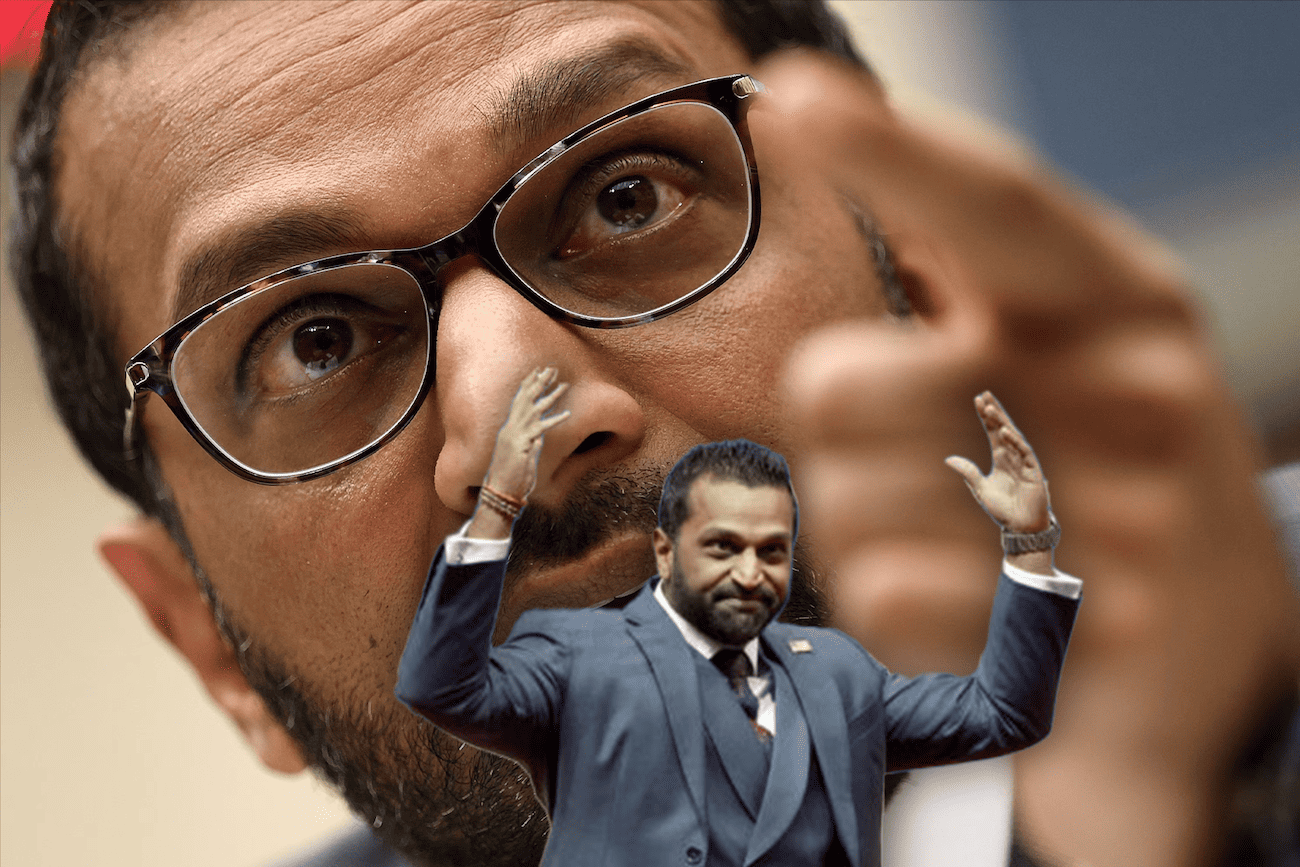

When Kashyap “Kash” Patel took the oath of office on the Bhagavad Gita on February 21, 2025, becoming the first Indian American FBI Director, he proclaimed that the American Dream was alive. “Anyone that thinks the American Dream is dead, just look right here. You’re talking to a first-generation Indian kid who’s about to lead the law enforcement community, the greatest nation on God’s green earth,” he declared.
One year later, that dream has curdled into what may be the most consequential failure of Indian American leadership in U.S. history—not because Patel is Indian American, but because his performance as the most powerful person of South Asian descent ever to serve in American government has been, according to a damning New York Times investigation, a disaster for both the FBI and the nation’s security.
The Most Powerful Indian American in History
Patel’s position represents an unprecedented milestone for the Indian American community. Patel is the first person of South Asian descent to serve as FBI director. The FBI directorship is arguably the most powerful law enforcement position in the United States, with jurisdiction over more than 200 categories of federal law and command over 35,000 employees across 56 field offices.
His ascent surpasses even that of Vice President Kamala Harris in terms of direct operational power. While Harris holds a higher constitutional office, the FBI Director wields immediate, day-to-day control over the nation’s premier law enforcement and domestic intelligence agency.
A Fraught Relationship With the Indian American Community
Despite this historic achievement, Patel’s relationship with the Indian American community has been complicated and often contentious. In a revealing 2022 interview with Indo-Asian News Service, Patel expressed bitterness about the community’s response to his political career.
According to American Kahani, he feels “forsaken and vilified by Indian Americans,” calling it “the height of hypocrisy” that they won’t support people like him —”first generation Indian Americans who have made it to somewhat the highest levels of the United States government — just because they disagree with you politically.”
This tension reflects a broader split within the Indian American community, which leans overwhelmingly Democratic. While some conservative Indian Americans celebrated Patel’s appointment as a breakthrough for representation, many progressive Indian Americans have been deeply critical of his partisan loyalty to Trump and his role in promoting conspiracy theories.
Backlash From the MAGA Base: The Diwali Incident
Adding another layer of complexity to Patel’s position, he has faced racist attacks from segments of the very political movement he serves. In October 2025, when Patel posted a simple Diwali greeting on X, the response from MAGA supporters was vitriolic.
Podcaster Joel Webbon wrote, “Go back home and worship your sand demons. Get out of my country.” Chris Nelson, a Christian from Florida, added, “What the hell is this? This is AMERICA. Not India.” X user Scott Hambrick chimed in with a one-word response: “Deport.”
Similar hostility followed Diwali greetings from other prominent Indian American Republicans including Nikki Haley, Vivek Ramaswamy, and Assistant Attorney General for Civil Rights Harmeet Dhillon.
According to CNN’s analysis, at this year’s White House Diwali celebration, Patel used a conspicuous turn of phrase — one seemingly meant to distinguish himself from another kind of immigrant. “It’s an honor to be a first-generation Indian American whose parents lawfully immigrated to this country,” he said. To some Trump supporters responding online to his remarks, it didn’t seem to matter that Patel’s parents entered the U.S. legally or that he was a dutiful member of the Trump administration. “Go celebrate your foreign gods back home in India. America is a Christian nation,” one user wrote. Said another, “Hard to think of something less American. This is an abomination.”
The New York Times Bombshell
Against this complex backdrop of historic achievement, community division, and racist backlash came the devastating New York Times investigation published Thursday. Based on interviews with 45 current and former FBI employees, the report paints a picture of an agency in crisis—led by a director more focused on social media optics than national security, pursuing vendettas on behalf of President Trump, and making America less safe in the process.
According to KQED, which interviewed Times reporter Emily Bazelon about her investigation, the period has been “marred by vendettas, mismanagement and meltdowns,” with officials describing “a traditionally independent agency now captured and weaponized by the White House.”
“I Don’t Read”
Perhaps the most striking revelation from the Times investigation concerns Patel’s fundamental approach to the job. According to The New Republic’s coverage of the report, Patel made his feelings known on the written word during his first director’s call with the heads of the bureau’s field offices. On that call, according to one field office leader, Patel “had no agenda, no thoughts, no strategy or leadership philosophy or priorities to share.”
“I specifically remember him saying at one point, ‘I don’t read.’ He explained he didn’t read briefing materials,” the leader said, according to The New Republic.
Social Media Over Security
The Times investigation revealed that Patel’s obsession with social media and public image has repeatedly interfered with the bureau’s core mission. The most egregious example came in the immediate aftermath of the September 10, 2025, assassination of conservative activist Charlie Kirk at Utah Valley University.
According to a senior FBI official quoted in the Times, the crisis response call became “surreal” as Patel prioritized Twitter strategy over the investigation:
“Whenever there’s a critical incident, one of the first things that happens is a conference call with everybody — all the executives, most of the field offices dial in. The director rarely speaks, because someone with situational awareness is leading the call. They’ll say: Here’s what happened. Here’s what we know. Here’s what we need. But we get on, and it’s just Kash berating the special agent in charge in Salt Lake. He’s super emotional. And then it turns surreal. He and [then-Deputy Director Dan] Bongino start talking about their Twitter strategy. And Kash is like: I’m gonna tweet this. Salt Lake, you tweet that. Dan, you come in with this. Then I’ll come back with this. They’re literally scripting out their social media, not talking about how we’re going to respond or resources or the situation.”
The official continued: “When I was an agent, I did hundreds of these cases. The initial information that comes in is always wrong. There’s too much coming in, and it takes time to vet. And it was obvious that Kash can’t understand that and doesn’t want to understand that. Everyone on the call is just like: This guy is completely out of control.”
The Times investigation revealed that Patel’s obsession with social media and public image has repeatedly interfered with the bureau’s core mission.
On another call, according to the Times, Patel stated: “When a crisis happens, the only thing you need to do is call me. The most important thing in any crisis is controlling the narrative.”
The FBI official responded internally: “No, no, no. We actually have to do some work here. We’re going to have to investigate, to solve this.”
International Incidents and “Crazy Requests”
Patel’s management style has also created diplomatic problems with America’s closest intelligence allies. According to The Daily Beast’s reporting on the Times investigation, Patel’s behavior at the May 2025 Five Eyes intelligence conference in Britain—an annual gathering of security officials from the U.S., U.K., Canada, Australia, and New Zealand—left allies frustrated and bewildered.
A senior FBI executive told the Times: “In the lead-up to that, his detail starts making crazy requests, he’s got special requirements on everything, and the Brits are getting pissed. Before the conference, his staff says he’s unhappy because he doesn’t like meetings in office settings. What he wants is social events, he wants Premier soccer games. He wants to go jet skiing, he’d like a helicopter tour.”
The social media obsession created further problems. According to the executive, as reported by Raw Story: “On that trip, the heads of intelligence for the Five Eyes went to Windsor Castle and met with the king. There was a photo taken of all the Five Eyes people, some of whom are non-disclosed, meaning their affiliation with the British intelligence service isn’t public.”


The executive continued: “They prefaced it with, This isn’t to be shared. But Kash has decided he wants to post it on social media. They have people trying to negotiate with the Brits about whether that’s possible. They’re fighting with the director’s office, like: You cannot post this. Do not do that. And they’re arguing, He wants a picture out.”
Weaponizing the Bureau
Beyond management incompetence, the Times investigation documented how Patel has systematically weaponized the FBI on behalf of President Trump. The Times report revealed that Patel has directed his agents to sift through sensitive material and case files in order to dig up dirt on Donald Trump’s enemies. The bureau has been hunting for negative information in order to discredit federal law enforcement officials who have investigated the president and his allies.
Mass Firings and Purges
The day after the Times published its comprehensive report, Patel launched a new round of firings targeting FBI officials connected to Trump investigations. MS NOW reports that the FBI has removed the special agent in charge in Atlanta, the acting assistant director of New York’s field office, and up to six agents in Miami who were involved in the bureau’s search of Trump’s Mar-a-Lago estate in 2022. Other agents who were involved in investigating Trump’s efforts to overturn the 2020 presidential election have also lost their jobs.
Firing employees en masse was previously unheard of at the FBI, which has a reputation for having nonpartisan career staffers, The New Republic noted.
The Indian American Community’s Reckoning
For the Indian American community, Patel’s troubled tenure raises profound questions about representation and responsibility. He is indisputably the most powerful Indian American in U.S. government history—and his performance in that role has been, according to the Times investigation and 45 current and former FBI employees, catastrophic.
This creates a complicated legacy. On one hand, Patel’s appointment represents a genuine breakthrough—the first time a person of South Asian descent has led America’s premier law enforcement agency. On the other hand, his tenure has been marked by what the Times characterizes as incompetence, vendettas, and the weaponization of law enforcement for political purposes. This raises the question: does bad representation serve the community, or harm it?
The community itself remains deeply divided. Conservative Indian Americans who supported Patel’s appointment have largely remained silent on the Times revelations, while progressive Indian Americans have pointed to the investigation as vindicating their concerns about his fitness for office.
What’s clear is that Patel’s identity as an Indian American has become a flashpoint from multiple directions. He faces racist attacks from segments of the MAGA base he serves, criticism from much of the Indian American community for his political positions, and now devastating assessments of his professional competence from the very institution he leads.
A Hindu Warrior or a Failed Leader?
According to Asian Voice, a few months ago, Patel shared a viral article on social media highlighting how his Hindu upbringing shaped his leadership style. Published by India Tribune under the title “FBI Director Kash Patel: A Hindu Warrior in Washington’s Political Battlefield,” the piece resonated strongly with Indian-American and pro-MAGA audiences.
Raised in a traditional Hindu household, Patel grew up immersed in its customs, festivals, and ethical teachings. He credits these values, dharma (righteous duty), karma (accountable action), and seva (selfless service), with shaping both his personal outlook and professional approach, according to the report.
Yet the Times investigation suggests a profound disconnect between these stated values and his actual performance. If dharma means righteous duty, how does that align with an FBI director who admits “I don’t read” briefing materials? If karma means accountable action, how does that square with using the bureau to pursue presidential vendettas? If seva means selfless service, how does that reconcile with prioritizing social media image over national security during a crisis?
This story was aggregated by AI from several news reports and edited by American Kahani’s News Desk.