


Asad Haider, Pakistani American Marxist Who Critiqued Identity Politics From the Left, Dies at 38

- Political theorist whose 2018 book "Mistaken Identity" challenged center-left orthodoxy dies in Toronto fall.
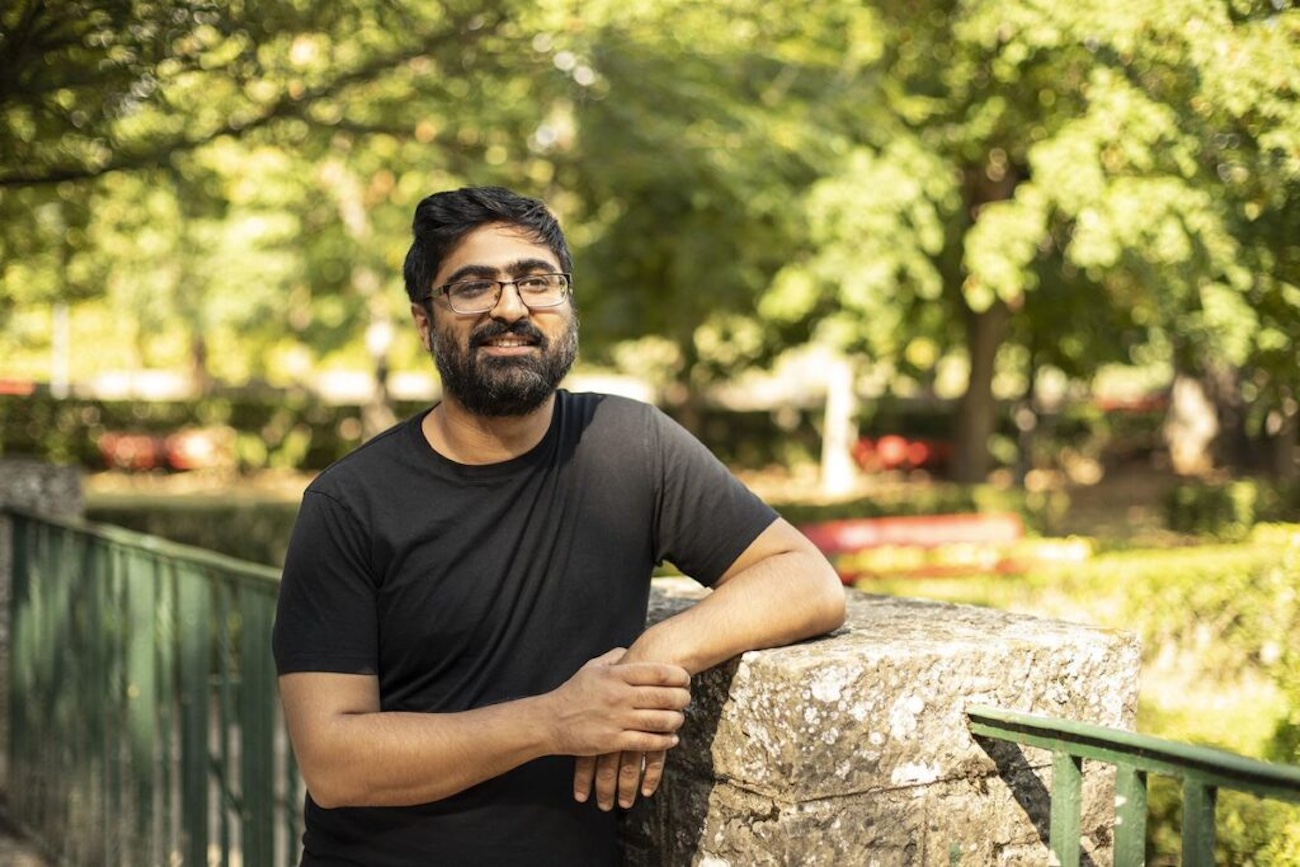

Asad Haider, a political theorist whose 2018 book Mistaken Identity: Race and Class in the Age of Trump critiqued identity politics from a far-left perspective—in contrast to the more familiar attacks voiced by many Republicans and commentators on Fox News—died on December 4, 2025, in Toronto. He was 38.
His death was caused by injuries resulting from a fall from an apartment building, Shuja Haider, his twin brother, told The New York Times, adding that the police had ruled out foul play.
Haider was an assistant professor of politics at York University in Toronto and the co-founder of Viewpoint Magazine, which declared its intention to “reinvent Marxism for our time.” He also contributed political essays to publications like Salon, The Baffler, and n+1.
His argument about the limits of identity politics—a paradigm that shaped the center-left Democratic Party of Barack Obama and Hillary Clinton—caught the attention of young activists with socialist views and was widely debated on the far left.
“One of the most brilliant Marxist theorists of his generation,” according to Historical Materialism journal, Haider managed to “leave a deep mark in contemporary debates” through “a creative combination of traditions, that ranged from Althusser and Badiou, to Tronti, to Stuart Hall and Gramsci.”
The Binational Childhood: Pennsylvania and Karachi
Haider was born on June 2, 1987, in State College, Pennsylvania, to Jawaid Haider, a professor of architecture at Penn State, and Talat Azhar, who later became the associate director of the university’s Hubert H. Humphrey Fellowship Program, according to The New York Times.
His parents had immigrated to Pennsylvania from Pakistan in the early 1980s, when Pakistan was under conservative military rule, following an era in which the country had seemed to be on the road to secular democracy, The Times reported.
Haider’s views about political identity derived from his background, according to The Times. Speaking Urdu at home and English at school, he would spend the academic year in bucolic Pennsylvania, but summers with his extended family in Karachi, an often violent city in Pakistan.
According to the family obituary published by StateCollege.com, Haider’s intellectual path started in childhood, “when his mother read to him and his brother, Shuja, who became his first interlocutor.”
The obituary noted that “having rejected conventional wisdom in all its forms, Asad did not perform particularly well in high school.” But his intellectual development continued through other channels—he became “a voracious reader and a stimulating conversationalist.”
According to the family obituary, “In his youth, Asad was a capable close-up magician, and while studying abroad in Paris as an undergraduate, he quickly became a seasoned French cook. In his adult life, he was an amateur powerlifter and a mixer of obscure tiki drinks, along with being an at first tentative but later wholehearted metalhead.”
Pakistani American intellectual life
Haider represented a particular strand of Pakistani American intellectual life: children of immigrants who came to the United States in the 1980s fleeing military dictatorship, who grew up navigating between American and Pakistani worlds, and who brought that hybrid perspective to their scholarship.
His summers in Karachi and academic years in Pennsylvania gave him firsthand experience of the global inequalities that Marxist theory seeks to explain. His ability to speak both Urdu and English, to move between bucolic State College and violent Karachi, shaped his understanding that political struggle must transcend national boundaries and identity categories to address systemic economic structures.
Haider represented a particular strand of Pakistani American intellectual life: children of immigrants who came to the United States in the 1980s fleeing military dictatorship, who grew up navigating between American and Pakistani worlds.
There’s a certain irony in the fact that Asad Haider, a Pakistani American Muslim scholar, became known primarily for his critique of identity politics. His own identity—shaped by immigration, bilingualism, cross-cultural experience, and religious background—could easily have been deployed in service of identity-based claims.
Instead, Haider used his platform to argue that focusing on identity obscures more fundamental economic structures. Yet his biography demonstrates that this critique came not from a position of privilege divorced from identity concerns, but from someone whose lived experience included navigating complex identity negotiations.
Perhaps that’s precisely why his critique had force—it came from someone who understood identity’s salience while arguing for a politics that transcended it.
Academic Trajectory
Haider received his bachelor’s degree from Cornell University in 2009. He studied in the History of Consciousness program at the University of California, Santa Cruz, and graduated with his Ph.D. in 2018.
According to York University’s YFile, “His doctoral dissertation examined social movements in France and Italy during the 1960s and 1970s, focusing on how Communist parties and extra-parliamentary movements responded to shifting social and political conditions.”
According to The New York Times, Haider went on to be a Mellon postdoctoral fellow in the Department of Philosophy at Penn State and then a visiting assistant professor of philosophy at the New School for Social Research in New York before joining York University’s faculty in 2021.
According to YFile, “His broader research considered how political movements generate new ideas and strategies rather than mirror existing social categories such as class or identity. He studied major revolutions and liberation struggles to explore whether political action can be understood without assuming it expresses a fixed social foundation.”
The Book That Defined His Intellectual Career
In 2018, Haider published Mistaken Identity: Race and Class in the Age of Trump with Verso Books. The book would become his defining work, sparking debate across the political left and earning praise from literary and philosophical luminaries.
According to YFile, “The book traced the genealogy of ‘identity politics’ and examined the theory and practice of mass organizations within the Black Freedom Movement.”
According to The New York Times, Haider defined identity politics as the view that belonging to an oppressed group by dint of one’s race or gender was the main determinant of one’s political interests. Conservative critics have denigrated the Democratic Party as a collection of special-interest groups focused on grievances about racism and sexism, separating and polarizing Americans.
In critiquing identity politics from the left, according to The Times, Haider did not minimize the effects of racism and sexism. But he argued that framework obscured a more fundamental injustice in American society: that of economic inequality.
He argued that what was needed was radical change—the end of capitalism—rather than the incremental change sought by groups that had suffered discrimination and simply wanted a seat at the table.
Identity politics “is not a politics that wants to change the social structure; it’s a politics which is about individual recognition,” Haider said in a 2019 interview, according to The Times.
For inspiration, according to The Times, Haider looked to earlier waves of radical politics, especially the Black Power movement of the 1960s. He wrote that Malcolm X and Huey P. Newton, a founder of the Black Panther Party, sought to overhaul all of society, especially the capitalist system, and saw the need to enlist a broad coalition, not just members of one racial group.
Critical Reception
According to YFile, the book was “widely reviewed and debated in outlets such as The Guardian and The New Statesman” and “was translated into Spanish, Portuguese and Korean.”
According to the family obituary, the book “was lauded by luminaries like the philosopher Judith Butler and the novelist Zadie Smith, who called it an ‘inspiration to a new generation of activists.'”
However, not all reviews were positive. According to The Times, Jacobin, a magazine of American socialism, wrote that Haider’s “political conclusions, however well intentioned, fail to impress.”
According to the family obituary, “More important than that, to Asad, was the way the book put him in dialogue with movements all over the world. In Brazil, for example, where social patterns around race take a different form than in the United States, readers nonetheless considered it a crucial intervention.”
According to the obituary, “Most meaningfully of all, Asad’s father, Jawaid Haider, who was battling cancer while the book was being written, had a chance to read it before he died late in the year of its publication.”
According to The New York Times, Viewpoint Magazine, which Haider founded with a colleague to analyze class struggles in contemporary social movements, published its first issue, titled “Occupy Everything,” in 2011, amid the start of the Occupy Wall Street movement.
According to Historical Materialism, Haider, “along with Salar Mohandesi, [was] the driving force behind Viewpoint—one of the most exciting and energetic online projects in the anglophone Marxist universe.”
The journal declared its ambition, according to The Times, to “reinvent Marxism for our time.”
According to YFile, “Haider contributed to scholarly journals including History of the Present, Radical Philosophy and Comparative Literature and Culture, with additional work forthcoming in Décalages, Foucault Studies, South Atlantic Quarterly and Polity.”
“‘All our biographies are unfinished,’ Asad wrote in a 2021 essay on Stuart Hall, ‘and will remain so long after we are gone.’ Because of the ripple effect he created—through his brilliant writing, through his impassioned teaching, and through his loyalty to his friends and family—Asad’s biography is still being written.”
Beyond Marxism
According to The New York Times, for many years, Haider considered himself a Marxist, but eventually came to resist the label, his brother said.
“The important things for him,” Shuja Haider told The Times, “were the notions of egalitarianism and emancipation.”


This philosophical evolution reflected Haider’s commitment to following ideas wherever they led, rather than adhering rigidly to any particular ideological framework.
York University’s YFile described Haider as “a York faculty member and political theorist whose work on Marxism, social movements and anti-racist thought shaped global academic discourse.”
According to YFile, “Those who knew him personally recall his generosity with ideas, his willingness to engage thoughtfully with others, and his deep curiosity about the world. He approached dialogue not as a contest to be won, but as an opportunity to learn and refine understanding.”
Historical Materialism wrote: “For us in Historical Materialism, he was an invaluable comrade and a friend.”
The journal continued: “By means of a creative combination of traditions…an insistence on an intransigent communist perspective for the social and political dynamics that emerged after 2011, a critical Marxist perspective on questions of identity and race, and constant engagement with strategic questions, he attempted to think through what it means for theory to be politically pertinent.”
The Philosopher as Materialist
The family obituary framed Haider’s life through Louis Althusser’s 1986 essay “Portrait of a Materialist Philosopher.”
“‘The man’s age has no importance,’ the French Marxist theorist Louis Althusser wrote,” the obituary began. “‘He could be very old or very young. The important thing is that he doesn’t know where he is and wants to go somewhere.'”
Quoting Althusser again, the obituary stated: “The philosopher ‘always catches a moving train, like in American Westerns,’ Althusser said, ‘without knowing where it comes from (origin) nor where it goes (end).'”
“Asad died unexpectedly on December 4th,” the obituary concluded, “after a lifelong pursuit of truth.”
According to The New York Times, besides his brother, who is an editor at The Nation magazine, Haider is survived by his mother. His father died in 2018.
According to the family obituary, “Asad will be laid to rest beside his first and most important mentor, his father Jawaid Haider.”
The burial took place on December 20, 2025, at Spring Creek Cemetery, 228 Country Club Road in State College, Pennsylvania, at 11:30 a.m., according to the obituary. It was followed by a reception in the Senate Suite at the Penn Stater Hotel and Conference Center at 12:30 p.m.
The family obituary included a poignant detail about Haider’s final months. “After the death of Brian Wilson in June,” it stated, “he developed a sudden interest in the late music of the Beach Boys, when the subject matter shifted from cars and girls to Wilson’s interior life.”
This turn toward introspective art in his final months now carries additional meaning, suggesting perhaps a contemplative period in Haider’s own interior life.
The Legacy
York University’s assessment captured the essence of Haider’s project: “His broader research considered how political movements generate new ideas and strategies rather than mirror existing social categories such as class or identity.”
This was Haider’s fundamental insight—that revolutionary politics doesn’t emerge automatically from social position, but requires active theoretical and strategic work to build coalitions capable of transforming society.
As Historical Materialism wrote, Haider demonstrated “constant engagement with strategic questions” and “attempted to think through what it means for theory to be politically pertinent.”
Mistaken Identity argued that the Black Power movement succeeded not by embracing narrow identity politics but by articulating a vision of total social transformation that could unite diverse groups around shared material interests and a common revolutionary project.
For Haider, the question was always: How do we build movements capable of actually changing the world, rather than simply seeking recognition within existing structures?
This story was aggregated by AI from several news reports and edited by American Kahani’s News Desk.