



An Indian American Psychologist’s Testimony About ‘Islamic Men’ Helped Convict a Pakistani American—But Was She Objective?

- Defense attorneys now argue that Prof. Chitra Raghavan’s testimony in the sexual assault trial of Meftaah Uddin relied on "sweeping generalizations about Muslim culture.”
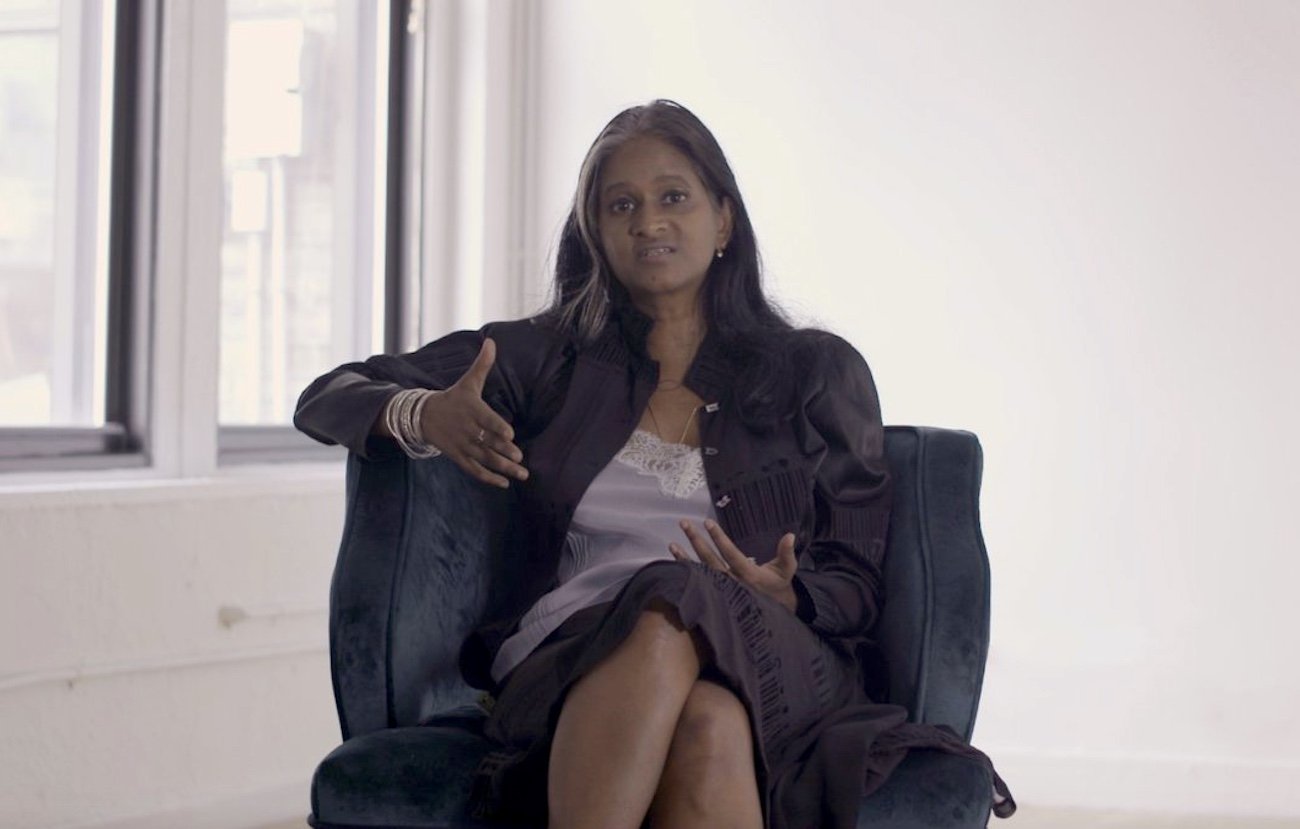

When Dr. Chitra Raghavan took the stand in a Brooklyn sexual assault trial in 2022, she brought impeccable credentials: a tenured professor of psychology at John Jay College of Criminal Justice, over 50 published scientific articles, two books on domestic violence and women’s rights in Muslim communities, and experience testifying as an expert witness in 20 previous cases on coercive control and intimate partner violence.
But defense attorneys now argue that Raghavan’s testimony in the trial of Meftaah Uddin—a 33-year-old Pakistani American man raised in Brooklyn—crossed a critical line, relying on “sweeping generalizations about Muslim culture” that painted their client as abusive by nature and prejudiced the jury. The case, now before New York State’s highest court, raises profound questions about the boundaries of expert testimony on culture and religion in criminal trials—and whether a witness’s own background matters when testifying about defendants from different faiths.
According to The Washington Post, which first reported details of the appeal, Raghavan testified that Muslim men entering arranged marriages seek virgin brides from their native countries so they “will be more submissive,” and that Islamic men “across religion” tend to ignore rules giving women the right to reject a husband’s sexual advances.
After hearing that testimony, a Brooklyn jury found Uddin guilty of repeated sexual assaults against his wife in his family’s Brooklyn apartment. He was sentenced to seven years in prison in late 2022.
Now his attorneys have appealed to the New York State Court of Appeals, arguing their client was denied a fair trial. If the court takes up the matter—it accepts only a fraction of cases presented to it—the case could set new rules for expert testimony about immigrant and religious cultures, a little-examined but sometimes critical aspect of the criminal justice system.
An Authority on Coercive Control
Dr. Raghavan’s qualifications are substantial and well-documented. According to her John Jay College faculty profile, she obtained her doctorate in Clinical and Community Psychology at the University of Illinois at Urbana-Champaign and completed postdoctoral training at Yale University School of Medicine. She has been cited 3,668 times in academic literature, according to Google Scholar, and serves as Director of the Forensic Mental Health Counseling Program at John Jay.
According to her professional website and John Jay profile, Raghavan specializes in assessment of sex trafficking, domestic violence, sexual harassment, rape, sexual assault, and other abusive interactions, along with their traumatic outcomes including PTSD, dissociative disorders, and trauma bonding. She conducts forensic evaluations and serves as a court-qualified expert witness in civil, criminal, family, and parole settings.
In 2014, Raghavan was named one of “New York’s New Abolitionists” by the New York State Anti-Trafficking Coalition for her work to promote human rights for women and fight human trafficking, according to her professional biography.
Significantly, Raghavan co-edited a 2012 book titled “Self-Determination and Women’s Rights in the Muslim World,” published by Brandeis University Press as part of its series on Gender, Culture, Religion, and Law. Her academic work specifically addresses issues facing Muslim women, giving her scholarly grounding in the subject matter.
According to her John Jay profile, “A second area of interest is applying Eastern Psychological principles to forensic psychology.”
What Raghavan Said in Court
At Uddin’s trial, New York trial court Judge Niki Warin allowed Raghavan to discuss the impact of sexual abuse in the Islamic faith, but with limits. According to The Washington Post, Judge Warin stated at the outset: “I don’t think it’s appropriate for her to make broad statements about all Muslim people.”
However, according to court records cited by The Post, Raghavan testified that men in arranged South Asian unions “sometimes want, particularly if they know they want to be controlling,” to find a wife in their native countries, citing an alleged cultural belief “that if a woman comes from their so-called mother country, she will be easier to control, ultimately, because she will be more submissive.”
The Post reported that Raghavan also testified that Islamic men “across religion” tend to ignore rules giving women the right to reject a husband’s sexual advances.
According to The Post, about two-thirds of Raghavan’s direct examination addressed general concepts such as battered women’s syndrome and coercive-control tactics such as surveillance, intimidation, and isolation. A smaller portion was devoted to sexual and domestic abuse issues in South Asian and Muslim communities.
The Post noted that Raghavan acknowledged at trial that she had not studied Pakistani culture specifically and that there are regional differences within Islam.
Stereotypes, Not Science
Uddin’s attorneys, Lauren Di Chiara and Robert Fantone, argue that Raghavan’s testimony went beyond appropriate boundaries and could have prejudiced the jury.
Di Chiara, a former prosecutor who handled sex-trafficking cases, told The Post that Raghavan’s testimony disparaged Muslim men and was not “supported anywhere in the record by science research or studies.”
Other cultural stereotypes introduced at trial would have been seen as clearly out of bounds, Di Chiara argued. According to The Post, she stated: “If an expert were asked about the state of an Irish man when they come home from work, and their answer was ‘six Guinnesses deep,’ that would have been inappropriate for obvious reasons.”
Di Chiara told The Post that Raghavan “is exceptional in her field but was misguided by the prosecutor,” adding: “She was asked things I don’t think she should have been answering.” Notably, Di Chiara said she had used Raghavan as a witness in one of her own cases when she was an assistant district attorney.
Fantone told The Post that the idea that women are manipulated “across religion,” as Raghavan testified, is particularly harmful. “I don’t think you can get any broader than that,” he said. “She’s essentially saying Islam itself is part of an abuse dynamic.”
An Arranged Marriage That Turned Violent
According to The Washington Post, Uddin and his wife (whose name The Post does not use because she is considered a victim of sexual violence) were married in Pakistan after a match made by their two families. About two years after the wedding, in late November 2020, the wife, who was in her 20s and had completed school in Pakistan, moved to the United States and joined Uddin’s parents and sisters in the family apartment. He was arrested about six months after she moved in.
At trial, she testified that she was not allowed to leave the house and could not access her phone or the internet, according to The Post. She described having some interaction with Uddin during the two years they lived apart but said she had spent little time with him before she moved in.
Defense attorney said Raghavan “is exceptional in her field but was misguided by the prosecutor,” adding: “She was asked things I don’t think she should have been answering.”
The Post reported that the wife told jurors her husband was hot-tempered and violent, with testimony including accounts of forced sexual encounters.
At the time of his arrest, according to The Post, Uddin, who has a degree in psychology, was working as an Uber driver and trying to set up a wholesale business.
In a phone interview with The Post from the Fishkill Correctional Facility, Uddin said he was pressured to get married by his family. He denied his spouse’s version of events and said she was unhappy in New York and displeased with his absences while he worked long hours.
“The Expert Witness Is Saying That All Muslim Men Are Savages”
Speaking to The Washington Post from prison, Uddin argued that the expert’s testimony played on biases the jury might have already had. According to The Post, he stated: “Because the jury looks at a Muslim man and thinks 9/11,” noting criticisms of New York Mayor Zohran Mamdani, the city’s first Muslim mayor.
“Basically, the expert witness is saying that all Muslim men are savages, and that is not a justifiable opinion to have for anybody,” Uddin told The Post.
The Risk of Cultural Prejudice
Multiple legal experts expressed concerns to The Washington Post about the potential for prejudice in Raghavan’s testimony.
Mark Zauderer, a New York trial and appellate lawyer, told The Post there is a risk of significant prejudice if a witness suggested that Uddin’s “alleged violent behavior was the product of his religion or culture.”
“You’re planting in the mind of the jury that this is what Muslim men do—they abuse women, they rape women, and it’s part of their culture,” Zauderer told The Post.
New York Law School professor Rebecca Roiphe, a former prosecutor, told The Post that expert testimony had the potential to put Uddin’s character on trial rather than his alleged conduct.
“Specific culture and ethnicity inferences made not just about the victim’s conduct but about the defendant’s—that is heading into much more problematic territory,” Roiphe told The Post. It raises the risk that “some juror is going to conclude or even subconsciously think that this defendant is more likely to have done this because other people in that ethnicity act in a particular way.”
Expert Testimony in Sexual Assault Cases
According to The Washington Post, experts often testify in sexual assault and domestic violence cases. They explain why victims might delay reporting abuse, why signs of trauma are not always evident, and why victims stay with abusers. The testimony is widely allowed in courts to aid juries.
Defense lawyers routinely seek to exclude or limit such testimony, The Post reported. They have accused prosecutors of using experts to rationalize inconsistencies in victim accounts and have argued the theories experts present are too broad.
The Post noted that if the New York State Court of Appeals takes up Uddin’s case, it could set new rules for expert testimony about immigrant and religious cultures—a little-examined but sometimes critical aspect of the criminal justice system.
No Trial Objection
According to The Post, Uddin faces additional hurdles in appealing his case because his former attorney did not raise objections to Raghavan’s testimony during the trial, which is generally necessary to preserve an issue for appellate review.
In October 2025, according to The Post, an intermediate appellate court declined to consider Uddin’s argument that his trial lawyer failed to adequately represent his interests by not objecting during Raghavan’s testimony and by not raising other key challenges, saying it was not the right venue.
The appeals panel did not issue findings on Raghavan’s individual comments but upheld the verdict and said the expert was properly allowed to testify, according to The Post. The court stated that Raghavan “demonstrated through her foundational testimony that she possessed the skill, training, knowledge, and experience necessary to proffer an opinion.”
According to The Washington Post, Brooklyn prosecutors deny the defense assertions and say the case against Uddin was extremely serious.
“We will continue to stand with the survivor, who endured a pattern of disturbing domestic and sexual violence, and will defend this conviction through any remaining appeal,” a spokesman for Brooklyn District Attorney Eric Gonzalez told The Post.
In a court filing with the Court of Appeals, according to The Post, Gonzalez’s office said there is no basis for a review on any issue raised by Uddin.
Does the Expert’s Background Matter?
Neither The Washington Post article nor court documents appear to address a question that hovers over the case: whether Dr. Raghavan’s own cultural or religious background is relevant to evaluating claims of bias in her testimony about Muslim defendants.
The surname “Raghavan” is a South Indian name deriving from Sanskrit, meaning “derived from Raghu” or “descendant of Raghu”—an epithet of the Hindu god Rama. According to naming databases, people with the surname Raghavan are predominantly Hindu.
However, no verified sources confirm Raghavan’s personal religious beliefs or practices, and her extensive scholarly work on Muslim women’s rights and her co-editing of “Self-Determination and Women’s Rights in the Muslim World” suggests deep engagement with and advocacy for Muslim communities.
The question of whether a Hindu professor can be objective about a Muslim defendant is itself problematic—it assumes religious identity necessarily creates bias, which would disqualify experts from testifying about any defendants outside their own faith communities. It could also perpetuate stereotypes about Hindu-Muslim tensions.
More relevant may be whether any expert—regardless of background—should be permitted to make broad generalizations about how people of a particular faith behave in intimate relationships, or whether such testimony inevitably crosses into prejudicial stereotyping that violates a defendant’s right to a fair trial.
When reached by email by The Washington Post, Raghavan declined to discuss the matter. According to The Post, she said she does not discuss work she has done for her forensic or clinical clients.
Justice Versus Stereotype
The Meftaah Uddin case presents a troubling dilemma. On one hand, his wife’s testimony described serious allegations of sexual violence and control that, if true, represent exactly the kind of coercive dynamics that expert testimony is meant to help jurors understand. Dr. Raghavan’s expertise in coercive control and trauma bonding is genuine and substantial.
On the other hand, the defense’s “Irish man and six Guinnesses” analogy highlights how quickly cultural generalizations can become offensive stereotypes. Would a court allow an expert to testify that Italian American men are more likely to be controlling because of cultural beliefs about male honor? That Jewish American men treat wives differently based on religious law? That African American men exhibit certain behaviors in relationships based on cultural patterns?
The answer to all those hypotheticals is almost certainly no—such testimony would be immediately recognized as prejudicial stereotyping. The question, then, is whether testimony about “Islamic men” deserves different treatment, and if not, whether Uddin received a fair trial.
As New York grapples with these questions, one thing is clear: the intersection of cultural expertise and criminal justice requires careful navigation to ensure that legitimate scholarship about community dynamics doesn’t become a weapon that turns a defendant’s identity into evidence of guilt.
Top photo source X. This story was aggregated by AI from several news reports and edited by American Kahani’s News Desk.