


A Nation’s Anxieties Find a Zip Code: How a Texas Suburb Became Ground Zero for America’s Anti-Indian Backlash

- Indian Americans in Texas are not absorbing the hostility passively. Community legal organizations published guidance documents advising families on their rights.
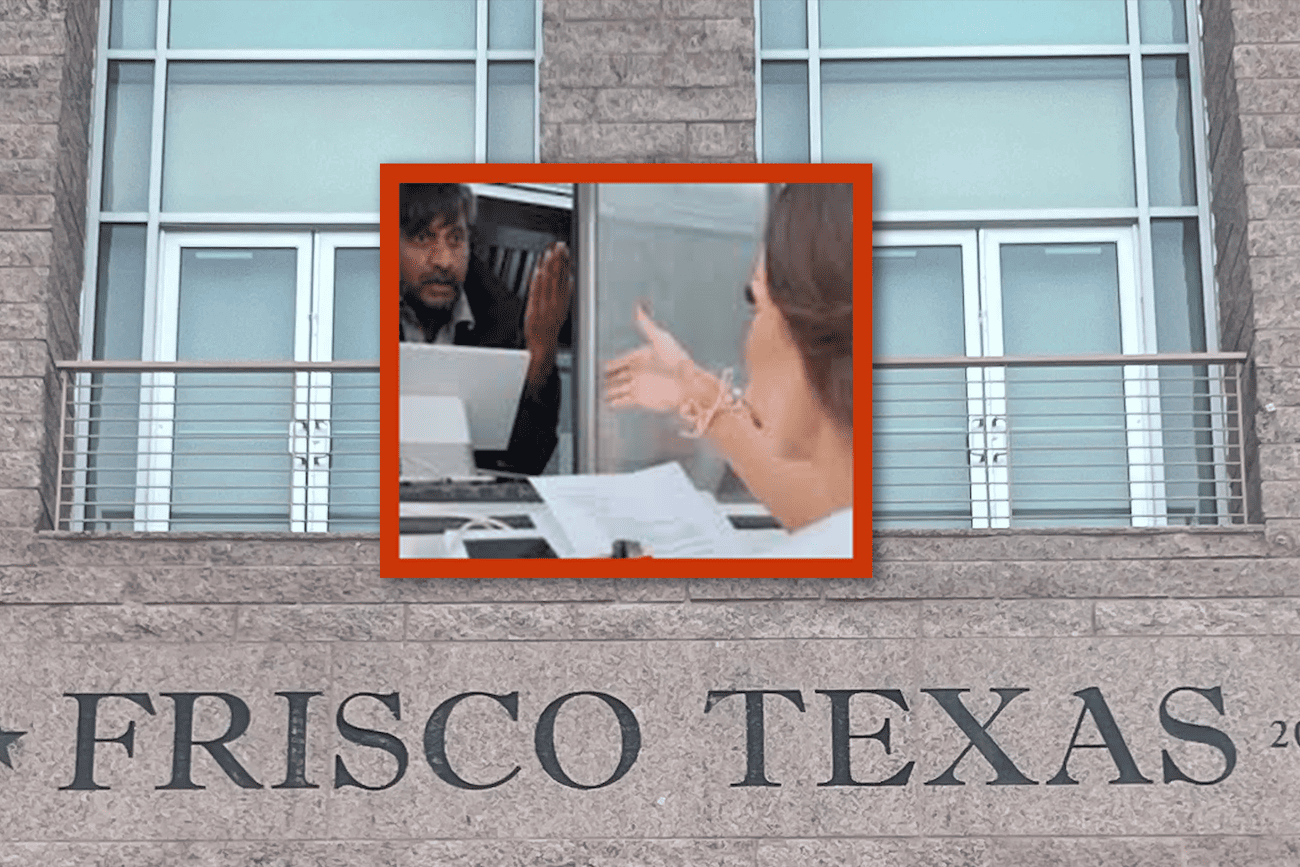

On the evening of February 3, 2026, the municipal chambers of Frisco, Texas filled beyond capacity. People had traveled from across the Dallas-Fort Worth metroplex — not for a local budget dispute or a zoning vote, but in response to a viral social media post calling for residents to confront what one online activist had branded an “Indian takeover” of the city. What unfolded would reverberate far beyond a single suburb.
Frisco’s transformation had been decades in the making. Once a quiet farming community, it had grown into one of the fastest-expanding cities in the United States, and its demographics had shifted dramatically along the way. According to CBS News Texas, roughly a third of the city’s 230,000-plus residents are now of Asian descent, with Indian Americans representing a significant share of that population — drawn largely by a booming technology sector and highly regarded public schools.
That visibility, it turned out, had made the community a target.
The Scale of the Online Campaign
The social media campaigns against Indian immigrants did not spring up spontaneously. They grew steadily, tracking political developments around immigration, and became measurably more intense after the 2024 election cycle.
Research by the Center for the Study of Organized Hate found that over a roughly ten-week span in the summer of 2025, several hundred hateful posts targeting Indians on X accumulated nearly 281 million views — with the vast majority focused on immigration grievances, framing Indian workers as job thieves and calling for their mass deportation, as reported by the Financial Express.
By year’s end, the scope had widened considerably. A report by the Network Contagion Research Institute, cited in Business Standard, documented more than 24,000 anti-Indian posts on X across all of 2025, generating over 300 million total views. Weekly anti-Indian content on the platform tripled compared to prior years. The escalation was not gradual — it spiked in direct response to specific immigration policy announcements, including new H-1B fee proposals and visa restriction measures.
The language also grew uglier over time. Explicit ethnic slurs spread in early 2025, followed by mid-year conspiracy narratives casting Indians as demographic “replacers” or cultural “invaders,” according to the same Business Standard analysis.
Separately, Moonshot — an organization that monitors online extremism — identified more than 44,000 anti-South Asian slurs in extremist online spaces during just two months of 2025, as reported by Newsweek. Stop AAPI Hate documented a rise of more than 115 percent in anti-Indian slurs tied to violent rhetoric between 2023 and late 2025, according to coverage by m9.news.
The Frisco Meeting: Grievance Goes Mainstream
The February city council meeting crystallized an online movement into a public spectacle. Marc Palasciano, a self-described activist and former T-Mobile employee from neighboring Richardson, had been posting about an “Indian takeover” of Frisco for weeks before the meeting, according to the Dallas Morning News. He arrived at city hall alleging, without evidence, connections between H-1B visa programs, political campaign donors, and local real estate interests.
Reporting by the Dallas Observer noted that the majority of speakers who showed up to criticize Frisco’s Indian population were not actually residents of the city — a detail that underscored how the evening had become a rallying point for broader anti-immigration sentiment across the metroplex rather than a genuine neighborhood concern.
City officials pushed back clearly. Frisco’s Mayor Jeff Cheney described the crowd as largely made up of outside agitators, and a city attorney clarified that Frisco has no role in administering or enforcing federal visa programs, as reported by CBS News Texas. Councilman Burt Thakur — the city’s first Indian-American council member — noted that Indian immigrants had accounted for a portion of the city’s growth over two decades, but that the city’s expansion had been broad and multifaceted.
Among those who defended the community was Shanthan Toodi, an Indian-American combat veteran who had served in Afghanistan and Iraq. According to the Dallas Morning News, Toodi said it was painful to have to justify his right to live in the city he called home, and while he supported accountability for genuine visa fraud, he rejected the framing of an “Indian takeover” as divisive and false.
Dr. Bidisha Rudra, who had been the victim of a racially motivated assault at a Plano restaurant in 2022, told CBS News Texas that the current rhetoric reopened wounds that had not fully healed. “The trauma doesn’t leave your body,” she said — one of the few direct quotes worth preserving for its personal power.
The Housing Accusations: Viral Claims, Thin Evidence
In the weeks following the council meeting, the campaign shifted to a new arena: housing. Conservative influencer Kaylee Campbell amplified a video clip from the Frisco meeting in which a speaker — identified in media reports as a former property manager named Kelly — alleged that Indian tenants were informally transferring apartment leases within their networks, bypassing standard screening, according to Business Today.
The allegations spread rapidly on X, with Campbell framing them in explicitly ethnic terms, suggesting that Indian residents were systematically blocking non-Indians from accessing housing in Frisco and Plano.
Housing specialists who spoke to NRI Pulse pointed out that informal lease transfers, when they do occur, are a widespread issue not unique to any community, and are normally handled as civil matters by property management companies — not by police or city governments. No formal municipal action had been taken as of late February 2026, and the claims remained unverified.
Videos filmed inside Costco locations in Frisco and Plano, showing large numbers of Indian-American shoppers, circulated on social media with commentary ranging from mockery to alarm.
Everyday Life Under Scrutiny: The Costco Moment
The online targeting extended beyond policy debates into the texture of daily life. Videos filmed inside Costco locations in Frisco and Plano, showing large numbers of Indian-American shoppers, circulated on social media with commentary ranging from mockery to alarm, according to Andhrawatch. What began as sneering jokes about the stores resembling neighborhoods in India escalated, in some corners of the internet, into earnest discussions about demographic “invasion.”
For many Indian-American families, the experience of running ordinary errands — grocery shopping, attending school events, speaking a native language in public — had taken on a new and anxious quality.
The O-1A Visa: A New Target Emerges
As political pressure against H-1B visas mounted, attention turned to the O-1A visa — a category reserved for individuals who can demonstrate extraordinary ability in fields like science, technology, business, or athletics. The420.in reported that MAGA-aligned commentators began questioning whether Indian professionals were using the O-1A pathway as an easier alternative to the H-1B, raising allegations of misuse — allegations that immigration experts largely disputed, given the rigorous criteria the visa requires.
The controversy over O-1A visas added a new layer to what had become a broad campaign of suspicion directed at virtually every legal immigration pathway used disproportionately by Indian professionals.
Meanwhile, the federal government’s own visa policies ratcheted up anxiety further. From December 15, 2025, the State Department required all H-1B applicants and their dependents to make their social media profiles public as a condition of visa processing, according to CNBC. Consular officers gained expanded authority to scrutinize public posts on platforms including X, Instagram, and LinkedIn. Applications that could not be immediately approved faced temporary denial — a status that, according to immigration lawyers interviewed by Business Today, could complicate future travel authorizations even if the visa was ultimately granted.
The practical fallout was significant. Tech companies with large Indian workforces began advising employees to scrub their social media histories of anything potentially ambiguous, according to Trak.in. Indian consular appointments booked for December 2025 were rescheduled to March 2026 and, in some cases, pushed as far as November 2026.


The Political Architecture Behind the Campaigns
The social media campaigns did not operate in isolation — they were amplified by political developments at the highest levels of government.
CNN reported that far-right commentators and some mainstream conservative figures had made Indian immigrants a consistent target, framing them as job-stealers and calling for deportation. White House deputy chief of staff Stephen Miller publicly accused India of widespread cheating on immigration policy, and the Trump administration proposed a $100,000 fee for H-1B petitions — a move that drew legal challenges from the U.S. Chamber of Commerce and multiple state attorneys general, as reported by the Washington Post.
The appointment of Sriram Krishnan as a White House AI policy adviser became a flashpoint, according to Newsweek. His public support for expanding skilled worker visas drew a torrent of online hostility from MAGA commentators who saw his position as a betrayal of “America First” principles.
Real-world incidents followed the online rhetoric. CNN documented multiple reports submitted to Stop AAPI Hate: a woman in Texas whose coworker was told “I’m glad Trump is deporting you”; a man in Virginia accosted at a restaurant and told to “go home.” According to Business Standard, 2025 also saw protesters outside Hindu temples carrying signs calling for the deportation of H-1B workers.
Who Drives It — and Why
Researchers who study online extremism have identified the logic underlying these campaigns.
Professor Rohit Chopra of Santa Clara University, who co-authored research for the Center for the Study of Organized Hate, explained to CNN that Indian Americans occupy an unusual position in the American imagination — successful, high-earning, and prominent in technology and business — which paradoxically makes them vulnerable to a particular kind of resentment. Unlike narratives targeting other immigrant communities around public services, the anti-Indian campaign frames Indians as economic competitors who are outcompeting native-born Americans on their own terms.
VisaVerge’s analysis of far-right messaging patterns found that the campaigns rely on economic scapegoating combined with demographic conspiracy theories, and tend to spike during periods of layoffs or politically charged immigration announcements — suggesting a deliberate tactical dimension to their timing.
The Community’s Response
Indian Americans in Texas are not absorbing the hostility passively. Community legal organizations published guidance documents advising families on their rights during law enforcement encounters, how to document hate incidents, and how to navigate social media vetting requirements, according to American Bazaar. Advocacy groups urged members to report incidents to Stop AAPI Hate and local civil rights offices.
The data on Indian-American contributions to the United States remain, by any measure, extraordinary. In Frisco, those contributions are visible in the schools, hospitals, and corporate offices that have made the city one of the most economically dynamic in the country. Whether that visibility continues to be a source of civic pride — or a catalyst for further backlash — may depend on whether the voices that packed that city council chamber in February represent a fringe or a trend.
The evidence, so far, is unsettling.