


‘Project Hail Mary’: A Fan of the Book Walks Out of the Movie Impressed, Moved, and Nagged by a Quiet Loss

- The book was willing to make you uncomfortable before it made you hopeful. The film, however, skips straight to the hope — and in 2026, a story about science and cooperation that pulls its punches feels like a missed opportunity.
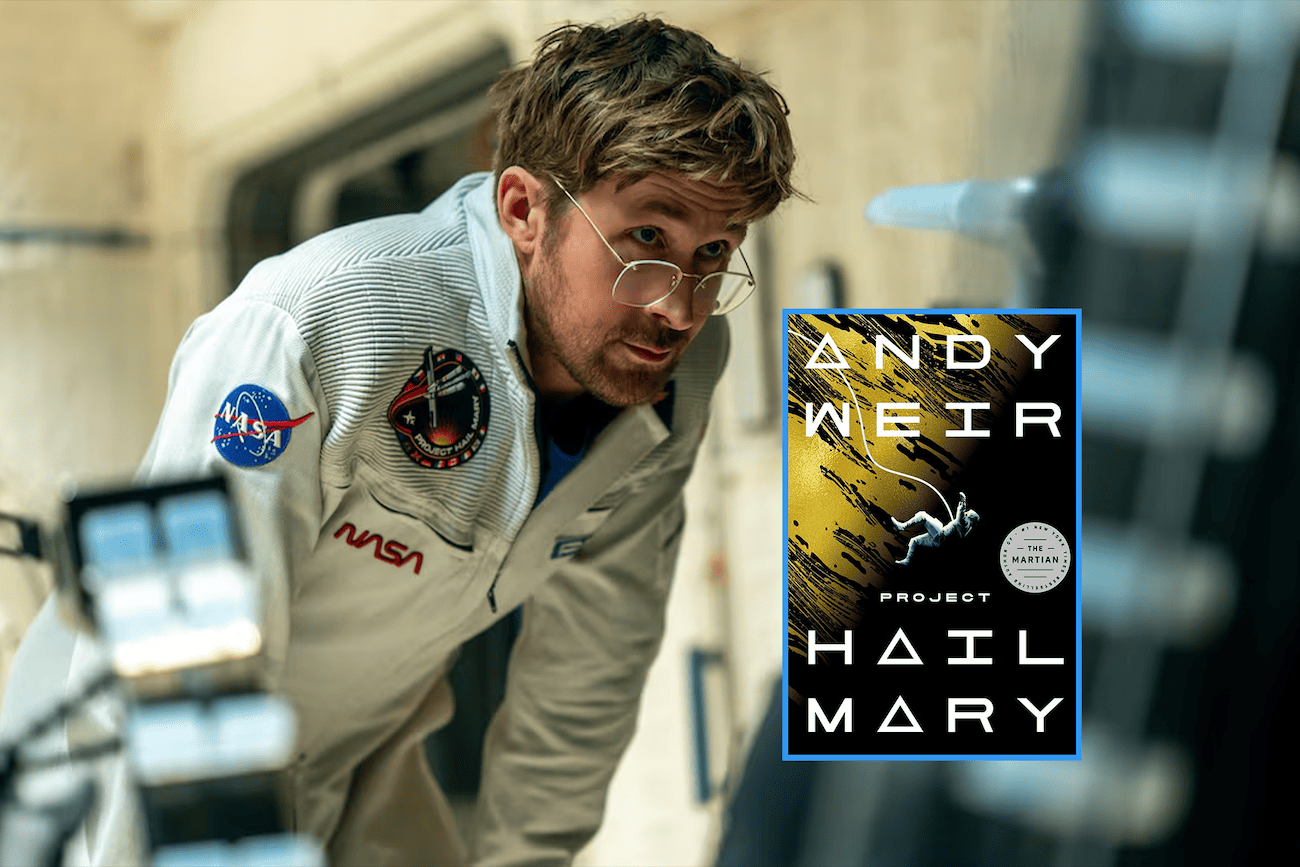

Andy Weir published “Project Hail Mary” in 2021 — the tail end of a pandemic, a moment when international scientific cooperation had just, literally, saved millions of lives. A story about scientists from every nation pooling their knowledge to prevent extinction felt, at that particular moment, almost like a love letter to something we were living through.
Five years later, that same story opens as a film in a world where scientific institutions are being defunded, researchers are being dismissed, and the word “elite” has been weaponized into pure contempt. The gap between the world the book was born into and the world the film has arrived in is not a footnote. It is the entire context. And it makes what the film chose to keep, and what it chose to leave behind — matter in ways the filmmakers may not have fully intended.
I want to be honest upfront: I am not a neutral observer. I read Andy Weir’s novel once, and for much of it I was engaged but not yet fully in. It was good. Smart. Funny in that particular nerdy way that either works for you or doesn’t. And then it did something that genuinely shocked me — and after that moment, I was completely, helplessly invested. I walked into Phil Lord and Christopher Miller’s film carrying that specific memory: the memory of being surprised by a book I hadn’t expected to surprise me. Keep that in mind.
And I want to be equally honest about this: the movie is very good. Maybe great. Ryan Gosling carries it with a kind of lived-in warmth that never tips into smugness. Rocky’s design is, frankly, perfect — I cannot imagine the alien better realized. The visual world of the film, especially the final scenes on Erid, is breathtaking in a way that reminded me why cinema exists. Daniel Pemberton’s score deserves a mention in the same breath — it makes the silence of space feel inhabited rather than empty, and gives the Grace-Rocky scenes a warmth that is somehow also genuinely strange, which is exactly right. These are not small things. The filmmakers clearly love this story. That love is visible and audible in every frame.
- The visuals — Gorgeous, fully realized. Erid in the final act is exactly right and somehow even better than I imagined it.
- Rocky’s design — Miraculous. Full stop.
- Grace’s arc — Moving the flashback of Stratt’s betrayal to just before he goes back to save Rocky was a smart, emotionally precise choice. His past cowardice and present bravery land harder for it.
- Daniel Pemberton’s score — Deserves its own paragraph. The music does what great film scoring always does at its best: it doesn’t underline the emotion, it adds one. Pemberton makes the silence of space feel full rather than empty, and the Grace-Rocky scenes hum with something warm and genuinely alien at the same time. A major contribution to why the film works as well as it does.
- Ryan Gosling as Grace — The whole film lives or dies on whether you believe this man is smart, lost, and worth following across the galaxy. Gosling makes it look effortless, which means it probably wasn’t. He plays the comedy without mugging, the grief without melodrama, and the wonder — especially in those early scenes with Rocky — with a kind of open-faced delight that is genuinely infectious. A lesser performance and this is a very different film.
- The tone — They kept the comedy. The book is funny, and I was genuinely worried they’d sand that away. They didn’t.
- The ending — More on this. But the film’s ambiguity is, I think, more humanly true than the book’s moral clarity.
So with all of that credit given — what’s the nagging thing? What is it that I keep returning to, the morning after?
It’s Antarctica.
The Cut That Changes Everything
In the book, Eva Stratt — the driven, unelected administrator who holds the world at gunpoint to ensure the Hail Mary mission launches — orders the nuclear bombing of Antarctica. The goal is to release methane trapped in the permafrost, a controlled catastrophe designed to buy Earth’s ecosystem a little more time. She doesn’t ask permission. She does the math, determines it’s necessary, and does it. The world is horrified. She accepts that.
This scene is not in the film.
And here is my honest confession: that scene is the reason I finished the book. I was reading along, reasonably entertained, when Weir dropped something genuinely shocking — an act so extreme, so morally uncomfortable, that I sat up and thought: oh, this story is willing to go there. It wasn’t that I endorsed what Stratt did. It’s that the book stopped being polite. It reached across the page and unsettled me, and after that I was completely invested. The shock wasn’t a gimmick — it was the book earning my full attention.
I don’t miss Antarctica because I think Stratt was right. I miss it because it was the moment the book stopped being safe.
Without it, Stratt in the film is a compelling character — Sandra Hüller plays her with exactly the right cold precision — but she never crosses a line that makes us genuinely uncomfortable. Her betrayal of Grace stings, but it’s personal. In the book, that betrayal lands against a backdrop where we already know what she’s capable of. The scale of her is different. And the story is different for it — not morally superior, just more willing to disturb.
This is where I want to be careful, because I’m not making a case that the film should have endorsed what Stratt did, or that her methods were necessary, or that autocrats and extremists are secretly the ones who save us. That’s not the point, and it’s not a philosophy I hold. The film works. The world gets saved without that scene. What’s lost isn’t a moral argument — it’s a narrative willingness to make the audience genuinely squirm. And in a film that is otherwise so warm, so funny, so carefully engineered to make you feel good, that missing discomfort is noticeable.
Because the book, understood something that the film — seems to have decided was too risky: great stories about saving the world earn their hope — they don’t just hand it to you. We are living through a moment when scientific institutions are being gutted, when cooperation is treated as weakness, when expertise is framed as arrogance. Into that moment, the film offers warmth and wonder and genuine beauty. All of that is valuable. But the book also offered friction — and friction is what makes wonder mean something.
What The Film Gets More Right
Here is where I want to complicate my own argument, because I think the film earns one genuinely important victory over the book.
The ending. In Weir’s novel, Grace chooses to stay on Erid with Rocky and the Eridian civilization. He makes this choice clearly, at peace, without apparent ambivalence. It is morally consistent with everything the book has built — a man who finally found where he belongs, who repays his debt to Rocky by giving up any chance of returning home. It is right. It is also, if I’m being honest, a little too clean.
The film leaves it open. We don’t know if Grace comes back. And I found, sitting in that darkened theater, that I preferred not knowing.
Because Grace is a human being. He saved the human race. He deserves to see it again. The book’s version asks him to be better than human — to transcend the longing for his own people, his own world, the small ordinary things that make a life. That’s heroic. It’s also a kind of martyrdom that the story perhaps hasn’t fully earned the right to demand of him. The film’s ambiguity says something quieter and I think truer: you can be brave and self-sacrificing and still want to come home. Heroism doesn’t have to cost you everything to count.
In a political moment where we are constantly told that sacrifice is simply the cost of progress — that workers must accept precarity, that communities must absorb loss, that individuals should be grateful for what little they’re given — the idea that the person who saves everything also deserves something for themselves feels quietly radical. The book’s Grace is a saint. The film’s Grace is allowed to be a man.
The Thing Worth Saying Out Loud
I don’t think the filmmakers made a political decision when they cut Antarctica. I think they made a practical one, and a commercial one, and probably the right one if your goal is a film that plays in multiplexes and moves people and leaves them feeling something like hope. All of those goals are legitimate. The film succeeds at them beautifully.


But books and films are different arguments, even when they share a story. Andy Weir’s novel — written in 2021, in the strange suspended optimism of a world that had just watched scientists race to save it — had the confidence to disturb its reader before it comforted them. It earned its warmth through friction. The film, arriving in 2026, in a world that feels considerably less optimistic about what science and cooperation can actually accomplish, makes the understandable choice to skip straight to comfort — and leave the confrontation on the cutting room floor alongside Antarctica.
Maybe it is. I hope it is.
The book was willing to make you uncomfortable before it made you hopeful. The film skips straight to the hope — and in 2026, a story about science and cooperation that pulls its punches feels like a missed opportunity.
I left the theater mildly disappointed. Not in the film — which is, genuinely, a beautiful piece of work — but in the gap between what it is and what the book asked us to sit with. That gap is the size of a nuked continent. It’s the size of a moment of shock that cracked a book open for me and pulled me all the way in.
Rocky is gorgeous. The movie is beautiful.
Go see it. And then read the book — not because it’s better, but because it’s braver. And right now, brave is the thing we can least afford to skip.
Fun Facts (about the film):
For a $248 million space epic, the production choices are almost defiantly old-school — and worth appreciating separately from everything else the film does.
- Not a single green or blue screen was used. The entire interior of the Hail Mary was built as a full-size physical set at Shepperton Studios in England. Not a model. Not a digital environment. A real ship you could walk through — which is exactly what Gosling did for the entire 102-day shoot.
- Rocky is a puppet. Creature designer Neal Scanlan — the man behind the Porgs in Star Wars — spent a year on the design. The final character is a thin fiberglass shell, hand-painted in translucent layers so light passes through him. Five puppeteers (affectionately called the “Rockyteers”) operated him in every scene, with CGI from Framestore stepping in only when the physics made puppetry impossible. When Scanlan met puppeteer James Ortiz, he told him: “You’re Frank Oz, and I’m making Yoda for you.”
- Gosling’s genuine delight is partly real. During filming, Gosling wore an earpiece through which his daughters — aged 9 and 11 — would occasionally voice Rocky’s lines. Some of the most charming moments of wonder on his face in the final film are his real reactions to his kids.
- The film has 2,018 VFX shots — and zero green screens. These aren’t contradictions. The directors used black backgrounds and shifting hue backdrops for interactive lighting rather than flat green. The point, as co-director Christopher Miller put it, was never to avoid digital work — it was to never use it as a substitute for building something real.
“Project Hail Mary, · Directed by Phil Lord & Christopher Miller · Novel by Andy Weir (2021).
Ganpy Nataraj is an entrepreneur, author of “TEXIT – A Star Alone” (thriller) and short stories. He is a moody writer writing “stuff” — Politics, Movies, Music, Sports, Satire, Food, etc.