


A Hindu ‘Hamlet’: Riz Ahmed Reimagines Shakespeare’s Play With South Asian Identity at its Center

- This culturally specific film successfully establishes its dual identity: fiercely contemporary yet rooted in tradition, British yet distinctly South Asian.
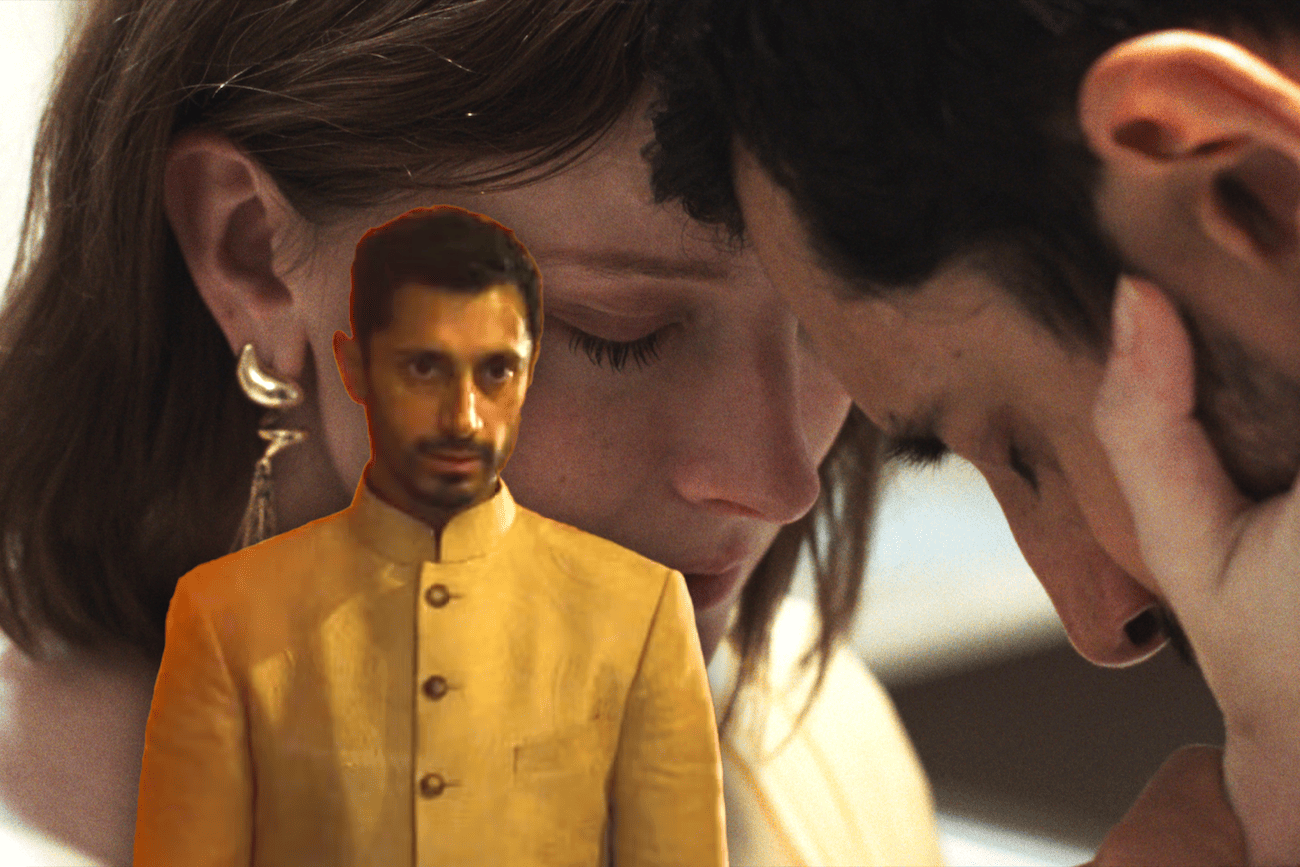

When Riz Ahmed’s “Hamlet” premiered at the Telluride Film Festival on August 30, 2025, it promised something rare: a contemporary reimagining of Shakespeare’s most performed play that would bring South Asian identity to its center while preserving the Bard’s original language. Now, as the film approaches its U.S. theatrical release on April 10, 2026, critics remain sharply divided on whether this bold adaptation justifies its existence—or whether it’s simply another entry in an already overcrowded field of “Hamlet” interpretations.
A Contemporary London, a Timeless Tragedy
“Hamlet” is a 2025 British drama film based on William Shakespeare’s Hamlet, reimagined in a contemporary London. Directed by Aneil Karia and written by Michael Lesslie, it stars Riz Ahmed, Morfydd Clark, Joe Alwyn, Sheeba Chaddha, Avijit Dutt, Art Malik, and Timothy Spall.
The film’s premise transposes the Danish prince’s story to modern-day London’s South Asian community. According to Rotten Tomatoes, Hamlet returns home after a long absence when his father, a powerful Indian businessman at the heart of London’s nouveau riche, dies suddenly. Hamlet soon starts to see visions of his dead father, who claims his brother Claudius murdered him — and urges Hamlet to take revenge.
Haunted by his father’s ghost, Prince Hamlet descends from elite London society into the city’s underground, moving between Hindu temples and homeless camps. In seeking to avenge his father’s murder, he begins to question his own role in his family’s corruption.
The Opening: A Hindu Funeral
The film’s most universally praised element is its opening sequence. According to The Hollywood Reporter, This latest version of Hamlet begins with a death ritual. Riz Ahmed, as the title character, washes his father’s body, surrounded by his uncle, Claudius, and other men as a Hindu priest recites from the Bhagavad Gita. That scene instantly and viscerally grounds you in the title character’s overpowering grief. It’s an inspired addition to Shakespeare’s play, and proof of how illuminating it can be to tweak one of the world’s masterpieces.
This culturally specific opening immediately establishes the film’s dual identity: fiercely contemporary yet rooted in tradition, British yet distinctly South Asian.
Ahmed’s Performance: The Reason to Watch
If critics agree on anything, it’s that Riz Ahmed’s performance justifies the film’s existence. According to Rotten Tomatoes, To say that Ahmed is the reason to see “Hamlet” would be an understatement. At first, his near-tears vocal choices married to his practical shaking feel overdone, but one must remember that Hamlet is going mad with grief and rage.
The review continued: Playing the title character as a fragile man dangerously unravelling, Ahmed brings considerable passion to indelible lines — but the real force comes from the emotional authenticity he lends one of drama’s most formidable and familiar roles.
According to Screen Daily, Ahmed attacks the text with a directness that allows for few theatrical flourishes. His Hamlet is a wounded, intense individual, and the actor puts us inside the head of the emotionally shellshocked character.
Metacritic’s critical consensus noted: This version of Hamlet is raw in its emotion, incredibly natural in its performances, and heartbreaking in its conclusion. Even after centuries of retellings, the story still cuts deep, and Aneil Karia’s version proves that its power has not diminished.
Two Standout Sequences
Two scenes have generated particular buzz among critics and festival audiences. The first is the “play within a play” sequence, reimagined as a South Asian dance performance. According to an IMDb review, A couple of breathtaking scenes stand out- the “play within a play” reimagined as a stunningly beautiful south Asian dance, and the “to be or not to be” soliloquy as a suicidal inner monologue driving flat out down the motorway in the rain.
Variety provided more detail: It all builds to a spectacular dance number at Gertrude’s wedding banquet, where the brooding “prince” instructs the performers to re-create the crime in order to gauge his uncle’s reaction. The movie peaks early with this vibrant scene, which is far more effective than the climactic duel, though Claudius’ reaction is unclear. As the dancers pantomime the murder, funneling blood-red poison into the sleeping king’s ear, it’s not clear if this is meant to be how Claudius killed his brother or Hamlet’s interpretive-dance take on the famous play for which he’s named.
The second memorable sequence is the film’s handling of Hamlet’s most famous soliloquy. According to Variety, Karia finds a unique way to present Hamlet’s suicidal soliloquy: behind the wheel of a fancy BMW, hurtling down rain-slicked London streets like a Danish prince with a death wish.
Positive Takes
Some critics embraced the film’s contemporary setting and cultural specificity. According to Rotten Tomatoes, one reviewer wrote: I would argue that, in a sea of rinse and repeat Hamlets often told from the same Western-centric lens, this offers a desperately needed breath of fresh air, even if it is not perfect.
Another on Rotten Tomatoes stated: Robust turns by Ahmed and Morfydd Clark, as the maudlin Ophelia, bring this version to life.
According to Metacritic, With an exceptional performance from Ahmed and style meets substance storytelling, Hamlet is a journey worth taking.
A couple of breathtaking scenes stand out- the “play within a play” reimagined as a stunningly beautiful south Asian dance, and the “to be or not to be” soliloquy as a suicidal inner monologue driving flat out down the motorway in the rain.
One Metacritic reviewer concluded: Thanks to Ahmed and Karia’s creative collaboration, this new version of a man caught between expectation and collapse, tradition and insurgency, love and fury will hopefully find its way to a new generation that has never experienced Shakespeare.
Negative and Mixed Reactions
However, several major critics questioned the adaptation’s fundamental choices. Variety’s Peter Debruge was particularly critical, writing that according to Variety, With director Aneil Karia’s interpretation, we get the great Riz Ahmed in the role, which is reason enough for the film to exist — but it’s perhaps the only one in a remake that might better have chosen not to be.


Variety continued: Screenwriter Michael Lesslie oversaw this adaptation, which carries with it unfortunate relics of an earlier time — not the iambic pentameter, which is sacred, but references to kings and lords and a royal society that don’t quite translate. Here, Elsinore is a corporation and the murder of Hamlet’s father by his uncle, Claudius (Art Malik), and hasty marriage to his mother, Gertrude (Sheeba Chaddha), is all part of a hostile takeover that doesn’t feel nearly dastardly enough to justify the tragic bloodbath that ensues.
The Hollywood Reporter’s critique focused on execution. Setting the story in a South Asian community in London works beautifully… It’s the details of transporting the play to the present day and trying to make it cinematic that are often jarring and clumsy. One of the cringey choices is making the Hamlet family business the Elsinore Construction Group, a poke-in-the-ribs reference to the castle in Shakespeare.
THR also criticized Ahmed’s early performance: In his early scenes his delivery is whispery, and he looks confounded at the news that so soon after his father’s death, his mother, Gertrude, will marry Claudius. It later becomes clear that the performance is meant to build. Hamlet becomes more enraged when his father’s ghost appears and reveals that Claudius murdered him, setting Hamlet on his path of revenge. Later, at Gertrude and Claudius’ wedding reception, he explodes in fury. But this deliberately slow build and Ahmed’s subdued beginning make the character and the film less gripping than they should be from the start.
The Shakespeare Debate
One recurring theme in reviews is whether preserving Shakespeare’s original language in a contemporary setting creates cognitive dissonance. According to Metacritic, It’s still the story of an anguished man grappling with death, transplanted to a different world and a different time but still exerting a powerful pull on our imaginations. In one way, it’s an abbreviated “Hamlet,” but in another way, it’s a pumped-up one.
A Letterboxd reviewer noted: Similar to Baz Luhrman’s adaptation of Romeo and Juliet, this adaptation translates Hamlet to a more contemporary setting, this time within the southeast Asian community of London, while still retaining the essence of the original text. Unlike Romeo + Juliet, however, this film is much more intimate and has a sincerity to it that cannot be ignored.
Another Letterboxd user was more skeptical: Riz Ahmed is good here but the dialogue doesn’t do him any favors, you can see his acting skills through his physical acting and his facial expressions are great but lots of the intended effect doesn’t land because I don’t understand what he means.
Cultural Specificity as Strength
Where the film finds its most distinctive voice is in its cultural grounding. According to Screen Daily, Both the London locales and the focus on a British-Asian family add vitality to a story of vengeance and grief that also makes time for a discussion of economic inequality. Some of Shakespeare’s narrative has been shifted to accommodate modern realities — Elsinore is now a powerful corporation — and Karia makes good use of Asian cultural traditions.
A Letterboxd reviewer captured this cultural resonance playfully: Hamlet really IS so South Asian coded… because your dads side really is the worst and weddings do get a little crazy.
The comparison to Chloe Zhao’s “Hamnet”—which premiered at the same festivals and addresses Shakespeare from a completely different angle—has created an unusual situation where two Shakespeare-adjacent films are competing for audience attention during the same awards season.
This story was aggregated by AI from several news reports and edited by American Kahani’s News Desk.