


A Ballad of Loss, Grief and Healing: How Chloé Zhao’s ‘Hamnet’ Stuns the Audience With Its Fragile Beauty

- Like "Gone with the Wind," a film I have returned to time and again, "Hamnet" is a work I would willingly revisit—drawn by its sacred stillness, to dwell once more in the purity of its divine souls.
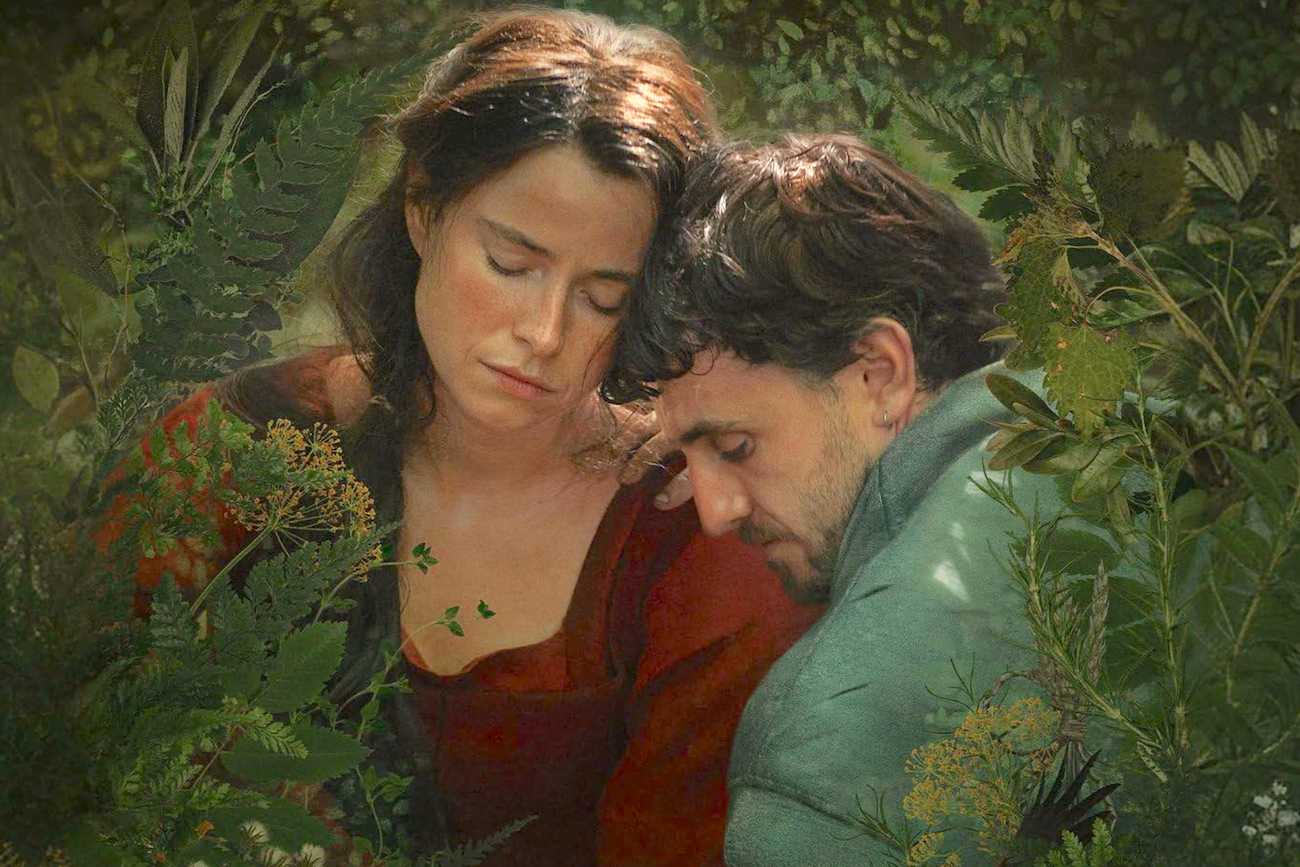

I never expected to encounter another woman like Scarlett O’Hara on the big screen—but then Agnes Hathaway appeared in “Hamnet,” brought to life with remarkable intensity by Irish actress Jessie Buckley. She wields her presence like a sorcerer’s wand, restoring the forest—Tara in this case—as the very soul of nature itself. What unfolds is nothing less than a spellbinding magnum opus.
“Hamnet,” directed by Chloé Zhao, possesses a timelessness akin to “Gone with the Wind,” and in watching it, I was struck by a quiet kinship between these two women. Though shaped by different histories and losses, both are bound by a fierce attachment to the land, and an instinctive understanding of birth, death, and renewal. They seem less like inhabitants of nature than its living pulse—women through whom the forest itself breathes and heals.
The film centers on Agnes, the forest witch—the unseen wellspring of Shakespeare’s genius. She moves with the velocity of wind, accompanied by a hawk that feeds from her hand and answers her sharp, knowing whistles. Though Shakespeare rendered her immortal through his writing, he never wrote of her directly, unless one listens for the faint echoes in “The Taming of the Shrew.” In his will, Shakespeare famously bequeathed Agnes the “second-best bed,” a gesture long interpreted as dismissal, though later scholarship suggests it may have been the guest bed, finer than the marital one. As with grief, the truth remains unresolved.
In the fictional “Hamnet,” Shakespeare is portrayed as a withdrawn and inward man, undone by the devastating loss of his only son—a child in whom he had invested such hope. The chemistry between Agnes and William is restrained yet profound. She is the ocean: vast, instinctual, and sovereign. He is the ship that rides upon her depths—sustained by her force, yet never able to command her tides.
Paul Mescal’s Shakespeare is melancholic and emotionally immature when set against Agnes’s immeasurable pain. His sorrow lingers softly, almost irritably, at the edges of her devastation.
The loss of their son, Hamnet, is foreshadowed through Agnes’s deep intimacy with nature, which offers its own hushed premonitions through strange and unforeseen signs. In her heart, she senses the inevitability of what is to come; as a child of the forest, she is granted this painful intuition. The audience is gently guided from the warmth of domestic joy into the gravity of grief—never overwhelmed by the moment of death itself, but slowly weighed down by its lingering aftermath. Before their son’s breath fully fades into memory, Shakespeare is compelled to leave for London, drawn back to the demands of the theatre, and absence settles where presence is most needed.
Wounded by his distance from their shared mourning, Agnes eventually sets out to find him. In London, she encounters “Hamlet,” a play that ignites her fury. She is outraged by the transformation of her son into creative material, by the fact that private loss has been reshaped into public ambition—that grief has been alchemized into legacy without her consent.
Yet in the theatre, as she watches the image of her grown son take shape on stage, Agnes begins to understand how profoundly creativity can transform pain into healing. She regards the actor with quiet wonder—and in that moment, all restraint dissolves. What follows is an emotional reckoning, and Jessie Buckley’s performance is nothing short of extraordinary. Here, emotion emerges in its purest form: raw, incandescent, and aching, burning a hollow deep within the heart.
Later, when Agnes enters Shakespeare’s attic, she recognizes a quieter language of love—the way he shielded her from emotional devastation by offering material stability. In this light, financial security becomes not a denial of grief, but a form of protection, suggesting that hardship can constrict not only survival, but also the space in which mourning is allowed to exist.
Paul Mescal’s Shakespeare is melancholic and emotionally immature when set against Agnes’s immeasurable pain. His sorrow lingers softly, almost irritably, at the edges of her devastation. Yet he fulfills the demands of the role, and alongside him, every actor—including the children—does justice to the screenplay adapted from Maggie O’Farrell’s novel.


Director Chloé Zhao’s restraint subtly shapes the film’s emotional architecture. By refusing to take sides, she allows the male perspective to brood quietly without dominance, creating space for Agnes’s grief to remain vast, elemental, and uncompromised.
Without revealing the intricacies of its plot, “Hamnet” stands as a quiet masterpiece—an artistic meditation on loss and the alchemy through which pain is transformed into healing. By the final moments, Agnes is suffused with a deep, reluctant pride in Shakespeare.
The film closes with her holding the hands of her grown son—the actor—and then, one by one, others join, extending their hands into a shared circle of mourning. Individual grief dissolves into something collective, leaving the audience momentarily stunned by the film’s fragile beauty.
Like “Gone with the Wind,” a film I have returned to time and again, “Hamnet” is a work I would willingly revisit—drawn by its sacred stillness, to dwell once more in the purity of its divine souls.
Nivedita Chandrappa is a nonprofit leader with over a decade of experience in human services, immigrant advocacy, and women’s economic empowerment. She is the Founder and Executive Director of Jeebito Project DV, supporting immigrant survivors of domestic violence through financial independence and peer-led recovery models. She is also a policy board member of NYNOW, advocating for worker cooperatives and labor rights. She lives in Queens, New York.