



‘Indian Takeover’ Rhetoric Dominates Frisco City Council Meeting as Texas Intensifies H-1B Visa Crackdown

- The meeting exposed raw divisions over Frisco's rapid transformation from a sleepy suburb into a diverse, booming city of more than 230,000 residents, 33 percent of whom are now Asian.
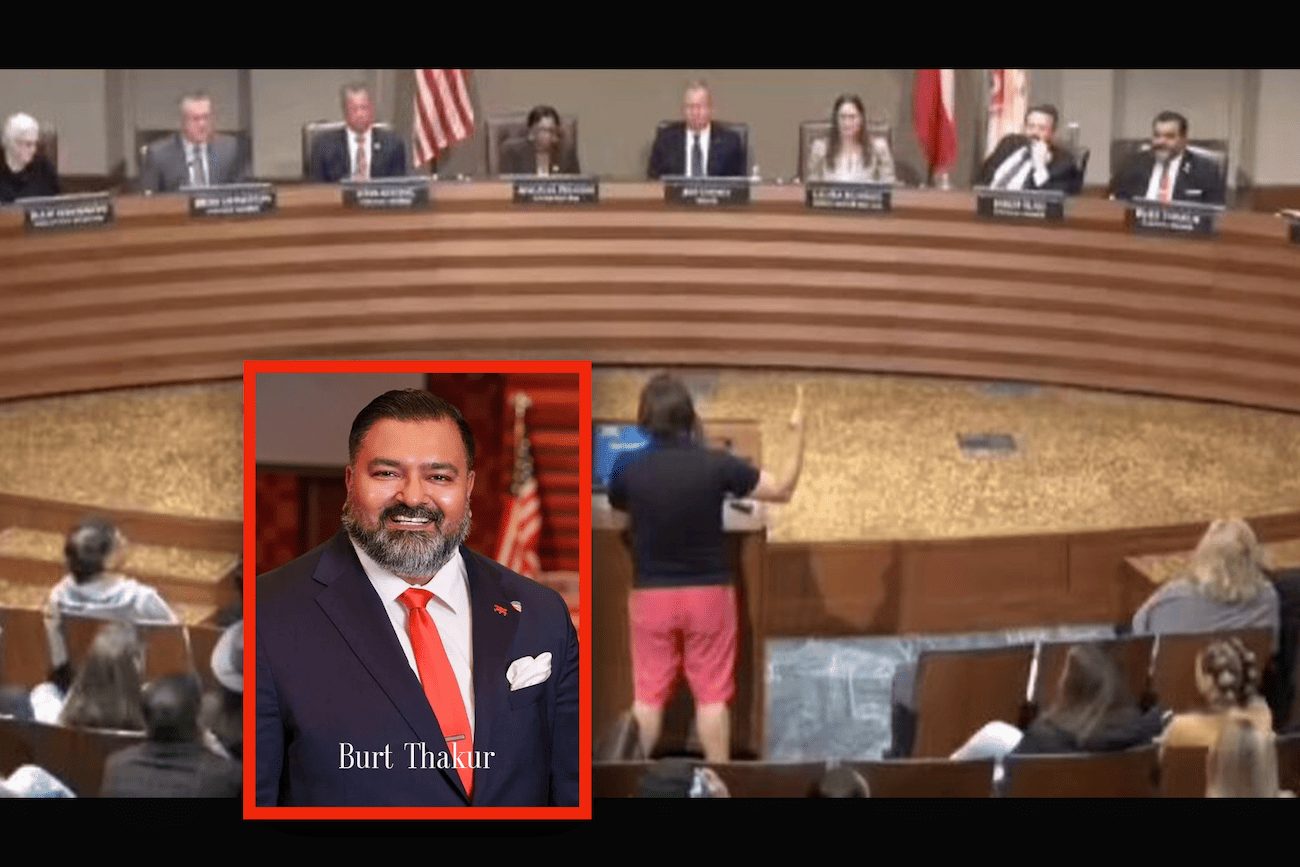

A standing-room-only crowd packed the Frisco City Council meeting on February 3, transforming the municipal chamber into a flashpoint for growing tensions over immigration, demographic change, and allegations of H-1B visa fraud in North Texas—even though city officials have no authority over the federally controlled visa program.
The meeting, prompted by social media posts urging people to address what activists call an “Indian takeover” of the city, exposed raw divisions over Frisco’s rapid transformation from a sleepy suburb into a diverse, booming city of more than 230,000 residents—33 percent of whom are now Asian, according to Dallas Morning News.
The confrontation comes amid a broader state-level crackdown on alleged H-1B visa abuse, with Texas Attorney General Ken Paxton launching investigations into “ghost offices” and Governor Greg Abbott freezing new H-1B visa applications at state agencies and universities.
A City Council Meeting Like No Other
The uncharacteristic turnout at Frisco City Hall on Monday night featured heated speeches both condemning and defending the city’s growing South Asian population, according to Dallas Morning News.
Marc Palasciano, a Richardson activist who posted about the council meeting on X, is a self-described former T-Mobile whistleblower and vocal critic of H-1B visas, which allow U.S. employers to hire foreigners for jobs requiring specialized knowledge, according to Dallas Morning News. In fiscal 2024, 71 percent of H-1B visas issued nationwide went to Indian applicants, according to federal data cited by Dallas Morning News.
Palasciano and his supporters argued that H-1B workers have taken jobs away from deserving Americans and fueled unwelcome demographic shifts in North Texas, according to the same source.
Dan Chandler of Far North Dallas was among those who spoke out about what he characterized as problems with the growing number of immigrants on H-1B visas in Frisco, according to Dallas Morning News.
Dylan Law told the council that immigrants moving to North Texas on H-1B visas have caused schools to be overcrowded and are changing the character of the region, according to Dallas Morning News.
“When lifelong residents voice concern, we’re told our discomfort is bigotry,” Law said, according to the same source. “Temporary visas are only temporary until loopholes like birthright citizenship are exploited and roots take hold through chain migration.”
Law urged the audience to take Attorney General Paxton’s investigation into H-1B visas seriously. He said the program has created income inequality because the annual median income for Indian-American families was more than $150,000 in 2023, higher than the median income for other racial groups, according to Dallas Morning News.
Most Speakers Were Not Frisco Residents
Significantly, a majority of the North Texans who spoke against the area’s growing Indian population were not Frisco residents, according to Dallas Observer.
This detail underscores how the Frisco meeting became a rallying point for broader anti-H-1B sentiment across the Dallas-Fort Worth metroplex, rather than strictly a local governance issue.
Indian Americans Defend Their Community
The meeting also drew a large contingent of Indian Americans who defended their right to live in Frisco and contribute to the community.
Shanthan Toodi, a combat veteran and Indian American who was previously deployed in Afghanistan and Iraq, said it hurt to have to defend his right to belong in the city, according to Dallas Morning News.
Toodi said perpetrators of H-1B fraud should be held accountable. However, he disagreed with activists framing the issue as an “Indian takeover,” according to the same source.
“When entire ethnic communities are spoken about as a problem … we stop talking about policy and we start drifting into collective blame,” Toodi said, according to Dallas Morning News.
The Indian American Advocacy Council (IAAC) issued a statement on January 31 strongly condemning what it called “the xenophobic and racially charged rhetoric being promoted ahead of the February 3rd Frisco City Council meeting,” according to the organization’s post on X.
“Labeling legal residents and taxpayers as an ‘Indian takeover’ is not” acceptable, the IAAC wrote, according to its X post, though the full statement was truncated in available sources.
Allegations Against City Officials
During the meeting, Palasciano raised questions about campaign donations made to Mayor Jeff Cheney and to Burt Thakur, who became Frisco’s first Indian American city council member after his election in 2025, according to Dallas Express.
He suggested, without evidence, that there were connections between political donors, real estate interests, and companies linked to the federal H-1B visa program, according to American Bazaar.
Videos of Palasciano’s speech have drawn national and international attention to Frisco, pushing the city into a broader, more heated conversation about immigration, tech workers, and the role of H-1B professionals in rapidly growing American communities, according to the same source.
Thakur Pushes Back
In a telephone interview with The Dallas Express, Thakur said he has no role in setting or enforcing federal immigration policy and pushed back on the idea that local officials are engineering demographic change.
“H-1B is something that I have no control of,” Thakur told The Dallas Express, according to Yahoo News. “That’s a USCIS issue. That’s a federal government [responsibility].”
“Temporary visas are only temporary until loopholes like birthright citizenship are exploited and roots take hold through chain migration.”
Thakur added that he would welcome scrutiny if wrongdoing exists. “I really would have no problem with any federal agency coming in and doing an audit,” Thakur said, according to the same source. “And if things are found that are illegal…” he said, trailing off, according to Yahoo News.
Palasciano later acknowledged in an email that he does not see Thakur as driving demographic change in Frisco. “I don’t believe Burt is having much impact on the demographics changing in Frisco. I see Burt as a product of those demographics already changing. Indians showed up to the voting polls to make sure they got their guy in office,” he wrote, according to American Bazaar.
Thakur does not dispute that Indian voters supported him. He said he worked hard to ensure they voted Republican, emphasizing that Indians are a significant voting bloc in North Texas, according to the same source.
“I’m trying to make sure they are America First Republicans, not Democrats, as they are in other parts of the country,” Thakur told Diya TV USA.
Thakur also pointed to his military service around the time of 9/11 as a foundation for his commitment to American jobs and public service, according to the same source. He said his priorities include improving infrastructure, public safety, and bringing higher-paying jobs to Frisco, where the median home price is now around $600,000, according to Diya TV USA.
Frisco’s Rapid Demographic Transformation
The controversy is rooted in Frisco’s dramatic growth and demographic shift. According to a city-released 2026 population overview, 33 percent of Frisco’s residents are Asian, up from 26 percent in 2020 and 10 percent in 2010, according to Dallas Observer.
Frisco, which was one of the nation’s fastest-growing cities in the 2010s, grew from about 33,828 residents in 2000 to more than 230,000 by 2024, according to Dallas Morning News.
This influx of primarily Indian households to Collin County has been a talking point along the fringes of conservative, North Texas-based social media circles for months, but was brought to the mainstream in recent weeks after Governor Abbott announced a freeze on H-1B visas, according to Dallas Observer.
Paxton’s “Ghost Office” Investigation
The Frisco meeting occurred against the backdrop of an escalating state-level campaign against alleged H-1B visa fraud.
On January 29, Texas Attorney General Paxton announced a “wide sweeping investigation” into abuse of the H-1B visa program by Texas businesses, according to his office’s official statement.
As part of the investigation, Paxton issued Civil Investigative Demands (CIDs) to three North Texas companies suspected of engaging in fraudulent activity—including entities identified in videos that were widely circulated online, according to the official statement.
Reports indicate that the businesses under investigation have likely engaged in illegal activity to scam the H-1B visa program by setting up sham companies featuring websites advertising nonexistent products or services to Texas consumers in order to fraudulently sponsor H-1B visas, according to the Texas Attorney General’s Office.
“For example, evidence has suggested that one of the businesses under investigation registered a single-family home as its office address and, on its website, listed its worksite address as that of an empty, unfinished building,” the official statement said.
Standing outside a single-family home listed as the office address for 3Bees Technologies Inc.—one of the companies under investigation—Paxton credited BlazeTV and Texas Scorecard personality Sara Gonzales with prompting the investigation, according to Texas Scorecard and Blaze Media.
“Thanks to you, we’re here today,” Paxton told Gonzales during an interview, according to Blaze Media.
“We’ve started an investigation into three different companies that we think might be scamming people with these H-1B visas,” Paxton said, according to the same source. “Thanks to you, we’ve sent them questionnaires. They’re called Civil Investigative Demands, and they’re designed to find out what the truth is, what is actually happening, what are their actual practices.”
Paxton’s Strong Warning
“Any criminal who attempts to scam the H-1B visa program and use ‘ghost offices’ or other fraudulent ploys should be prepared to face the full force of the law,” Attorney General Paxton said, according to the official statement from his office.
“Abuse and fraud within these programs strip jobs and opportunities away from Texans. I will use every tool available to uproot and hold accountable any individual or company engaged in these fraudulent schemes. My office will continue to thoroughly review the H-1B visa program and always work to put the interests of Americans first,” Paxton added, according to the same source.
Paxton emphasized that the investigation is ongoing and that companies found to be operating lawfully will face no penalties, according to Texas Scorecard. If evidence of consumer deception or fraud is uncovered, however, the attorney general said the state could pursue enforcement actions under Texas’ deceptive trade practices laws, which allow for significant financial penalties, according to the same source.
Paxton’s office has demanded documents identifying all employees working for these companies, records detailing the specific products or services provided, financial statements, and communications related to company operations of the three North Texas businesses.
Although the Texas Attorney General’s Office is currently looking at three businesses in North Texas, Paxton indicated that is the start of a much larger investigation, according to Blaze Media.
Abbott’s University and Agency Freeze
The state-level pressure intensified on January 26 when Governor Greg Abbott directed all public universities and state agencies to freeze new H-1B visa applications, according to multiple sources including Texas Politics.
Under Abbott’s directive, public universities and state agencies may not initiate or file new H-1B visa petitions without written permission from the Texas Workforce Commission through the end of the next legislative session on May 31, 2027.
The U.S. Citizenship and Immigration Services reports that nearly 75 percent of H-1B visas are issued to individuals from India, according to Dallas Observer.
A Coordinated Campaign
Together, Abbott’s administrative freeze and Paxton’s enforcement action represent a coordinated state-level response to growing concerns that the H-1B program—originally designed to supplement the American workforce with specialized talent—is being exploited to replace domestic workers through misrepresentation and fraud, according to Texas Scorecard.
“We’re going to find out what the truth is,” Paxton said, according to the same source. “If they’re acting appropriately, they’ll be fine. If they’re not, we’ll hold them accountable.”
The controversy in Frisco and across Texas reflects broader national debates about skilled immigration, demographic change, and economic opportunity.
The confluence of legitimate concerns about visa fraud with rhetoric about “Indian takeovers” and demographic “invasions” has created a volatile mix that Indian American advocacy groups say crosses the line into xenophobia and collective blame of an entire ethnic community.
This story was aggregated by AI from several news reports and edited by American Kahani’s News Desk.