


Why Trump’s Advisor Attacked Brahmins for ‘Profiteering’ From India’s Russian Oil Imports

- Whether it’s right-wing geopolitics or the left’s academic activism, targeting Brahmins is a proxy for attacking Hinduism. This hurts us all, and we need to push back.
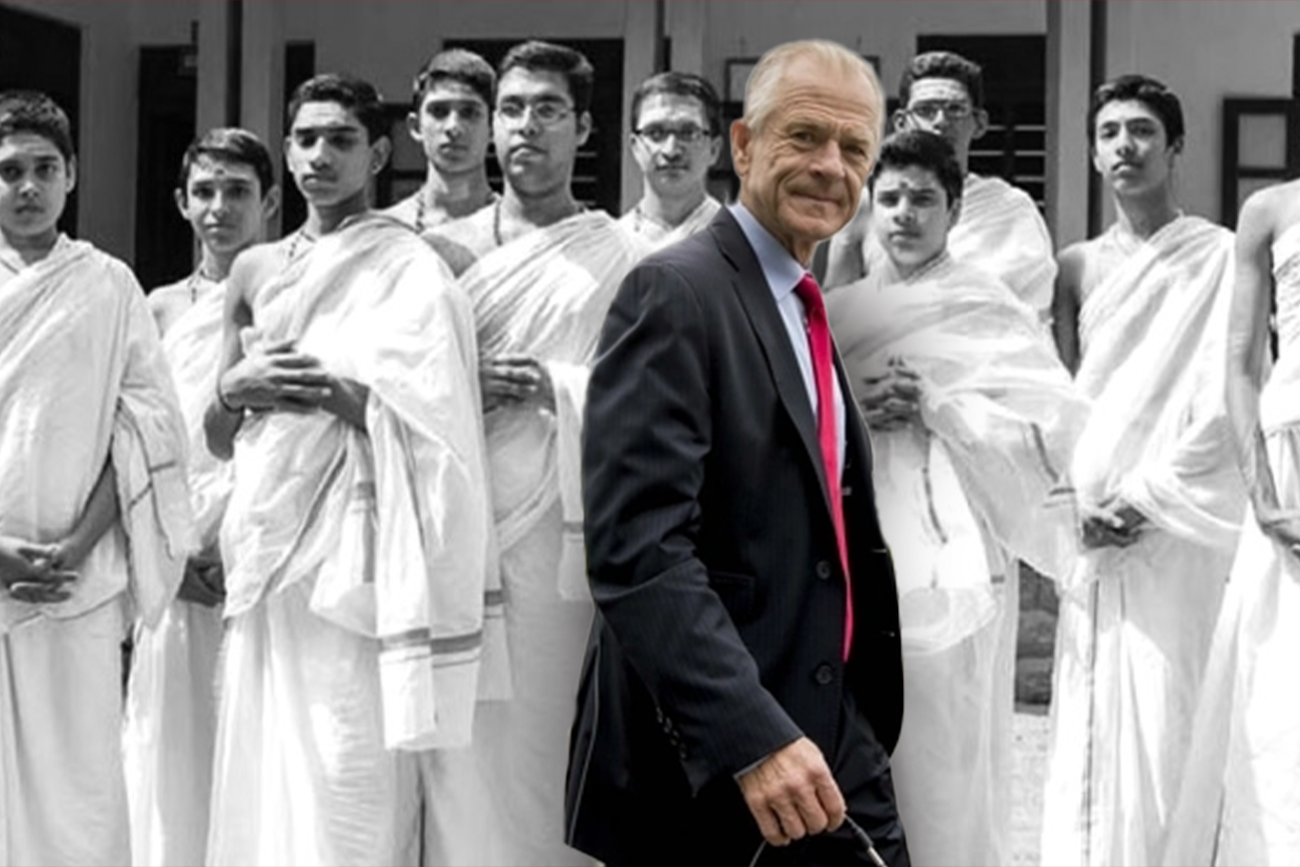

As second-generation Indian Americans, we juggle our Indian roots with American life, but our Hindu identity is under fire. Assistant to the President and Director of the Office for Trade and Manufacturing Policy Peter Navarro’s Fox News claim last week that Brahmins are “profiteering at the expense of the Indian people” by refining Russian oil echoes the left’s rhetoric, like the 2021 “Dismantling Global Hindutva” (DGH) conference’s obsession with “Brahminical oppression.” Whether it’s Navarro’s right-wing geopolitics or the left’s academic activism, targeting Brahmins is a proxy for attacking Hinduism. This hurts us all, and we need to push back.
Navarro’s attack framed Brahmins as elite profiteers in India’s oil trade, calling India a “Kremlin laundromat.” It’s a geopolitical ploy to pressure India’s neutrality in the Russia-Ukraine conflict, ignoring that India’s oil imports stabilized global markets in 2022, with Western approval. Brahmins, just 4-5% of India’s population, aren’t a monolith—65% of their households earned under $100/month in 2004. India’s refining sector (Reliance, ONGC) isn’t caste-driven. Navarro’s “Brahmin” slur revives colonial stereotypes of exploitative priests, used by the British to justify rule. As X user @DivyaSoti posted on September 2, 2025, “When you need to attack India, when you need to attack Hindus, you need to necessarily attack Brahmins first.”
The left plays a similar game. The DGH conference, backed by 40+ U.S. universities (e.g., Harvard), tied “Hindutva” to “Brahminical supremacy,” blaming Brahmins for global oppression. Scholars like Audrey Truschke frame Hinduism itself as casteist, ignoring that only 18% of Indians report recent caste discrimination (Pew Research, 2021). This echoes colonial missionaries like Abbe J.A. Dubois, who called Brahmins the “biggest hurdle” to Christianizing India in the 1800s. DGH’s rhetoric fuels bans on Hindu symbols, like Rutgers’ 2022 push against “caste-oppressive” texts, and sidesteps anti-Brahmin violence, like the 1989-90 Kashmiri Pandit exodus.
Left or right, the tactic is identical: target Brahmins to undermine Hinduism. Historically, Brahmins, as guardians of Vedic knowledge, symbolized Hindu resilience. Islamic invaders like Muhammad bin Qasim massacred them in 711 CE to break resistance. British censuses rigidified caste to vilify Brahmins. In India, the Dravidian movement’s anti-Brahmin campaigns sparked violence post-1967, and post-Gandhi’s 1948 assassination, pogroms killed hundreds of Brahmins. Today, Navarro uses Brahmins to shame India geopolitically, while DGH equates them with Hindu nationalism to delegitimize Hindu advocacy. Both dodge broader issues—like caste violence by non-Brahmin groups or Western energy hypocrisy.
Why It Hits Us
For second-generation Indian Americans, this is personal. Whether Brahmin, Dalit, OBC, or none of the above, we’re tied to Hinduism’s cultural fabric—Diwali, Holi, or temple visits. Brahmin-bashing paints Hinduism as backward, fueling “Hinduphobia.” Think of the 2019 Swaminarayan temple vandalism or “curry” jabs we’ve all faced. Global narratives amplify “Brahminical patriarchy,” turning our heritage into a liability. In Bangladesh, Hindus, often Brahmins, face “dual loyalty” accusations. Books like “Brahmin Genocide” ( Shri Asi Mahalingam Balaji & Sree Iyer, 2023) warn of escalating attacks, citing the Kashmiri Pandit exodus. When Navarro or DGH scapegoat Brahmins, it divides us and weakens our ability to embrace our identity.

We can’t stay silent. Call out Navarro’s ignorance and the left’s selective outrage. Caste is complex—region, class, and history matter more than “Brahmin oppressors” tropes. If you’re Brahmin, own your heritage but listen to others. If you’re not, don’t let stereotypes define Brahmins or Hinduism. Our strength is unity—celebrating Ganesh Chaturthi in Chicago or explaining rangoli at work. As Ambedkar said, fight “Brahmanism” (caste ideology), not Brahmin people. India’s not perfect, but progress comes from dialogue, not division. Reclaim our narrative before Navarro or DGH writes it for us.
Madhu Hebbar, an engineer, is an IIT graduate, living in the greater Los Angeles area. He is a practicing Hindu, and an avid reader, who is interested in Eastern philosophies and their general application to Western challenges. He is engaged in coaching youngsters interested in Hindu civilizational history, universal values and its modern-day relevance.