


From Palak Paneer to Payout: Did Indian Students’ $200,000 Settlement Expose ‘Food Racism’ in America?

- The targeting of food smells as proxy for racial resentment has deep historical roots. An expert has documented how curry functions as a racialized marker in American workplaces.
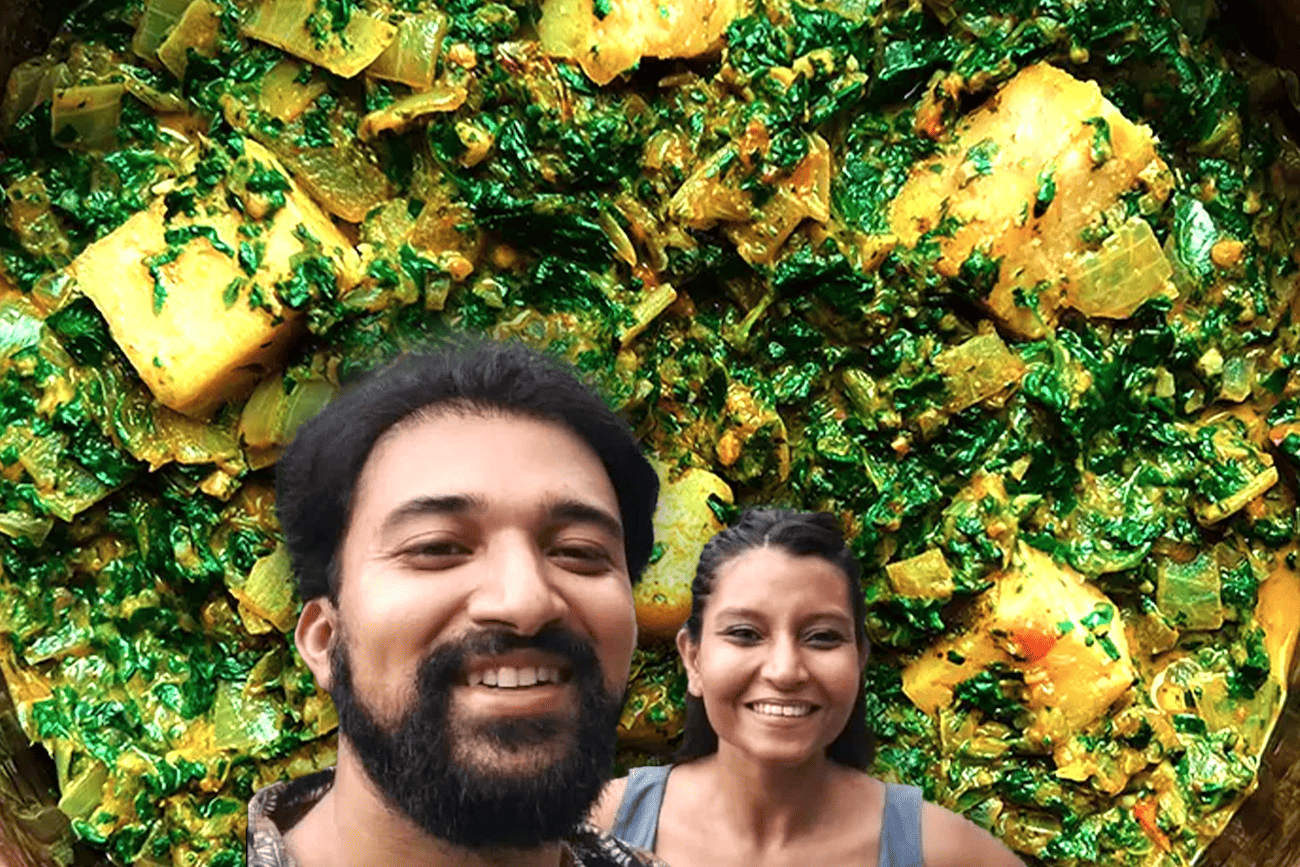

What began as a routine lunch break—reheating palak paneer in a shared microwave—ended in a courtroom victory, a $200,000 settlement, and a hard-won affirmation of dignity for two Indian doctoral students at the University of Colorado Boulder. But for Aditya Prakash and Urmi Bhattacharyya, the fight was never just about money. It was about challenging what they call “food racism” and asserting that their culture doesn’t need permission to exist.
The September 2025 settlement has sparked a global conversation about the subtle yet pervasive discrimination faced by immigrants and international students over their traditional cuisine—a phenomenon that reveals deeper anxieties about cultural identity, assimilation, and who gets to decide what smells acceptable in shared spaces.
The Incident That Sparked a Two-Year Battle
The incident dates back to September 5, 2023. Prakash, now 34 and a PhD student in anthropology at the time, was heating his lunch in a departmental microwave when a female staff member approached him and objected to the “smell” of his food. She told him not to use the microwave to heat his lunch. “The smell was pungent, she said,” Prakash later recalled.
According to Complex magazine, Prakash claims he responded calmly, saying he was just heating up the food and leaving. However, the incident, which they called “an experience of racial and ethnic microaggressions by department staff,” marked the start of a series of conflicts that escalated over the next two years.
What happened next transformed a simple lunch into an institutional crisis. According to The Independent, Prakash responded that it was just food and returned to his desk to eat, “feeling othered and saddened”. What he understood as a racialized slight soon became an institutional dispute.
Escalating Retaliation
The couple alleges that the university’s response went far beyond the initial confrontation. According to Complex, the student, who came to the United States on student visa to pursue a doctoral degree, then said he was repeatedly summoned to meetings with senior faculty, accused of making staff members “feel unsafe.” He was later reported to the Office of Student Conduc.
According to Complex, the couple, who are now engaged, received support from 29 fellow students after a chairperson sent a department-wide email about the kitchen use policy and how members of the community are asked “to refrain from preparing foods with strong or lingering smells in the main office.” The students criticized the department’s “harmful response” and their “discriminatory food policies,” citing the department’s Statement on Systemic Racism and Violence.
Bhattacharyya’s experience was equally troubling. According to The Independent, “I went to my laptop to access the class roster and suddenly I was locked out,” she said. “There was no warning. No conversation.” This happened after the department circulated an email reinstating restrictions on the use of the main office kitchen and discouraging the preparation of food with “strong or lingering smells.”
The consequences intensified. According to The Independent, in January 2024, the couple’s PhD advisory committees resigned without warning and the department reassigned them to advisers outside their fields of research, a decision they said stalled their doctoral projects. The university made them ineligible for teaching roles and funding, putting their immigration status at risk. Together, the couple said, these decisions dismantled the academic and financial structures required to continue their studies.
According to Gulf News, “That’s when we knew this was no longer about a microwave,” Prakash said. “We decided to seek legal recourse.”
The Legal Victory—and Its Costs
The couple filed a federal civil rights lawsuit in the U.S. District Court for Colorado in May 2025. According to The American Bazaar, the Indian duo raised concerns about “discriminatory treatment,” and how the university “engaged in a pattern of escalating retaliation.” The departmental kitchen policy had a “disproportionate and discriminatory impact on ethnic groups like South Asians,” they contended making many Indians wary of opening their lunches in shared spaces. The “discriminatory treatment and ongoing retaliation,” Prakash and Bhattacheryya said, caused them “emotional distress, mental anguish, and pain and suffering.”
In September 2025, the university settled. According to The Federal, the University of Colorado Boulder agreed to pay $200,000 to Prakash and Bhattacharyya to settle the case and conferred their master’s degrees. However, the settlement also bars them from future enrollment or employment at the university.
The university maintained its position throughout. According to Yahoo News, “When these allegations arose in 2023, we took them seriously and adhered to established, robust processes to address them, as we do with all claims of discrimination and harassment. We reached an agreement with the students in September [2025] and deny any liability in this case,” the university said.
But for Prakash and Bhattacharyya, the settlement came at a profound personal cost. Both have left the United States and returned to India. According to Complex, “There is a hardening, a kind of narrowing of empathy,” Bhattacheryya told The Indian Express. “Institutions talk a lot about inclusion, but there is less patience for discomfort, especially if that discomfort comes from immigrants or people of color.”
According to Complex, “I don’t see myself going back,” Prakash also told the newspaper. “If this case can send out a message that this [food racism] cannot be practiced with impunity, that we, as Indians, will fight back, that would be the real victory.”
Prakash said for them, the point of the lawsuit was not the money. “It was about making a point – that there are consequences to discriminating against Indians for their ‘Indianness.’”
The Phenomenon of ‘Food Racism’
The Colorado case has exposed what many are calling “food racism”—discrimination based on the smells, ingredients, or eating practices associated with particular cultural or ethnic groups. The case has received significant media coverage in India since it was first reported last week, with many Indians recounting incidents of facing ridicule over their food habits abroad. Communities from Africa, Latin America and other parts of Asia have also shared their own stories of being shamed over their dietary practices.
Curry is used to mark or signify the overwhelming presence of Indian Americans in the workplace, a presence that lingers on despite being unwelcome.
This is not a new phenomenon. Scholar Madhavi Mallapragada of the University of Texas at Austin has documented how curry functions as a racialized marker in American workplaces. According to her analysis in Flow Journal, curry invariably enters into a conversation about work visas, immigrant workers, Indian technology experts, outsourcing and the job market in the IT sector. Curry is used to mark or signify the overwhelming presence of Indian Americans in the workplace, a presence that lingers on despite being unwelcome. As opposed to the taste, look, color or texture of the food, it is the smell of curry that is frequently brought up in these workplace confrontations and tensions.
Mallapragada cites a revealing example: in a 2010 thread on dice.com, a conversation about dwindling jobs in the IT sector very quickly veers into a rant about a co-worker heating curry in the office microwave, feeling trapped by the lingering smell and by the Indian infestation in the office.
The targeting of food smells as proxy for racial resentment has deep historical roots. According to Flow Journal, “curryheads” was a racist and pejorative reference in the 19th and early 20th centuries. More recently, when Nina Davuluri became the first Indian American Miss America in 2013, the racism became more focused on Indian American stereotypes and the predictable ‘curry’ reference made its way in innumerable forums and comments sections of online news—of Davuluri constantly smelling of spices, of being a “curry-muncher” and of curry during Thanksgiving being an absolutely revolting idea.
The Etiquette Debate: When Does Consideration Become Discrimination?
The Colorado case raises complex questions about workplace food etiquette and where the line falls between reasonable accommodation and discriminatory enforcement.
Workplace advice columns and HR professionals have long grappled with food smell complaints. A 2019 Houston Press article listed curry as one of “The 5 Smelliest Foods You Should Never Bring to the Office.” According to the Houston Press, “Maybe you don’t live in an area with a high concentration of curry fans. But if you live in, say, the United Kingdom or Houston — where we have lots of curry eaters — you know the aroma of a freshly-microwaved bowl of Indian food. It’s delicious…to the person eating it. To everyone else, the strong scent of the curry punches you in the face with a force that makes your eyes water and your nose run. Worse — like the burnt popcorn smell — the overwhelming aroma lingers for days, making your entire workplace smell like the line cook’s clothes at Bombay Brasserie after pulling a double.”
Such advice frames the issue as one of courtesy and consideration for coworkers. But critics argue that these guidelines often single out foods associated with immigrant communities while giving a pass to equally pungent foods from dominant cultures.
The same Houston Press article, for instance, ranked Mexican food as the number one office offense, noting: “No other cuisine captures as many strong and offensive aromas as Tex-Mex. Stinky onions? Check. Acrid salsa? Check. Greasy cheese and chips and chile con carne gravy? Check. Malodorous beans? Check.” Yet complaints about tacos or burritos rarely escalate to the level of institutional policies or civil rights lawsuits.
The question of when smell-based policies become discriminatory is nuanced. According to discussions on Ask a Manager, a popular workplace advice blog, the key distinction lies in how policies are enforced. One commenter noted: “If they specifically said, You’re no longer allowed to bring in Indian food” that could be discriminatory, but if they listed ingredients, and the coworker determined that he couldn’t bring in his leftovers anymore, that’s not.”
However, even ingredient-based bans can have disparate impacts. As another commenter observed in the Ask a Manager discussion: “My point was that the employee was Indian so the impact on them was that they couldn’t bring in Indian food. The fact that cardamom is in Swedish food would not matter to them because the employee probably doesn’t eat a lot of Swedish food.”
Fish presents a particularly instructive parallel. While reheating fish in office microwaves is widely discouraged, one Ask a Manager commenter raised an important equity concern: “I know people are super harsh over fish in offices, and it’s so surprising to me that banning it is not seen as racist, especially since it tends to be just disliking the smell and not an allergy. There are parts of the country where fish is a large part of subsistence diets for Native American people (I’m thinking specifically of Alaska Natives) and rural-living people. Telling them not to have that at work is not only telling them to cut out a significant part of their diet but also probably increasing their food budget as fish is essentially free.”
Cultural Context: What Smells ‘Normal’?


At the heart of food smell disputes lies a fundamental question: who decides what smells acceptable, and whose cultural norms become the default?
In her Instagram post that went viral, Bhattacharyya addressed this directly. According to Gulf News, “This year, I fought a fight,” she wrote. “A fight for the freedom to eat what I want and to protest at will — no matter the colour of my skin, my ethnic extraction, or my unflinchingly unchanged Indian accent.”
Social media responses to the settlement highlighted how subjective smell perceptions are. According to Gulf News, “Palak paneer ka sharp smell nahi aaya toh kya khaaya?” one Instagram user joked. “That’s aroma for us.”
This cultural relativity extends beyond Indian food. Scholar Mallapragada notes that while tech company campuses like Google’s Googleplex celebrate multicultural food options, the presence of Indian food in the technology domain and workplace is invoked in a very different way in some of the heated debates on online tech-centric forums. The same food that’s valorized in corporate diversity narratives becomes weaponized in informal workplace conflicts.
The Broader Implications
The Colorado settlement represents more than one couple’s victory. It signals growing pushback against the subtle policing of immigrant culture in American institutions.
According to Gulf News, for Prakash and Bhattacharyya, the case was never just about compensation. “It was about dignity,” Prakash said. “And about saying that our culture doesn’t need permission to exist.”
The case also highlights institutional blind spots. The University of Colorado Boulder’s Department of Anthropology—the very field dedicated to studying human cultures—became the site where cultural intolerance played out. The irony was not lost on observers.
Moreover, the case exposes how international students remain vulnerable to retaliation. With their immigration status tied to their academic enrollment and funding, Prakash and Bhattacharyya faced not just the loss of their doctoral programs but potential deportation. According to The Independent, within months, he and his partner, Urmi Bhattacheryya, who had joined the same department as a doctoral student and teaching assistant days earlier, would lose their PhD supervisors and their funding, effectively bringing their doctoral work to a halt.
The settlement’s prohibition on future enrollment or employment at the university represents a permanent severance from the academic community where they had invested years of work. Both have left the United States, their promising academic careers derailed by a dispute that began with lunch.
Finding a Path Forward
As American workplaces and educational institutions become increasingly diverse, the question of whose cultural norms dominate shared spaces will only become more pressing. The Colorado case demonstrates that dismissing these concerns as trivial—it’s just food, after all—misses the deeper dynamics of power, belonging, and cultural validation at play.
For the thousands of people who shared similar experiences on social media after the settlement was announced, the Colorado case resonated precisely because it named something they had experienced but struggled to articulate: that being told your food smells bad is often code for being told you don’t belong.
As one supporter wrote on social media, quoted by Gulf News: “This is what raising your voice the right way looks like.”
And another: “I’m celebrating with more palak paneer.”
Whether institutions learn from the $200,000 lesson the University of Colorado Boulder just paid remains to be seen. But for Aditya Prakash and Urmi Bhattacharyya, who stood their ground at significant personal cost, the message is clear: their culture doesn’t need permission to exist, and discrimination—however it’s packaged—will be challenged.
This story was aggregated by AI from several news reports and edited by American Kahani’s News Desk.