



Et tu, Abbott?: Indians Main Victims of Texas’ Freezes on H-1B Visa Applications at State Universities and Agencies

- The governor previewed the action during a Monday interview with conservative radio host Mark Davis, stating he saw no reason for H-1B visa employees in Texas public schools.
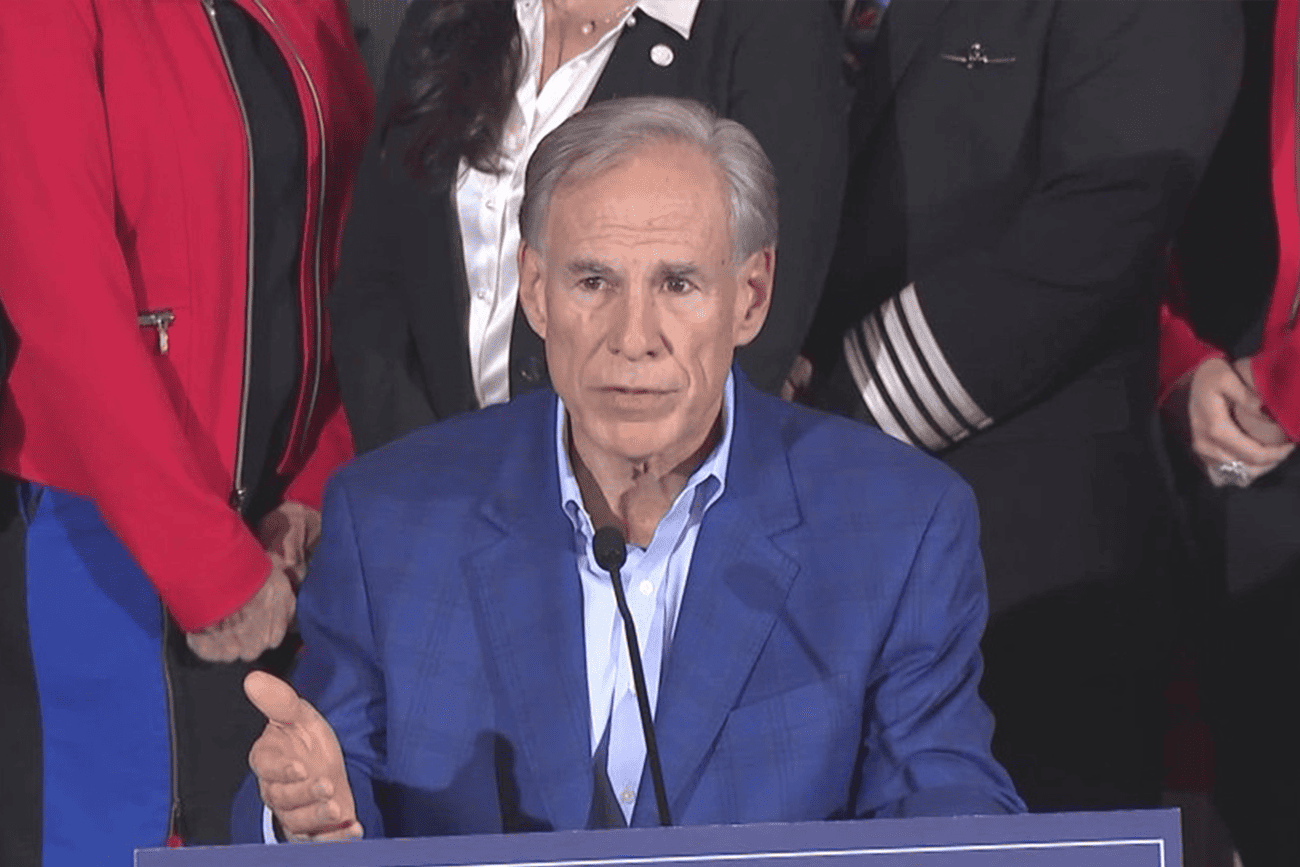

Texas Governor Greg Abbott has ordered an immediate freeze on new H-1B visa applications at all public universities and state agencies, joining a growing national movement to scrutinize the use of foreign workers in taxpayer-funded institutions.
The directive, issued Tuesday, prohibits public universities and state agencies from initiating or filing new H-1B visa petitions without written permission from the Texas Workforce Commission through May 31, 2027, when the state’s next legislative session concludes.
“State government must lead by example and ensure that employment opportunities — particularly those funded with taxpayer dollars — are filled by Texans first,” Abbott said, according to The Texas Tribune.
Comprehensive Reporting Requirements
Under Abbott’s order, state agencies and higher education institutions must submit detailed reports to the Texas Workforce Commission by March 27, 2026, according to FOX 7 Austin. The reports must include the number of new and renewed H-1B petitions filed in 2025, current H-1B visa holders sponsored by each institution, job titles, countries of origin, and visa expiration dates.
Additionally, institutions must provide documentation demonstrating they made efforts to give qualified Texans reasonable opportunities to apply for positions filled by H-1B visa holders, The Texas Tribune reported.
Major Employers Affected
Federal immigration data reveals the scope of H-1B visa use among Texas institutions. As of September 30, 2025, Dallas Independent School District employs 230 H-1B visa holders, making it the largest education-related employer of such workers in Texas, according to data cited by The Dallas Morning News.
Other major employers include UT Southwestern Medical Center with 220 H-1B visa holders, Texas A&M University with 210, UT MD Anderson Cancer Center with 171, and the University of Texas at Austin with 169, according to federal data.
Universities Respond
The freeze could particularly affect Indian students studying in Texas who planned to transition from student visas to H-1B positions at state universities or government institutions.
The Texas A&M University System had already stopped applying for new H-1B visas following President Trump’s September 2025 proclamation requiring employers to pay $100,000 for each visa holder, according to Chris Bryan, the system’s vice chancellor for marketing and communications, as reported by KXAN Austin.
“We have received Governor Abbott’s directive ordering a freeze on new H-1B visa petitions at Texas public institutions of higher education, and we are fully complying with that directive,” Bryan told The Texas Tribune. “The System remains committed to protecting Texas taxpayers, complying with the law, and ensuring that Texas students and communities are served by a strong and qualified workforce.”
The University of Texas System confirmed it has submitted visa information to the governor’s office. Randa Safady, vice chancellor for external relations, communications and advancement services, said in a statement to The Texas Tribune that institutions are complying with the freeze and awaiting guidance on how to submit future hiring requests to the Texas Workforce Commission.
Context and Motivation
Abbott previewed the action during a Monday interview with conservative radio host Mark Davis, stating he saw no reason for H-1B visa employees in Texas public schools, according to The Texas Tribune. He also suggested some visa holders may have overstayed their visas during the Biden administration.
The governor’s directive followed reporting by The Dallas Express revealing that Texas A&M University spent approximately $3.25 million on H-1B visa sponsorships over roughly five years, compared to about $1.1 million spent by the University of Texas at Dallas during a similar period, according to The Texas Tribune.
Disproportionate Impact on Indian Professionals

The freeze is expected to disproportionately affect Indian professionals, who comprise the largest group of H-1B visa holders in the United States. Indians represent an estimated 71 percent of all approved H-1B applications in recent years, with China a distant second at 11.7 percent, according to U.S. Citizenship and Immigration Services data.
Texas public universities employ hundreds of foreign faculty and researchers, many from India, across engineering, healthcare, and technology fields. Indian students also contribute approximately $10 billion annually to U.S. universities and related businesses through tuition and other expenses while creating around 93,000 jobs, according to Open Doors data.
The freeze could particularly affect Indian students studying in Texas who planned to transition from student visas to H-1B positions at state universities or government institutions. However, the directive does not affect private-sector companies in Texas, meaning Indian professionals working in private IT firms, startups, and businesses can still apply for H-1B visas normally.
Part of Broader Trend
Texas is not alone in scrutinizing H-1B visa use. Florida Governor Ron DeSantis directed his state’s public university system to curtail use of the program in 2025, arguing universities were misusing visas and should prioritize hiring U.S. citizens, The Texas Tribune reported. Florida’s Board of Governors is considering a proposal to pause new H-1B visa hires through early 2027.
The order comes amid broader debate in the U.S. over skilled immigration and state-level interventions in federal programs, according to multiple sources.
H-1B visas allow employers to hire foreign workers for specialized jobs requiring at least a bachelor’s degree, with applications vetted and approved by the federal government. Public universities and academic medical centers typically use the visas to hire professors, researchers, doctors, and other highly trained staff. The visas are initially granted for three years and can be extended for another three years.
It remains unclear whether Abbott’s directive applies to public school districts, The Dallas Morning News reported.
This story was aggregated by AI from several news reports and edited by American Kahani’s News Desk.