




In ‘Daughter of a Refugee,’ Tanya Momi Paints the Unspoken Traumas of India’s Partition

- The book is a testimony to profound endurance, proving that while empires can draw borders across the earth, they cannot silence the art and memory of those who survive.
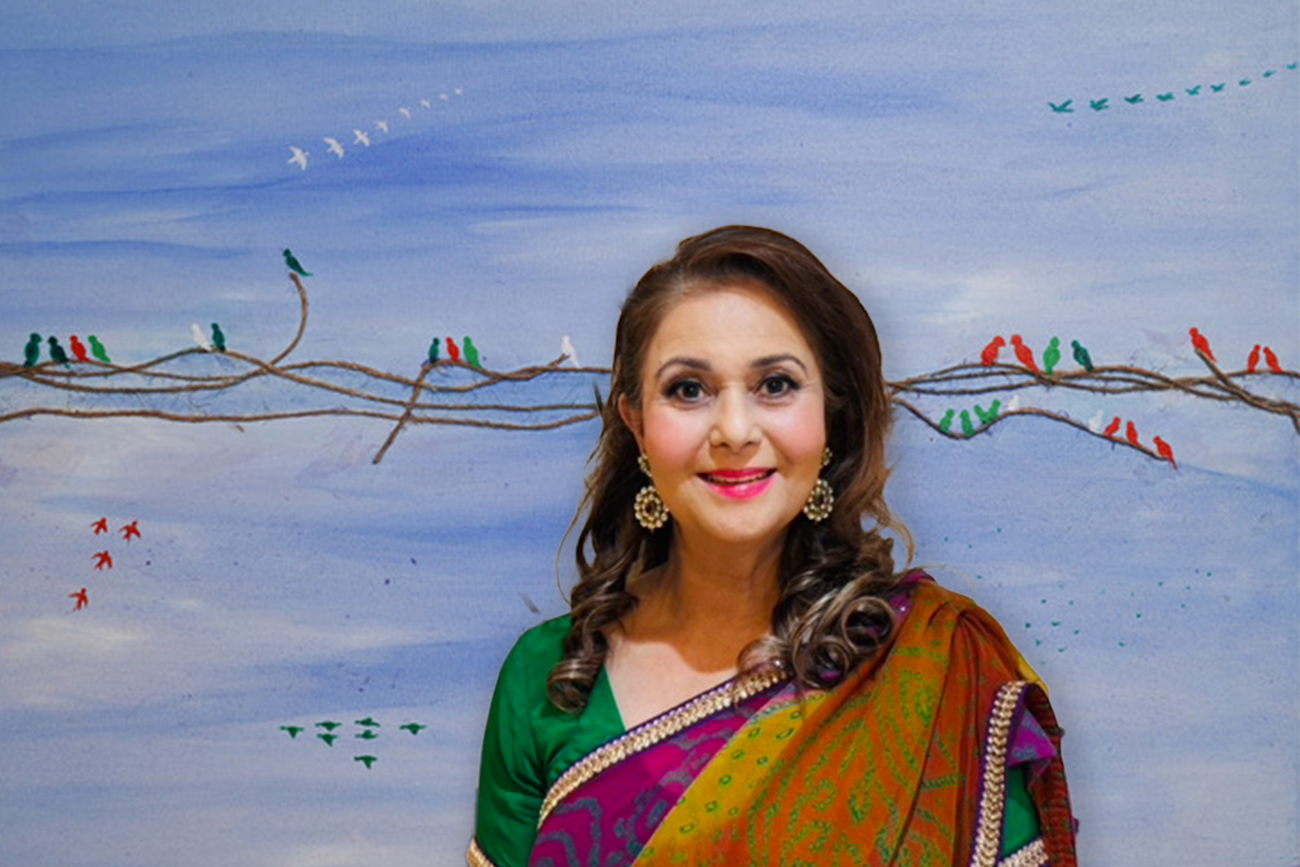

“A line drawn in haste on a paper map can permanently scar the geography and soul of a civilization,” writes Tanya Momi in her staggering new work, “Daughter of a Refugee: India’s Partition, History, Memory, and Art.”
It is a sentence that captures the central tragedy of 1947, when the British Empire carelessly carved the subcontinent into India and Pakistan, triggering one of the largest and bloodiest migrations in human history. For Momi, this rupture is not merely academic; it is the genetic material of her family’s existence. A visionary artist who built a highly successful entrepreneurial life in Silicon Valley, even speaking at the White House in 2016, she returned to the easel after a 22-year pause with fierce clarity. “Daughter of a Refugee began not as a choice, but as a duty,” she states in her author’s note. What follows is a fiercely original, hybrid work, part historical indictment, part family memoir, and part gallery exhibition, all working in tandem to map the invisible contours of intergenerational trauma.
The book’s architecture is deeply intentional. Opening chapters trace pre-Partition India from the Indus Valley Civilization to the inclusive, secular empire of Maharaja Ranjit Singh, the “Lion of Punjab.” Momi reminds the reader of the rich, interwoven fabric of Hindu, Muslim, and Sikh communities that existed before the British colonial strategy of “divide and rule” took hold. She guides us through the philosophical bedrock of the subcontinent, detailing the core beliefs of Hinduism and the revolutionary equality introduced by Sikhism, followed by the cultural heights of the Mughal Empire and the subsequent, devastating arrival of the British East India Company, which systematically dismantled India’s traditional economy to serve British markets. Momi does not mince words when addressing colonial tactics, devoting entire chapters to Winston Churchill’s strategy of power and manipulation and to the tragic exile of Maharaja Duleep Singh, whose isolation signaled the collapse of Sikh independence.
In Chapter 11, provocatively titled “Partition: A Mess Created by Three Lawyers?”, Momi’s historical analysis sharpens into a searing critique. She examines how Jawaharlal Nehru, Muhammad Ali Jinnah, and Mahatma Gandhi, all Western-educated attorneys, failed the people they sought to lead. Jinnah’s rigid courtroom pursuit of a separate state exploded into wide-scale religious violence; Nehru’s hunger for power dangerously ignored the practical realities of dividing armies and rail systems; and Gandhi’s idealized, non-violent vision ultimately left him sidelined from the final political reality, guaranteeing a chaotic division. “The lawyers delivered the official documents for the division,” Momi writes with devastating clarity, “but they left the people to pay the ultimate cost.”
This critique extends to the sheer bureaucratic negligence of the border drawing itself. In Chapter 12, Momi highlights the catastrophic role of Sir Cyril Radcliffe, a British lawyer with no experience of South Asia’s complex social fabric, who was given a mere five weeks to draw a boundary line through intricate webs of communities and shared irrigation systems. The subsequent delay in announcing the “Radcliffe Line” until two days after Independence created a dangerous vacuum of authority that fueled the ensuing massacres.
Momi forces the reader to confront this violence not as a tragic byproduct of independence, but as an unrecognized genocide. She points out the bitter irony that the 1948 UN Convention on Genocide was codified just a year after the atrocities in Punjab, a tragedy involving systemic massacres, the abduction of over 75,000 women, and forced conversions that fit every criterion of the convention. Yet, this history remains glaringly absent from India’s textbooks. Momi passionately calls for a Truth and Justice Commission and demands that the nation finally build a memorial honoring those who perished.
That cost is explored with painful intimacy. Momi does not allow the reader to consume this trauma passively; each chapter ends with a page titled “Pause for a Moment’s Reflection,” a necessary structural breath before plunging back into the dark. This deliberate invitation to stop, observe, and reflect on the text’s implications transforms the reading experience into an active meditation on memory and loss.
The voices of three generations anchor the manuscript. A poignant foreword by her father, published Punjabi writer Balbir Singh Momi, who was just twelve-and-a-half when he fled his village in Sheikhupura, frames the narrative. Writing on the 75th anniversary of Independence, he recalls the sweltering August heat of 1947, the sudden uprooting from Khalsa High School, and the agonizing journey to India. An author of 22 books & short stories, Mr. Momi’s words are a testament to the resilience of a generation forced to forge new beginnings from the ashes of their ancestral homes. This is mirrored by an equally moving introduction from Momi’s son & executive editor, Jaypreet Singh, who writes of the “blood-red boundary line” of trauma cutting through the family’s psychic blueprint.
The voices of three generations anchor the manuscript. A poignant foreword by her father, published Punjabi writer Balbir Singh Momi, who was just twelve-and-a-half when he fled his village in Sheikhupura, frames the narrative.
Where words reach their limit, Momi’s visual art takes over, elevating the book into a visceral experience. The cover art, “Window of Life,” acts as a portal between memory and the world beyond. In her painting “Divided,” the horrors of the 1947 monsoon are rendered in acrylic and mixed media, where vertical black lines represent slaughtered bodies stacked alongside trains, and “parallel gauze” symbolizes rivers overflowing with blood. In “Where Are You From?” she paints undivided Punjab in the shape of a shrinking human heart, framed by a traditional Phulkari design in gauze, symbolizing raw, unhealed trauma. These artworks serve as both historical witnesses and instruments of healing. Momi’s brushstrokes capture the tension between belonging and exclusion, transforming the raw wounds of history into a medium for reconciliation.
This artistic exploration bleeds seamlessly into the book’s poetic section. Her “Poems Dedicated to the Rivers of Punjab” and “Poems on the Chaos After Independence” serve as an elegy for a land severed from its people. The poetry acts as connective tissue between the dense historical chapters and the raw visual art, mourning the water that once nourished a unified culture before it became a boundary line of death. She supplements this with an unflinching examination of ongoing environmental and political crises, probing questions like “Who Controls Punjab’s Rivers?” before turning deeply personal once more in Section 5 with intimate tributes like “A Letter Across Time.”
Yet, “Daughter of a Refugee” is not solely an archive of grief; it is a diagnosis of the present. In Chapter 15, Momi offers a brilliant socioeconomic observation regarding the displaced: “To say we were unable to compete is not an admission of inferiority but an accusation of the unequal starting lines history imposed.” She argues that while the rest of India moved forward with its institutions and social fabric largely intact, refugees were forced to rebuild from nothing, delaying their generational growth, education, and artistic expression. She connects this trauma to the modern crises crippling Punjab today: political mismanagement, agricultural decline, and a devastating drug epidemic tearing through its youth.

Momi’s final chapters pivot from mourning to bold diplomacy. She outlines a comprehensive recovery plan for Punjab, suggesting lessons from the Sindhi diaspora and the Gujarat economic model. She highlights how Gujarat’s pro-business environment and long-term planning could serve as a blueprint for Punjab’s economic transformation, while drawing inspiration from the Sindhi community, who leveraged education and strong community bonds to achieve massive global success despite becoming a stateless people.
This practical socio-economic planning culminates in a daring proposal for a peace treaty between India and Pakistan. Momi drafts a meticulous blueprint covering territorial sovereignty, economic cooperation, and environmental management. She posits that the Sikh community, with its ethos of Sarbat da Bhala (peace for all), is the “ideal neutral third party” to bridge the gap between the two hostile nations. Because Sikhs lost their ancestral homes and economic base in Pakistan, yet remain fiercely patriotic defenders of India’s borders, they possess a dual history of betrayal and sacrifice, granting them unparalleled moral authority to speak to the pain of both sides.
“Refugees carry more than bags; they carry memories, longing, and hope,” Momi reminds us. Daughter of a Refugee is a heavy bag to carry, laden with the grief of millions and the ghosts of 1947. But in Tanya Momi’s capable hands, it is also a vessel of profound endurance, proving that while empires can draw borders across the earth, they cannot silence the art and memory of those who survive.
Tanya Momi’s art & her father’s artifacts are currently on display at the Los Altos History Museum Partition Exhibition until May 24th. (https://www.losaltoshistory.org/exhibit/stories-of-partition/)
More information at: daughterofarefugee.org
Rashmi Rustagi is an actor, writer, and producer based in Redwood City, California. Her latest film, Designed by Preeti, is currently streaming online.