




The American Rip: Are We The Good Guys (A.W.T.G.G.) When It Comes to Venezuela, Greenland Or Iran?

- There’s nothing new about what’s happening now. It’s another chapter in a long, troubling history of U.S. interference in world affairs, usually justified by lofty ideals but most often producing disastrous results.
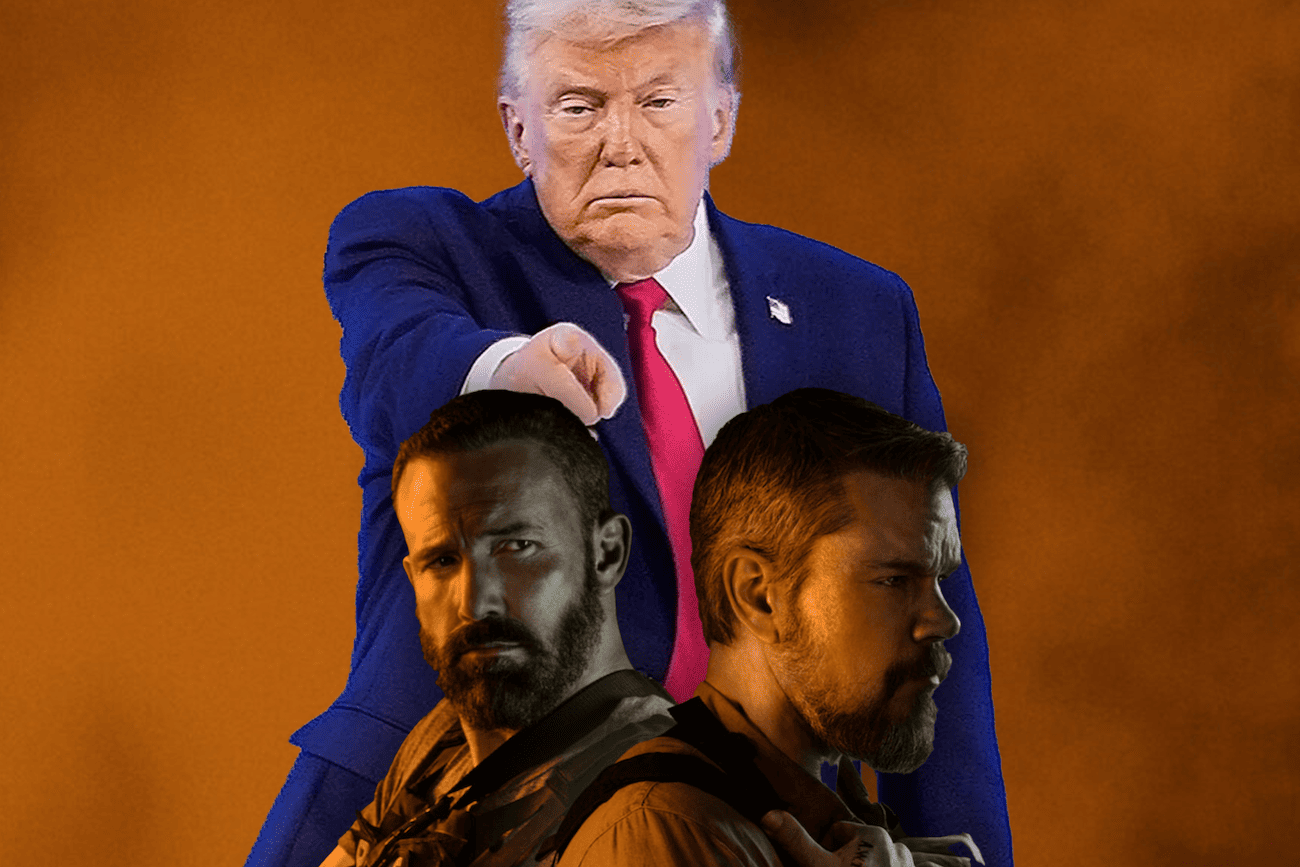

There is a certain kind of confidence, a particular brand of self-assurance, that has become synonymous with the American identity. It is a belief, often unspoken but deeply ingrained, that our intentions are presumed pure, our motives are just, and our actions are, by default, on the right side of history. This conviction is a powerful force, shaping foreign policy, influencing domestic discourse, and coloring the way many Americans view their nation’s place in the world. It’s an inherited certainty that we are the protagonists in the grand global narrative. But what happens when the plot becomes murky, when the lines between hero and villain blur, and when our actions abroad begin to look less like liberation and more like domination?
This question has echoed throughout American history, but it rings with a particular urgency today. We find ourselves in an era where the quiet hum of imperial ambition has once again grown into a loud, unapologetic roar. The brazen and ultimately unsuccessful mercenary-backed attempt to infiltrate Venezuela in 2020 — Operation Gideon — stands out for its sheer absurdity and the arrogance baked into its very premise. That episode was not simply about toppling a government with a handful of hired guns and a fishing boat; it was fundamentally about seizing control of Venezuela’s vast oil reserves, premised on the fantasy that a quick, private coup could allow the United States to dictate the country’s future.
In January 2026, the United States carried out a direct military action (Operation Absolute Resolve) that resulted in the capture of Nicolás Maduro. Yet even this extraordinary escalation has not produced anything resembling a clean regime change. Power has not changed hands so much as it has shifted within the same structure: Maduro’s vice president now effectively runs the country, state institutions remain intact, the legitimacy of interim leadership is contested, and key elements of the former regime continue to exert influence.
American Hubris
The strategic benefits touted by U.S. officials — particularly regarding oil and political stability — remain far from clear. In effect, there has been no real transformation, only a reshuffling at the top. If a so-called strategic victory is eventually declared, it is likely to be short-sighted and symbolic, designed less to alter Venezuela’s reality than to appease American hubris.
This episode is not a one-off. Instead, it’s another chapter in a long, troubling history of U.S. interference in Latin American politics, usually justified by lofty ideals but most often producing disastrous results. Time and again, America has tried to install leaders favorable to its own interests or to secure resources, only to end up fueling instability, anti-American sentiment, and human suffering. Yet, even as the outcomes repeat themselves, we cling stubbornly to the narrative that we are somehow doing good — for them and for the world.
This episode was a symptom of a broader pattern of behavior, a continuation of a legacy that stretches back through the decades. This legacy is one of intervention, of propping up friendly dictators while deposing democratically elected leaders who stray from American interests. It’s a story told in the coups in Iran and Guatemala, the protracted and devastating war in Vietnam, the invasion of Iraq under false pretenses, and the countless covert operations that have destabilized regions for geopolitical gain. Each of these actions was sold to the American public under the banner of freedom, democracy, or national security. We were always the good guys, fighting the forces of evil.
The language of imperialism, however, has become startlingly overt in recent years. Consider the recent — and frankly surreal — events surrounding Greenland. The notion of “purchasing” an autonomous territory was not framed as a serious diplomatic conversation between equals, but as a casual assertion of entitlement, as if the world were a Monopoly board and America simply had the strongest hand. Just days before reversing himself on Wednesday at Davos, President Trump announced on Truth Social that the U.S. would impose an additional 10% tariff on European countries that resisted America’s bid to take over Greenland.
That Trump does possess mechanisms to pursue such tariffs only underscores the point; what matters is the casual assumption that American power — economic or otherwise — can be wielded to force the surrender of another nation’s sovereignty. The threat itself reveals the mindset: coercion as negotiation, punishment as persuasion, and domination disguised as deal-making. The dismissal of Denmark’s refusal as “nasty” only sharpened the insult, exposing an imperial reflex that treats resistance not as a legitimate assertion of self-determination, but as insolence deserving retaliation.
Focusing on Trump alone risks missing the deeper problem. This mindset is not a partisan issue; it is a deeply American one. While administrations may change, the machinery of empire grinds on.
This is not merely bombast or incompetence. It reflects a distinctly fascistic mode of politics — one that collapses personal will into national interest, treats economic violence as a legitimate extension of state power, and frames dissent, whether foreign or domestic, as obstruction to be crushed rather than disagreement to be respected. Tariffs, in this worldview, are not economic policy tools but instruments of intimidation: announced impulsively, deployed selectively, and wielded less in the service of public good than as expressions of grievance, dominance, and personal leverage.
The Mindset
But focusing on Trump alone risks missing the deeper problem. This mindset is not a partisan issue; it is a deeply American one. While administrations may change, the machinery of empire grinds on. The rationale shifts — from fighting communism to fighting terrorism to countering economic rivals — but the fundamental belief in American exceptionalism remains the constant. This exceptionalism is the idea that the rules that apply to other nations do not apply to us. We can sanction, we can intervene, we can demand, because we are acting in the service of a higher cause. Or so we tell ourselves.
But what is the actual cost of this unwavering self-belief? In Venezuela, the focus on regime change has exacerbated a humanitarian crisis, with crippling sanctions harming the very people they are purported to help. The public narrative centered on the illegitimacy of the Maduro government. However, it conveniently ignores the role that decades of American intervention and economic pressure have played in creating the conditions for such a regime to thrive. When a nation is constantly under siege, its politics become polarized, its institutions weaken, and authoritarian leaders can more easily consolidate power by appealing to nationalist sentiment against a foreign aggressor.
We rarely engage in this level of self-reflection. It is far easier to accept the simple story: we are good, they are bad. We are delivering democracy; they are clinging to tyranny. This simplistic binary absolves us of any responsibility for the complex, often tragic, outcomes of our actions. It allows us to view the world not as a community of nations, but as a hierarchy with America at its apex.
This imperial arrogance is not just a feature of our foreign policy; it seeps into our national consciousness. It’s the confidence that allows us to believe that our model of democracy is the only valid one, that our economic system is universally applicable, and that our cultural values are the global standard. Any deviation is seen not as a legitimate difference, but as a flaw to be corrected, often by force. We export our culture, our corporations, and our military with the same missionary zeal, convinced that dominance is indistinguishable from virtue.
Imperial Footprint
The danger of this worldview is that it stifles dissent and critical thinking. To question the inherent goodness of American foreign policy is often equated with being unpatriotic. It is to be cast as an apologist for despots or an enemy of freedom. This leaves little room for a nuanced conversation about the consequences of our imperial footprint. It prevents us from asking the difficult questions. Are we actually making the world a safer, more democratic place? Or are we fueling cycles of violence and resentment that will lead to future conflicts? Is our primary goal the spread of liberty, or is it the protection of our economic and strategic interests, wrapped in the language of liberty?
The world is changing. The unipolar moment that followed the Cold War is over. New powers are rising, and the international order is becoming more complex and multipolar. In this new landscape, a foreign policy built on the assumption of unquestioned American primacy is not only arrogant but also unsustainable. It alienates potential allies, emboldens adversaries, and ultimately undermines our own security. A nation that insists on being the world’s policeman will eventually find itself policing a world that no longer wants its protection.


Perhaps it is time to dismantle the myth of our own benevolence. Not to replace it with self-loathing or to argue that America is a uniquely evil force in the world, but to embrace a more honest and mature understanding of our nation’s role. It would mean acknowledging our capacity for both great good and great harm. It would mean listening to the voices of those affected by our policies, rather than dismissing them as collateral damage. It would mean recognizing that true global leadership is not about dominance, but about cooperation, humility, and a willingness to live by the same rules we expect others to follow.
It requires a fundamental shift in our national psyche, a willingness to look in the mirror and confront the uncomfortable truths of our history and our present. It means asking a question that we have been conditioned to believe is already answered.
American Self-Perception
There’s a subtle but powerful moment in the movie “The Rip” that mirrors the struggle at the heart of American self-perception. Lieutenant Dane Dumars, played by Matt Damon, leads a group of Miami cops through a single night that tests every moral instinct they have. As the story unfolds, we see Damon’s character — stoic, grieving, and carrying ghosts — glance often at the tattoos inked across his two hands: A.W.T.G.G. on one hand and W.A.A.W.B. on the other. For most of the movie, the acronyms hang unspoken, cryptic, perhaps a private mantra or a nod to the code of the force. The audience, like Dumars’ colleagues, assumes they’re a kind of cop brotherhood maxim, a distillation of the “us vs. them” mentality baked into the work.
Only at the movie’s end, as the team’s bonds fray under money, suspicion, and violence — and as Dumars’ personal loss rises to the surface — does the real meaning emerge. In the aftermath, as sun rises and the bodies, money, and truth are counted, Dumars reveals to Desi, the story behind the letters. They weren’t born from bravado, but from pain: they were the last words exchanged between Dumars and his 10-year-old son before cancer took the boy’s life.
A.W.T.G.G. — “Are we the good guys?”
W.A.A.W.B. — “We are and always will be.”
In that confession, everything shifts. The tattoos aren’t declarations of certainty. They’re not even assurances. They are a question and a hope, an argument Dumars carries quite literally in his hands: the enduring need to believe in one’s own goodness even as experience, actions, and history cast long shadows of doubt.
The movie, like the country it so plaintively echoes, refuses easy answers. It asks us to carry both — the question and the answer — and to live, uncomfortably but honestly, in the tension between them.
Ganpy Nataraj is an entrepreneur, author of “TEXIT – A Star Alone” (thriller) and short stories. He is a moody writer writing “stuff” — Politics, Movies, Music, Sports, Satire, Food, etc.