


What Annoyed Me, Unsettled Me, Amused Me in 2025 and What I Will Not Accept as Inevitable in 2026

- What I’m looking forward to most in 2026 is a broader rejection of the far-right worldview that survives by pitting everyone against a single, endlessly blamed group —cast simultaneously as all-powerful villains and illegitimate outsiders.
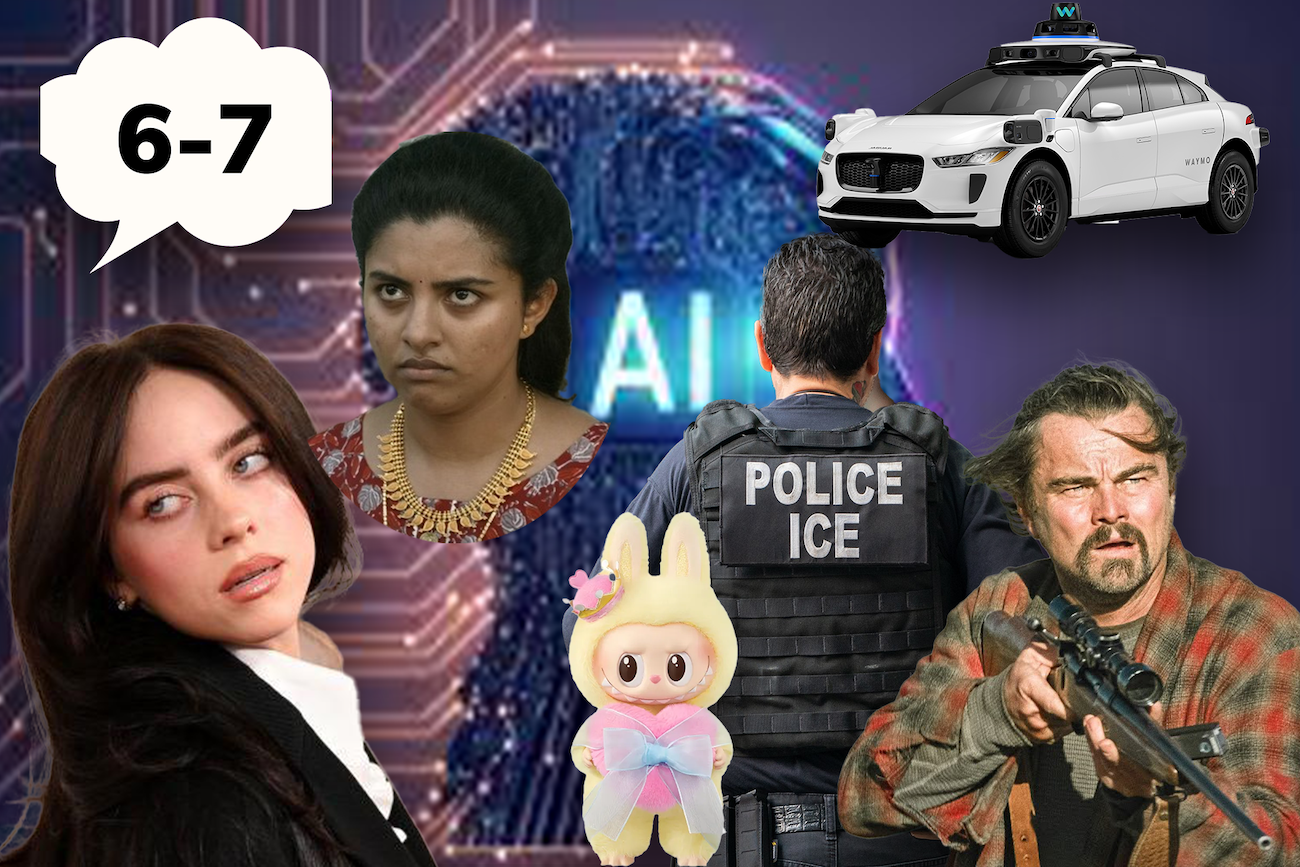

This is not a definitive account of the year.
It’s not neutral.
It’s not comprehensive.
This is a record of what lingered—what annoyed me, unsettled me, amused me, and made me pause—as 2025 unfolded in public and private, online and off. It also sketches what I’m no longer willing to accept as inevitable in 2026.
2025 — WRAPPED
Top Stories You Couldn’t Mute
The aftershocks of the 2024 U.S. election hardened into policy and tone.
Gaza continued to fracture not just geopolitics but moral language itself. We’re often told that history will tell us who was on the right side. In 2025, that felt like an unbearably long wait.
AI regulation remained mostly theatrical while AI deployment accelerated quietly.
Across democracies, permanent crisis language stopped feeling temporary.
The Oxford English Dictionary picked “rage bait” as the word of the year. For once, I agreed—though it could just as easily have applied to the last decade.
These weren’t always the most important stories. But they were the most inescapable. You didn’t have to seek them out. They arrived anyway.
The Joke That Escaped Containment
What began as playful absurdity online—“6–7,” a throwaway numerical joke, allegedly inspired from a rap song for no specific reason—slowly leaked into real life. Sports announcers hesitated mid-score and hesitated whether to call out “six-seven.” Some schools literally banned using the phrase. Several In-N-Out Burger locations quietly removed order number 67.
It stopped being funny the moment institutions began preemptively managing a meme.
2025 was the year jokes didn’t just reflect culture—they disrupted logistics.
The Aesthetic That Wouldn’t Die
Dubai chocolate. Labubu. Italian brain rot. Trends engineered for repetition rather than originality, circulating long past their natural expiration date. Reddit threads filled not with outrage but exhaustion—people tired of being nudged to enjoy the same joke again, and again, and again.
The problem wasn’t that these trends existed.
It was that nothing replaced them.
The feed just kept looping.
When AI Got Old
AI (Artificial Intelligenced) hype reached its saturation point in 2025. Every product announcement promised transformation. Every integration claimed inevitability. What began as wonder hardened into noise.
As more data emerged, it became clear that a vast majority of AI deployments hadn’t yet resulted in measurable ROI. All hype, no plan—eerily reminiscent of the South Park episode about the Underpants Gnomes. Phase one: collect data. Phase two: ??? Phase three: profit.
The real story wasn’t innovation—it was normalization.
“AI-powered” became background text, a required label rather than a meaningful distinction. Intelligence, artificial or otherwise, was assumed. Judgment was not.
Why Cities Fail Us
Car-centric city planning continued to feel less like an inconvenience and more like a quiet insult. Long walks to nowhere. Short drives to everything. Entire neighborhoods designed around movement rather than presence.
With driverless taxi services like Waymo gaining popularity and electric vehicles pushing full self-driving fantasies, America continued to widen its distance from understanding the need for robust public transportation.
In a year obsessed with efficiency, we somehow built environments that made the simplest human acts—walking, pausing, arriving—feel like acts of resistance.
Culture That Asked for Time
2025 wasn’t short on content. It was short on things willing to wait for you.
Some films, books, and music refused to be skimmed, summarized, or multitasked through. They trusted the audience to stay.
Films like “One Battle After Another,” “Sinners,” “If I Had Legs I’d Kick You,” “Homebound” (Hindi), “Bison” (Tamil), and a remarkable slate of Malayalam films—“Ponman,” “Ronth,” “Lokah,” “Thudarum,” among others—didn’t rush the viewer. They invited the viewer to breathe with every frame.
Live music continued to draw people despite the creeping presence of AI-generated tracks on streaming platforms, and that felt quietly heartening. Spotify’s top global artists—Bad Bunny, Taylor Swift, The Weeknd, Drake, Billie Eilish—sat alongside India’s most-streamed names: Arijit Singh, Pritam, Shreya Ghoshal, A.R. Rahman, Anirudh Ravichander.
I’m also realistic enough to know that 2026 will arrive with its own cultural nonsense. There will be a new word. A new meme. A new “6–7” equivalent that younger generations will adopt effortlessly while the rest of us hesitate, squint.
Books by Brian Goldstone, Megha Majumdar, Imani Perry, Michael Lewis, Omar El Akkad, and Victoria Amelina weren’t just timely; they were necessary. These were books to sit with, sleep with, and carry forward into 2026.
In a year designed for speed, duration became a quiet form of defiance.
Cruelty That Became Policy
What unsettled me most in 2025 was how quickly cruelty normalized. ICE raids—masked men with no badges pulling people off the streets and from their homes—were framed as routine. Science was attacked without embarrassment. RFK Jr.’s dismissal of medical consensus landed not as scandal but as content. Measles re-emerged not as tragedy, but as debate.
Even more chilling was the growing openness of hatred toward Indian Americans—said aloud now, without apology. The tone shifted first. The consequences followed.
The Billionaire Immunity Problem
It was darkly amusing how consistently billionaires escaped consequence. Bad behavior, failed experiments, intentional social harm—all forgiven under the mythology of “vision.”
Wealth wasn’t just success.
It became moral insulation.
In 2025, money didn’t just talk. It absolved.
The Moment I Stopped
Economic shifts, mass layoffs disguised as strategy, and the increasingly god-like posture of tech leaders made something click. This wasn’t ambition anymore—it was unchecked belief in one’s right to steer humanity.
And we weren’t given a choice. They declared themselves the chosen ones to drive humanity forward. Toward salvation or extinction—it remains to be seen.
That realization didn’t provoke panic.
It provoked pause.
A reassessment of timelines, dependencies, and what kind of future deserves participation.
The Year in One Sentence
2025 was the year everything became available at once, and attention became the only thing anyone was truly fighting over.
2026 — UNWRAPPED
If 2025 was an inventory of what happened, 2026 is a statement of what I’m no longer willing to treat as inevitable.
This isn’t a forecast.
It’s a posture.
What follows isn’t about prediction or optimism. It’s about choosing friction over fatalism—naming the ideas, systems, and habits I’m actively pushing back against, even if the outcomes remain uncertain.
Politics Without the Cruelty
What I’m looking forward to most in 2026 is a broader rejection of the far-right worldview that survives by pitting everyone against a single, endlessly blamed group—immigrants, minorities, experts, journalists, academics, the collective intellect—cast simultaneously as all-powerful villains and illegitimate outsiders.
This pattern has repeated itself across the United States, Canada, India, England, Germany, and elsewhere, each time dressed in local grievances but powered by the same playbook. The cruelty isn’t incidental. It’s the point.
Rejecting this worldview doesn’t require ideological purity. It requires refusing the lie that society only works when someone else is permanently on trial.
Economics Without Pretending

I’m watching closely for how governments respond to AI-driven job displacement—not with slogans, but with policy. Universal Basic Income is often dismissed as radical when viewed in isolation, but stripped of ideology, it’s a practical response to a structural problem: automation is moving faster than reskilling.
Telling people to “become specialists AI can’t replace” is easy advice to give and hard advice to implement. Young people entering the workforce and workers displaced mid-career are confronting the same reality from opposite ends.
Some form of income stabilization may soon move from theoretical to necessary. I’m not looking for miracles in 2026—just honesty about trade-offs, and the willingness to test ideas, or at least have conversations, before desperation makes the choices uglier.
Streaming Without the Fragmentation Tax
I’m hoping 2026 brings sanity to the streaming ecosystem. We became cable-cutters chasing flexibility, only to find ourselves paying for four or five platforms just to approximate what used to be one subscription.
Fragmentation feels deliberate. Consolidation feels dangerous.
Media monopolies don’t just reduce choice; they narrow voices and calcify power. The prospect of ever-larger conglomerates—Paramount absorbing CBS, Warner Bros. circling further consolidation—feels less like progress and more like a return to the worst parts of the old system, now with better interfaces.
What I’m hoping for isn’t dominance, but balance: fewer bills, clearer value, and competition that doesn’t hollow out the industry.
Technology Without the Echo Chamber
On the tech front, I want 2026 to be the year the AI ecosystem stops congratulating itself long enough to take a breath. The hype cycle has become a closed loop—founders selling inevitability to investors, investors selling scale to governments, governments selling efficiency to the public.
Everyone knows the bubble is real. Everyone knows it’s fragile. And yet we keep pretending the only options are acceleration or collapse.
I’d rather see controlled deflation than spectacular explosion. Fewer press releases. Fewer “AI-first” declarations. More honesty about limits, costs, environmental impact, and human displacement.
The technology isn’t the problem.
The refusal to slow down is.
So is the blindfolded refusal to have an honest conversation about all sides.
A Small Hope
I’m also realistic enough to know that 2026 will arrive with its own cultural nonsense. There will be a new word. A new meme. A new “6–7” equivalent that younger generations will adopt effortlessly while the rest of us hesitate, squint, and Google it in private.
That’s how culture evolves. That’s how generations create distance.
All I’m hoping for is that whatever replaces it is a little less awkward, a little less disruptive to burger menus and basketball scores—and that I’ll be curious enough to learn it, even if I never quite use it correctly.
What I’m Actually Looking Forward To
None of this requires optimism. Just restraint.
Less punishment masquerading as politics.
Less ideology pretending to be economics.
Less hype standing in for responsibility.
If 2026 delivers even modest movement in these directions—across borders, across systems, across conversations—that would be enough progress to notice.
Not everything needs to be accounted for.
Some things just need to be handled with care.
Ganpy Nataraj is an entrepreneur, author of “TEXIT – A Star Alone” (thriller) and short stories. He is a moody writer writing “stuff” — Politics, Movies, Music, Sports, Satire, Food, etc.