




Industrial-Scale Fraud?: Examining Claims About H-1B Visa Fraud Related to India and What’s Changed Since 2007

- Allegations made by a former American diplomat that 80 and 90 percent of H-1B visa applications from India are fraudulent appear to describe real problems that existed in the past. Presenting nearly two-decade-old observations as reflective of the current program's integrity is problematic.
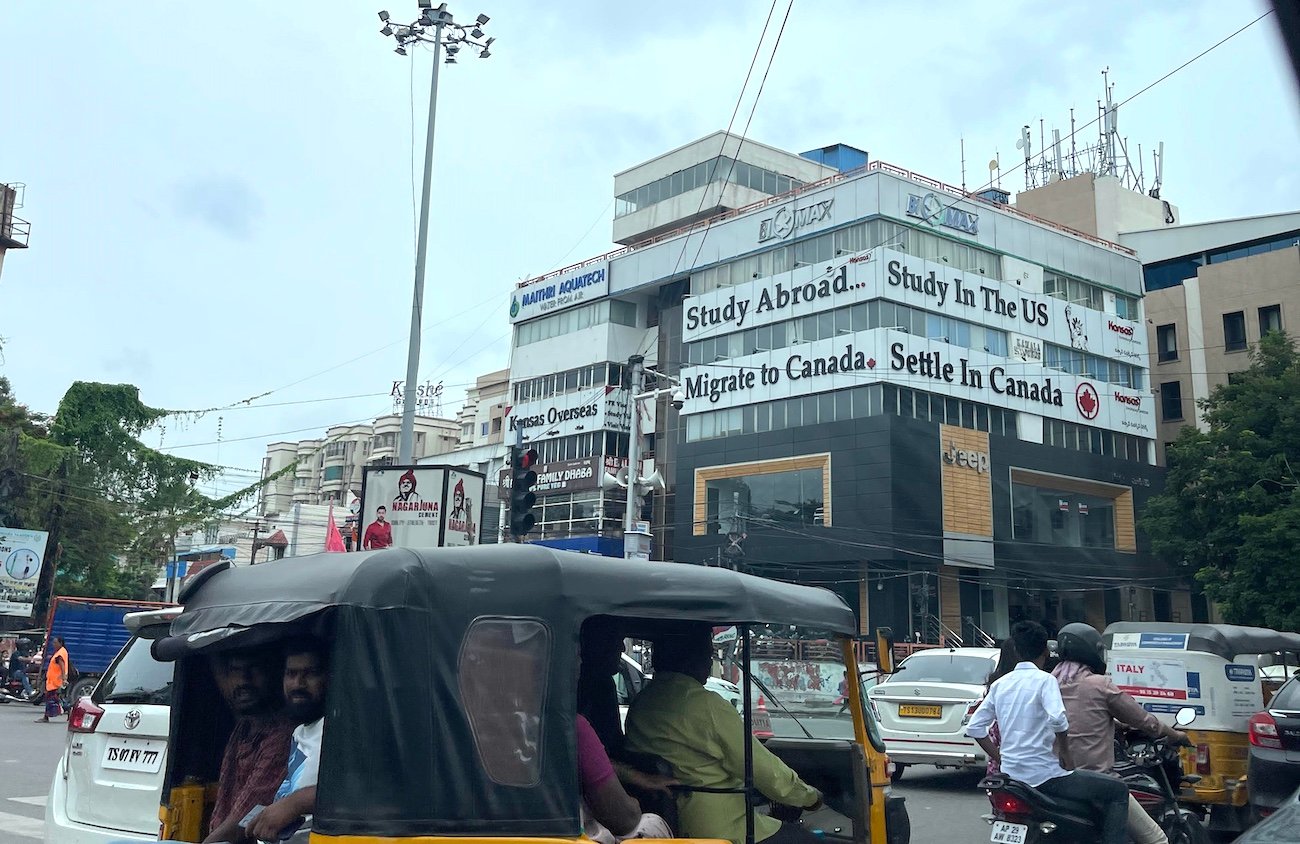

A former U.S. diplomat’s explosive allegations about widespread fraud in the H-1B visa program have reignited a contentious debate about immigration, skilled labor, and program integrity—but the claims center on events from nearly two decades ago, raising questions about their relevance to today’s program.
The Allegations
Mahvash Siddiqui, who served as a consular officer at the U.S. consulate in Chennai from 2005 to 2007, alleged in a November podcast with the Center for Immigration Studies that between 80 and 90 percent of H-1B visa applications from India involved fraudulent documentation or unqualified applicants. Speaking on the “Parsing Immigration Policy” podcast, Siddiqui, who described herself as speaking in her personal capacity, claimed she adjudicated roughly 51,000 non-immigrant visa applications during her tenure, most of them H-1Bs.
According to Newsweek’s reporting, Siddiqui described widespread use of forged documents, including degrees, property papers, marriage certificates, fake transcripts, and fake bank statements. She identified certain districts, notably around Hyderabad, particularly the Ameerpet area, as hubs for visa consultancy shops that allegedly sold fraudulent credentials and trained applicants to pass the visa issuance process.
“I would say 80 to 90 percent of the people that I encountered in each of the visa categories, you know, especially the young people between the ages of 20 to 45 that, you know, had very few ties to India, were basically using the non-immigrant visa pipeline to essentially come and work in the United States and never go back home and essentially displace American workers,” Siddiqui said in the podcast.
Perhaps most controversially, as reported by Newsweek, Siddiqui told the Center for Immigration Studies’ podcast: “I hate to put it this way, but as an Indian American, I can say this that essentially there’s certain things that I noticed in India that was that fraud is normalized there, like bribery is normalized.”
The Political Pressure Claims
According to The Hans India, Siddiqui claimed consular officers who tried to raise alarms and deny suspicious applications were pressured by political interventions and orders from above. “We quickly learnt about the fraud. We wrote a dissent cable to the Secretary of State, detailing the systematic fraud we were uncovering. But due to political pressure from the top, our adjudication was overturned,” she said in the podcast. She characterized the fraud unit as “a rogue operation because we were caring for America’s first interests.”
The Numbers Game
Former U.S. Congressman and economist Dr. Dave Brat amplified these concerns on Steve Bannon’s “War Room” podcast, making claims that appear to misunderstand how H-1B statistics work. According to Business Today, Brat claimed the U.S. consulate in Chennai issued 220,000 H-1B visas in 2024—2.5 times the 85,000 limit mandated by federal law.
“There’s a cap of only 85,000 H-1B visas, yet somehow one district in India — the Madras (Chennai) district — got 220,000,” Brat said, calling the situation “industrial-scale fraud.”
However, this claim conflates visa processing with visa issuance. The 85,000 cap applies to new H-1B petitions approved annually by USCIS, not to the total number of visa stamps issued at consulates. The 220,000 figure cited by Brat and Siddiqui includes renewals, extensions, and dependent H-4 visas for family members—none of which count against the annual cap. The Center for Immigration Studies’ own podcast description notes that in 2024, Chennai processed “220,000 H-1Bs and 140,000 H-4 visas for their family members,” indicating these are visa stamps, not new cap-subject approvals.
What Official Data Shows
Official U.S. government data presents a more nuanced picture than Siddiqui’s claims suggest, though it does acknowledge fraud exists.
According to a USCIS document on H-1B and L-1A compliance reviews, from fiscal years 2013 to 2016, FDNS completed a combined total of 35,462 H-1B and L-1A compliance reviews. USCIS determined that 31,132 (88 percent) were compliant and 4,330 (12 percent) were noncompliant.
A Heritage Foundation report cited a September 2008 USCIS “H-1B Benefit Fraud and Compliance Assessment,” which found that 51 of 246 sampled H-1B petitions (about 21 percent) were fraudulent. However, this study is now 17 years old.
The Department of Homeland Security Office of Inspector General’s 2017 report on H-1B verification noted that USCIS’s Administrative Site Visit and Verification Program uses more than 80 immigration officers to conduct random, unannounced site visits. The report found the program had “limited impact” with relatively few revocations resulting from these visits, though it did identify compliance issues.
Notably, USCIS’s own website on “Combating Fraud and Abuse in the H-1B Visa Program” acknowledges the problem exists and outlines enforcement measures, including site visits, interviews, and investigations. The site states: “Yet, too many American workers who are as qualified, willing, and deserving to work in these fields have been ignored or unfairly disadvantaged. Employers who abuse the H-1B visa program may negatively affect U.S. workers, decreasing wages and opportunities as they import more foreign workers.”
The Heritage Foundation’s Assessment
The Heritage Foundation, a conservative think tank, has published extensive research on H-1B fraud. In a 2024 report, the organization noted that “fraud is common in ‘low-trust’ countries where corruption is rife in civil and commercial affairs and the economic rewards of emigrating are high.” The report documented various forms of fraud by both alien beneficiaries and employer petitioners, including inflated credentials, bogus degrees, and lies about business nature and job locations.
Despite USCIS highlighting “extensive fraud investigations” and “referrals for criminal prosecution,” only two organizations had been added to the Willful Violator list in the previous year: Bonzer, LLC and BER-IT, Inc. “If there is a fraud crackdown underway, it’s not particularly visible.”
However, The Register reported in April 2024 that despite USCIS highlighting “extensive fraud investigations” and “referrals for criminal prosecution,” only two organizations had been added to the Willful Violator list in the previous year: Bonzer, LLC and BER-IT, Inc. “If there is a fraud crackdown underway, it’s not particularly visible,” The Register noted.
Wage Theft vs. Document Fraud
Interestingly, some recent research suggests the more significant problem may not be document fraud but wage theft. The Economic Policy Institute documented in a 2020 report evidence of “widespread wage theft in the H-1B visa program,” finding that major outsourcing firms were paying H-1B workers less than their directly employed U.S. workers, apparently violating the program’s “actual wage” requirement.
According to The Register, in 2021 rulemaking, the U.S. Department of Labor estimated that employers were underpaying H-1B workers to the tune of $15 billion per year—suggesting systematic program abuse exists, but of a different nature than the document fraud Siddiqui described.
India’s Dominance in H-1B Numbers
What is undisputed is India’s overwhelming dominance in H-1B visa recipients. According to multiple sources, Indians received about 70-71 percent of all H-1B visas issued in 2024, compared to just 12 percent for Chinese applicants. The H-1B program grants up to 85,000 new visas annually, not counting current visa holders who qualify for renewals.
However, according to a National Foundation for American Policy analysis cited by Newsweek, the number of H-1B visas granted to India-based companies has dropped sharply. The report found that just three Indian companies ranked among the top 25 employers receiving approved H-1B petitions for initial employment in fiscal year 2025.
Political Context and Timing
The timing of these allegations is politically significant. They arrive amid the Trump administration’s proposed $100,000 fee for new H-1B petitions, which has sparked legal challenges from organizations including the U.S. Chamber of Commerce, according to Newsweek.
The issue has created unusual divisions within Republican ranks. President Donald Trump has defended hiring highly skilled foreign workers, stating that the U.S. lacks enough domestic talent to meet the demands of key industries. This position has drawn criticism from some figures in the Make America Great Again movement, who see H-1B visas as a threat to American jobs.
According to Business Today, White House Press Secretary Karoline Leavitt said Trump supports bringing in foreign workers “just at the beginning,” with plans to eventually replace them with Americans—a statement that itself raises questions about the program’s intended purpose.
The 2005-2007 Era: A Different Time
It’s crucial to note that Siddiqui’s firsthand experience dates from 2005 to 2007—nearly two decades ago. The American Bazaar reported that WikiLeaks cables from that period did indeed uncover widespread fraud rings, particularly in Hyderabad’s Ameerpet area, which led to significant reforms.
Following these revelations, according to multiple sources, the U.S. established heightened vetting protocols and created a specialized Hyderabad consulate focused on fraud detection. USCIS also implemented the Administrative Site Visit and Verification Program in 2009, two years after Siddiqui left Chennai.
What Has Changed

Since Siddiqui’s tenure, several anti-fraud measures have been implemented:
- The 2009 establishment of the Administrative Site Visit and Verification Program for random, unannounced workplace inspections
- The opening of a dedicated Hyderabad consulate with enhanced fraud detection capabilities
- Increased scrutiny of India-based outsourcing firms
- Enhanced information-sharing between USCIS, Department of Labor, and Department of State
- Recent rule changes preventing multiple lottery submissions for the same individual
Unanswered Questions
Several critical questions remain unanswered in this controversy:
First, why did Siddiqui wait nearly 18 years to publicly share these allegations? The podcast was her first public detailed account of events from 2005-2007.
Second, what is the current fraud rate? While NASSCOM claims it’s below 1 percent and Heritage Foundation studies from 2008 suggested 21 percent, there appears to be no recent comprehensive government study publicly available that would definitively answer this question.
Third, if 80-90 percent of applications were fraudulent as Siddiqui claims, how were approval rates so high? If consular officers were identifying such massive fraud, one would expect dramatically lower approval rates or documented evidence of systematic overruling of denials.
Fourth, to what extent do Siddiqui’s observations reflect systemic fraud versus the specific conditions at Chennai during a particular period when fraud networks were known to be operating?
The Broader Policy Debate
Beyond the specific fraud allegations, the controversy highlights fundamental policy disagreements about the H-1B program itself.
Critics argue that even legitimate use of the program displaces American workers and suppresses wages. Robert Law, director of the Center For Homeland Security And Immigration at the America First Policy Institute, told The Register: “American workers are being sidelined, overlooked and their wages are being suppressed because of H-1Bs. Whether it’s IT outsourcing firms or major companies like Microsoft, IBM, Facebook, Apple, and so on, the way the law was drafted and is currently being applied, all of these companies are legally allowed to pay less than market wages.”
Supporters counter that U.S. companies face genuine shortages in STEM fields and must rely on foreign workers to remain competitive globally. They argue that restricting H-1B visas doesn’t automatically create jobs for Americans—it may simply move work offshore.
Conclusion
Mahvash Siddiqui’s allegations about H-1B fraud from 2005-2007 appear to describe real problems that existed during that period—problems that were documented in WikiLeaks cables and led to significant reforms. However, presenting these nearly two-decade-old observations as reflective of the current program’s integrity is problematic without current data.
The conflation of visa stamps (including renewals and dependents) with new cap-subject approvals by critics like Dr. Brat further muddles the debate. While 220,000 visa stamps were issued at Chennai in 2024, this doesn’t mean 220,000 new H-1B workers entered the U.S. labor market that year.
What is clear is that the H-1B program faces legitimate challenges: NASSCOM’s claim of less than 1 percent fraud seems optimistic given government enforcement data, but Siddiqui’s 80-90 percent figure from 2005-2007—even if accurate for that specific time and place—cannot be responsibly extrapolated to today’s program without current evidence.
The more pressing concerns may be less about forged degrees and more about wage suppression, outsourcing firms’ business models, and whether the program serves its intended purpose of addressing genuine labor shortages or has become a vehicle for replacing American workers with lower-paid foreign labor—fraud or no fraud.
As this debate continues, one thing is certain: extraordinary claims require extraordinary evidence. Allegations about current fraud rates should be backed by current data, not decade-old anecdotes, however vivid and troubling those anecdotes may be.
The story, conceptualized and edited by American Kahani’s News Desk, was aggregated by AI from several news sources.